


Sand Bass: California's Year-Round Bottom Dweller

If you dive California waters long enough, you learn that some species are seasonal visitors and others are reliable residents. Sand bass fall firmly in the second camp. While yellowtail migrate north with warm water and white sea bass disappear for months at a time, spotted sand bass and barred sand bass hold their ground on sandy bottoms and near-shore structure year-round. They are one of the most consistently available targets in Southern California, and they deserve far more attention from divers than they currently get.
For newer divers still building confidence with shot placement and stalking, sand bass are an ideal species to cut your teeth on. They sit on or near the bottom, they hold still more often than not, and they are plentiful in accessible depths from 15 to 60 feet. For experienced divers, they fill the gaps between seasonal runs and put quality protein in the cooler when nothing else is cooperating.
Spotted Sand Bass vs. Barred Sand Bass: Know Your Species
California is home to two primary sand bass species that divers will encounter, and telling them apart matters for both regulations and bragging rights.
Spotted Sand Bass (Paralabrax maculatofasciatus)
The spotted sand bass is the more southern of the two species, with its center of abundance running from San Diego Bay up through the Orange County coast. They are identified by the distinct dark spots covering their body — not vertical bars. Spotted sand bass tend to be smaller on average, with most fish in the 1- to 3-pound range, though fish over 5 pounds are taken regularly in San Diego Bay and Mission Bay. The IGFA world record is 6 pounds 4 ounces.
Spotted sand bass favor shallow bays, harbors, and nearshore sandy areas with eelgrass or scattered rock. They are often found in water as shallow as 5 to 15 feet, making them accessible even from shore dives in protected waters. In bays like San Diego Bay and Mission Bay, they stack up around dock pilings, riprap, and channel edges.
Barred Sand Bass (Paralabrax nebulifer)
The barred sand bass is the larger and more widespread of the two species. They range from Baja California up through Santa Barbara and are identified by the vertical dark bars along their flanks (though these can fade when the fish are over sand). Barred sand bass regularly reach 3 to 5 pounds, with trophy fish pushing 7 to 8 pounds. The IGFA record is 13 pounds 3 ounces.
Barred sand bass are open-coast fish more than their spotted cousins. They prefer sandy bottoms near low-profile reef, rock piles, pipes, outfall structures, and artificial reefs in 20 to 60 feet of water. They are the species you are more likely to encounter on a typical kelp-edge or sandy-bottom dive along the Southern California coast.
How Sand Bass Differ from Calico Bass
Newer divers often confuse sand bass with calico bass (kelp bass, Paralabrax clathratus), since all three species belong to the same genus. The key differences are habitat and appearance. Calico bass are almost always associated with kelp canopy and rocky reef structure — they are the fish you see hovering in and around kelp stalks. Their coloration is a mottled brown-and-white pattern that blends with kelp holdfast and rocky substrate.
Sand bass, by contrast, live on or very near sandy bottoms. You will find them sitting on the sand next to a pipe, half-buried near a rock pile, or hovering just off the bottom near a wreck. Their coloration is lighter and more uniform — tans, grays, and olive — designed to blend with sand rather than rock. If you are diving over sand and see a bass-shaped fish on the bottom, it is almost certainly a sand bass, not a calico.
Where to Find Sand Bass in California
Sand bass are structure-oriented fish that use sandy bottoms as their home base. The key to finding them is understanding that they need some form of structure nearby but do not live on top of heavy reef the way calico bass do. Think of sand bass as the fish that live in the transition zone — the sand flats adjacent to reef, the pipes running across open bottom, the isolated rocks sitting on otherwise featureless sand.
Prime Structure Types
Pipes and outfalls: Underwater pipes running along sandy bottoms are sand bass magnets. The pipe itself provides the only vertical relief on an otherwise flat bottom, and sand bass will line up along them. Many Southern California beaches have outfall pipes running offshore.
Artificial reefs: California has deployed numerous artificial reef structures in sandy areas specifically to create habitat. Reef balls, concrete rubble, and sunken structures in 30 to 50 feet attract concentrations of sand bass.
Wrecks: Small wrecks and debris fields on sandy bottoms consistently hold sand bass. Even small pieces of structure — a shopping cart, a cinder block, a piece of old pipe — can hold fish.
Rock-sand transitions: The edges where rocky reef gives way to open sand are prime sand bass territory. The fish use the reef for cover but forage over the adjacent sand.
Eelgrass beds: In bays and shallow nearshore areas, eelgrass provides cover for spotted sand bass in particular. These beds are especially productive in San Diego and Mission Bay.
Geographic Hotspots
CPFV (Commercial Passenger Fishing Vessel) data from the California Department of Fish and Wildlife tells a clear story about sand bass distribution. San Diego and Orange County dominate the catch numbers by a wide margin. From 2018 through 2024, San Diego-based boats reported more barred sand bass catches than all other ports combined. This aligns with what divers see in the water: the further south you go, the more sand bass you find.
San Diego (Imperial Beach to La Jolla): The epicenter. IB Pipe, Point Loma kelp edges, Mission Bay, and La Jolla's sandy stretches all hold strong populations of both species.
Orange County (Dana Point to Huntington Beach): Excellent barred sand bass fishing on the nearshore artificial reefs and around the Huntington Flats area. The Newport Beach area is particularly productive.
Los Angeles (Palos Verdes to Malibu): Sand bass are present along the sandy stretches between rocky reef areas. The Palos Verdes shelf and Redondo Beach area hold fish.
Ventura/Santa Barbara: Less common but still present. Barred sand bass become less abundant north of Point Conception.
Seasonal Patterns: Why Sand Bass Are Always Around
One of the best things about sand bass for divers is their year-round availability. Unlike pelagic species that migrate with water temperature, sand bass are residential. They do not leave. They shift depth and activity level seasonally, but they remain in the same general areas throughout the year.
Spring (March-May): Sand bass begin moving shallower and feeding more aggressively as water temperatures climb. Barred sand bass start forming pre-spawn aggregations in May, particularly around structure in 30 to 50 feet.
Summer (June-August): Peak spawning season. Barred sand bass form large spawning aggregations over sandy bottoms, particularly during full and new moons. These aggregations can be enormous — hundreds of fish stacked up in a small area. Note: many divers choose to leave spawning aggregations alone, as these fish are concentrated and vulnerable. Consider whether you want to shoot fish that are actively spawning.
Fall (September-November): Post-spawn recovery. Fish disperse from spawning sites and feed heavily to rebuild energy reserves. This is arguably the best season for sand bass — the fish are hungry, the water is warm, and visibility is often good.
Winter (December-February): Sand bass slow down but do not disappear. They move slightly deeper and become less active, but they are still present on structure. Winter is when sand bass become a valuable backup species — when nothing else is biting, you can almost always find sand bass.
Approach Tactics for Divers
Sand bass are not difficult fish to approach, but they can be difficult to see. Their camouflage is excellent. A sand bass sitting motionless on a sandy bottom next to a rock can be nearly invisible until you are within a few feet of it. This is actually what makes them great practice fish — they teach you to slow down and scan the bottom carefully rather than swimming fast and looking for obvious targets.
Reading the Bottom
The biggest skill sand bass hunting develops is bottom-reading. When you dive over sand, your eyes need to adjust to looking for shapes that do not belong. A slight shadow. A fin edge. An eye glinting. Sand bass will often sit completely still with their pectoral fins spread on the sand, and their coloring matches the substrate so well that you will swim right over them if you are not paying attention.
Work along structure methodically. Swim slowly along a pipe, scanning both sides. Circle a rock pile at a distance of 6 to 10 feet, looking at the sand around the base. Approach wreck structure from the sand side, not from above. Sand bass typically face into the current, so if you approach from the down-current side, you can often get very close.
The Approach
Once you spot a sand bass, the approach is straightforward. These fish are not nearly as spooky as calico bass or sheephead. They rely on camouflage rather than flight, and they will often hold position even as you close to within arm's length. The key rules are simple:
Stay low: Approach along the bottom, not from above. Sand bass are prey for larger fish and sea lions that attack from above, so overhead movement spooks them far more than lateral movement at their level.
Move slowly: No sudden movements. Glide toward the fish with minimal fin kicks. If the fish starts to tense (dorsal fin goes up, body lifts off the bottom), freeze and wait.
Optimal range: Take your shot at 4 to 6 feet. Sand bass are not large fish, so you do not need the reach of a long gun. A 75 to 90 cm gun is ideal.
Watch for multiples: Where there is one sand bass, there are usually more. After you take a fish, scan the immediate area — there are often several more within a 20-foot radius that you missed on the first pass.
Shot Placement
Sand bass are not big fish, which means shot placement matters more than with a large tuna or yellowtail. A bad shot on a 3-pound fish can destroy half the usable meat. The ideal shot placement depends on the angle of approach:
Broadside: Aim just behind the pectoral fin, through the gill plate area. This is the kill zone — it hits the spine and brain stem and results in an instant kill with minimal meat damage.
Head-on: Aim for the top of the head between the eyes. A head shot is clean and preserves all the body meat.
Avoid: Do not shoot through the body cavity. On a fish this small, a gut shot ruins a disproportionate amount of meat and the fish will thrash and potentially tear off the shaft.
California Regulations for Sand Bass
As of 2026, California sand bass regulations are as follows. Always verify current regulations with the CDFW before diving, as these can change:
Bag limit: 5 fish per day (combined for all bass species — calico, sand bass, and spotted sand bass count toward the same limit).
Minimum size: 14 inches total length.
Season: Open year-round (no closed season for sand bass as of 2026).
Gear: Spearfishing is a legal method of take. No powerheads or explosives. Standard freedive spearfishing rules apply — no scuba spearfishing in California.
Important note: The 14-inch minimum size means you need to be selective. Many sand bass you encounter will be undersized, particularly spotted sand bass. Get good at estimating 14 inches underwater — it is roughly the distance from your wrist to your elbow on most adults. When in doubt, let the fish go.
CPFV Data: Sand Bass by the Numbers
CPFV logbook data provides the best available window into sand bass abundance and distribution along the California coast. While these numbers reflect hook-and-line catch from party boats rather than spearfishing specifically, they are a reliable proxy for overall population density by region.
From 2018 to 2024, barred sand bass consistently ranked among the top five species caught by CPFV boats operating out of San Diego. Catch-per-angler-day (CPUE) numbers for San Diego were roughly double those of Los Angeles-based boats and triple those of Ventura and Santa Barbara ports. This matches the biological reality: barred sand bass prefer the warmer water and expansive sandy habitat found south of Los Angeles.
Spotted sand bass show an even more concentrated distribution. They are almost exclusively a San Diego and north Baja species in the CPFV data, with San Diego Bay and Mission Bay producing the vast majority of recorded catches. Spotted sand bass are rarely reported from boats operating north of Dana Point.
The year-round nature of sand bass fishing is also visible in the data. While catch rates peak in summer (June through August, during the spawning aggregation period), every month of the year shows consistent catches. Compare this to yellowtail, which essentially disappears from the CPFV data from November through April, and the value of sand bass as a year-round species becomes clear.
Cleaning and Eating Sand Bass
Sand bass are excellent table fare. The meat is white, mild, and firm — comparable to calico bass in flavor and texture. They are not a fishy-tasting species and are one of the better eating fish available to California divers.
Filleting
Sand bass in the 14- to 16-inch range yield two modest fillets. Do not expect a lot of meat — these are not big fish. A 3-pound barred sand bass will give you roughly 8 to 10 ounces of boneless fillet. This is why the 5-fish bag limit exists — you need several fish to make a meal. Fillet technique is straightforward: standard bass fillet along the backbone, skin on or off depending on your cooking method. Remove the rib bones with an angled cut.
Cooking
Sand bass are versatile in the kitchen. The mild white meat works with almost any preparation. Some top methods include:
Pan-seared with skin on in butter and lemon. The skin crisps up beautifully.
Beer-battered fish tacos. Sand bass is arguably the best taco fish in California — firm enough to hold up in a tortilla, mild enough to let the toppings shine.
Ceviche. Fresh sand bass diced small, lime juice, cilantro, onion, jalapeño. The firm texture holds up perfectly.
Grilled whole. For fish right at the 14-inch minimum, grilling whole (scaled and gutted) with salt, oil, and citrus is simple and delicious.
Why Sand Bass Are Great for Newer Divers
If you are new to spearfishing in California, sand bass should be one of your first target species. Here is why:
Accessible depth: Most sand bass are found in 15 to 40 feet, well within beginner freediving range. You do not need to hit 60-foot dives to find them.
Cooperative targets: Sand bass sit still and rely on camouflage. They do not run from you the way calico bass often do. This gives you time to set up a proper shot without the pressure of a fish that is about to bolt.
Teaches bottom-reading: Learning to spot sand bass on sandy bottom is a transferable skill. Once you can pick out a camouflaged sand bass, you will be better at spotting halibut, sole, and other bottom-dwelling species.
Shot placement practice: Because sand bass hold still, they let you practice deliberate shot placement rather than reactive shooting. This builds good habits.
Year-round availability: Unlike many target species, sand bass do not have an off-season. You can practice on them any month of the year.
Good eating: Nothing builds confidence like bringing home dinner. Sand bass taste great and give newer divers a tangible reward for their time in the water.
Gear Recommendations for Sand Bass Diving
You do not need specialized gear for sand bass. A standard California spearfishing setup works perfectly:
Speargun: 75 to 90 cm is ideal. Single band. You do not need a powerful gun for sand bass — accuracy matters more than power.
Wetsuit: Standard 5mm or 7mm depending on season. No special requirements.
Weight belt: Enough to stay neutral at 20 to 30 feet. You want to be able to hover just off the bottom, not pin yourself to the sand.
Stringer or catch bag: A hip stringer works fine. No need for a float or floatline — these are not fish that will tow you anywhere.
What This Means for California Divers
Sand bass will never be a glamour species. Nobody is booking a charter trip specifically to shoot 3-pound barred sand bass. But that misses the point entirely. Sand bass are reliable, accessible, good to eat, and available 365 days a year. They fill coolers when other species will not cooperate, they teach fundamental skills to newer divers, and they provide consistent action on days when the ocean is not giving you anything else.
Next time you are diving a sandy bottom and scanning for halibut or lobster, slow down and look harder. There are probably sand bass everywhere around you that you have been swimming right over. Learn to see them, and you will never come home empty-handed again.
Check current visibility, water temperature, and fish activity predictions at your dive spot using the SpearFactor Fish & Dive Conditions Tool.
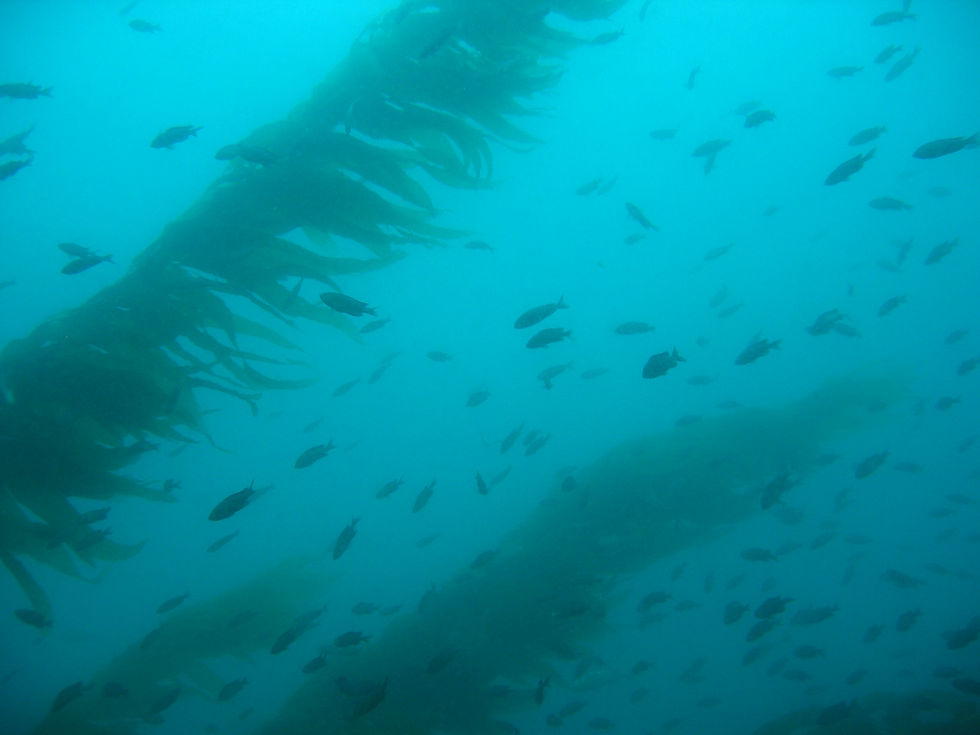
Cover photo: Barred sand bass (Paralabrax nebulifer) from San Diego Bay, California. Photo by Ruff tuff cream puff, CC0/Public Domain, via Wikimedia Commons.


Comments