


The Seven Species of Coral Trout: A Diver's Guide to Identification, Habitat, and Hunting

Coral trout are some of the most prized reef fish in the Indo-Pacific, and for good reason. They are beautiful, they fight hard, and they taste incredible. But most divers lump them all together under one name without realizing there are actually seven distinct species in the Plectropomus genus. Knowing the difference matters. It affects where you hunt, what you are looking at on the reef, and whether the fish in front of you is legal to take. Here is your complete breakdown of all seven coral trout species and what makes each one unique.
1. Leopard Coral Trout (Plectropomus leopardus)
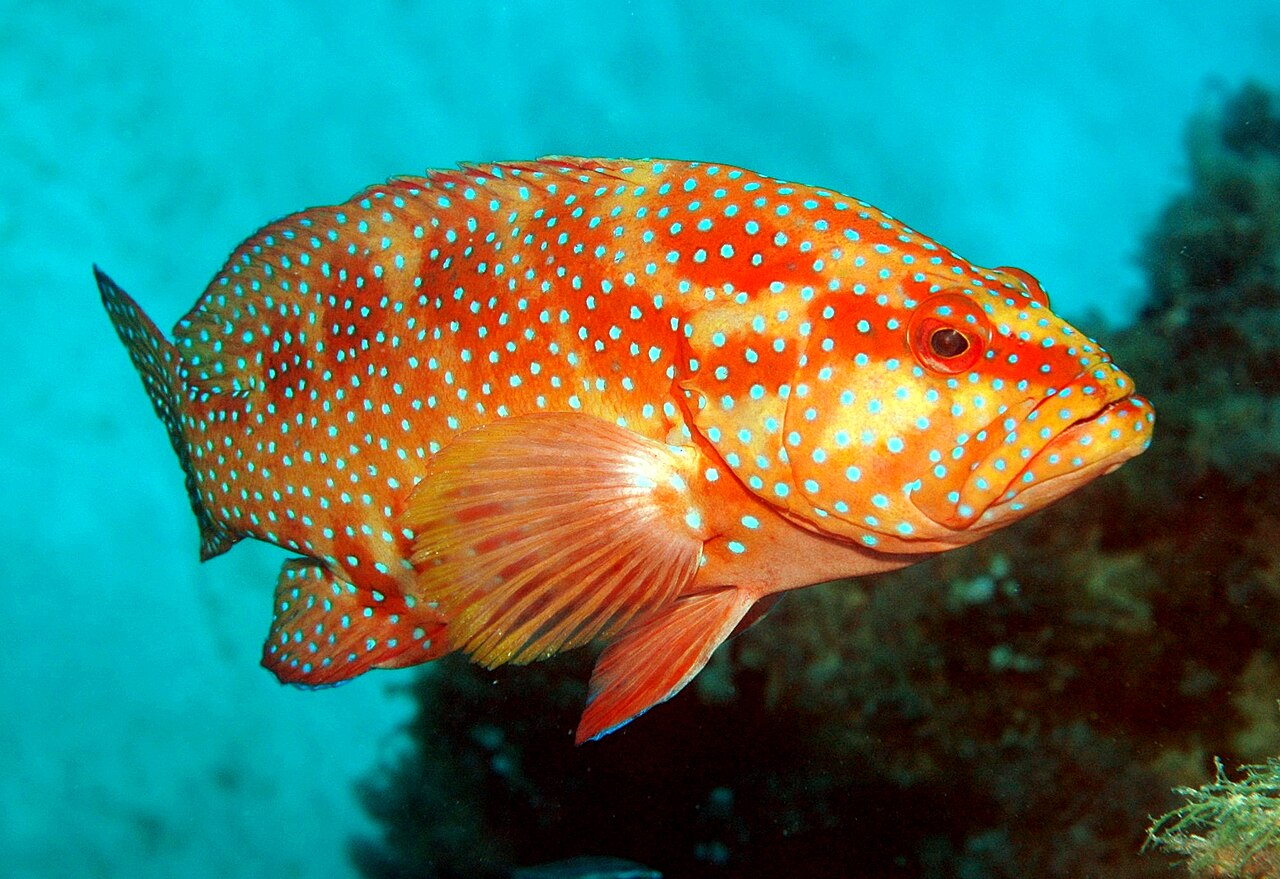
This is the one most divers picture when they hear coral trout. The leopard coral grouper is the most common and commercially important species in the genus. It ranges across the western Pacific from southern Japan down through the Great Barrier Reef and into the Coral Sea. Coloration varies from olive green to bright orange-red, covered in small, evenly spaced blue spots across the entire body, head, and fins. A distinctive blue ring around the eye is a reliable identification marker. They typically inhabit coral reef structure at depths of 10 to 100 feet and average 3 to 8 pounds, though specimens over 15 pounds are taken. This is the primary target species for reef divers in Queensland and throughout Southeast Asia.
2. Black-Saddled Coral Trout (Plectropomus laevis)
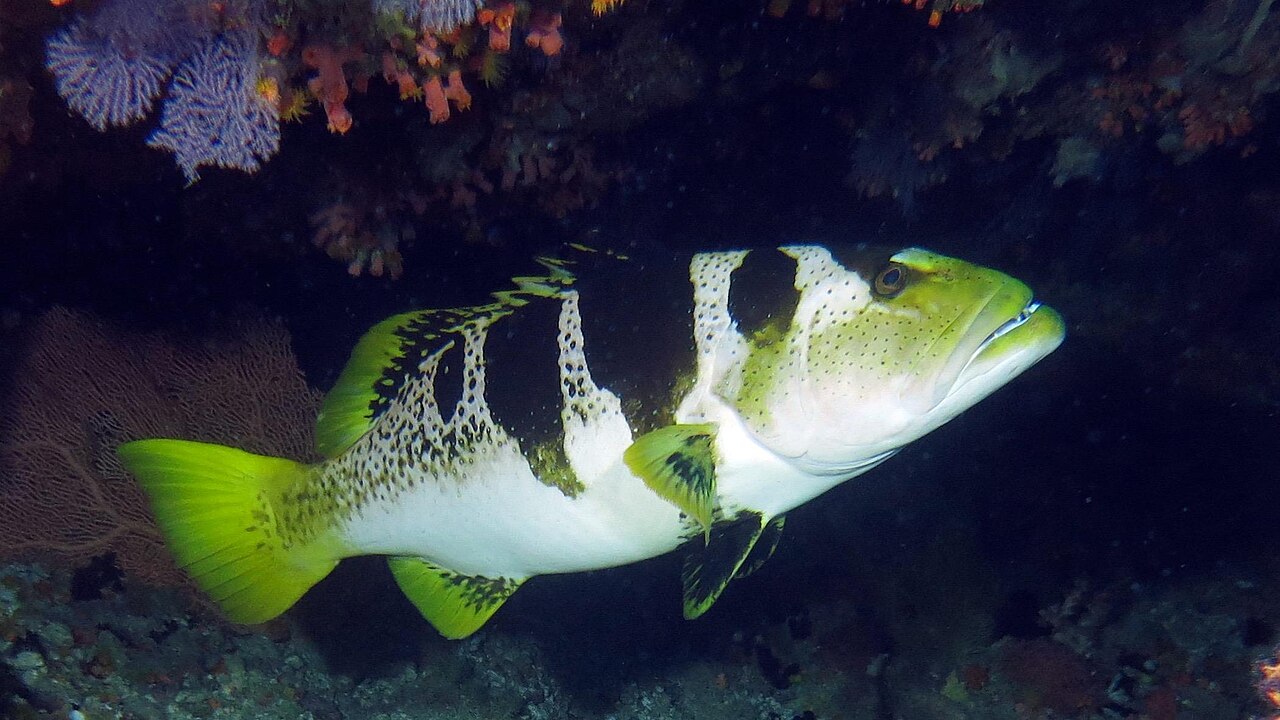
The black-saddled coral grouper is the largest species in the genus and can exceed 40 pounds, making it the trophy of the group. It has the widest range of all Plectropomus species, stretching from East Africa across the Indian Ocean to the central Pacific. What makes this species fascinating is that it has two completely different color phases. The first phase is white or pale with bold dark brown saddle-shaped bars across the back and yellow fins. The second phase looks more like a typical coral trout with red-brown coloration and small blue spots, but with faint dark saddle markings still visible. Divers who have only seen the spotted red phase often mistake it for a leopard coral trout, but the concave anal fin margin and those subtle saddle bars give it away.
3. Squaretail Coral Trout (Plectropomus areolatus)
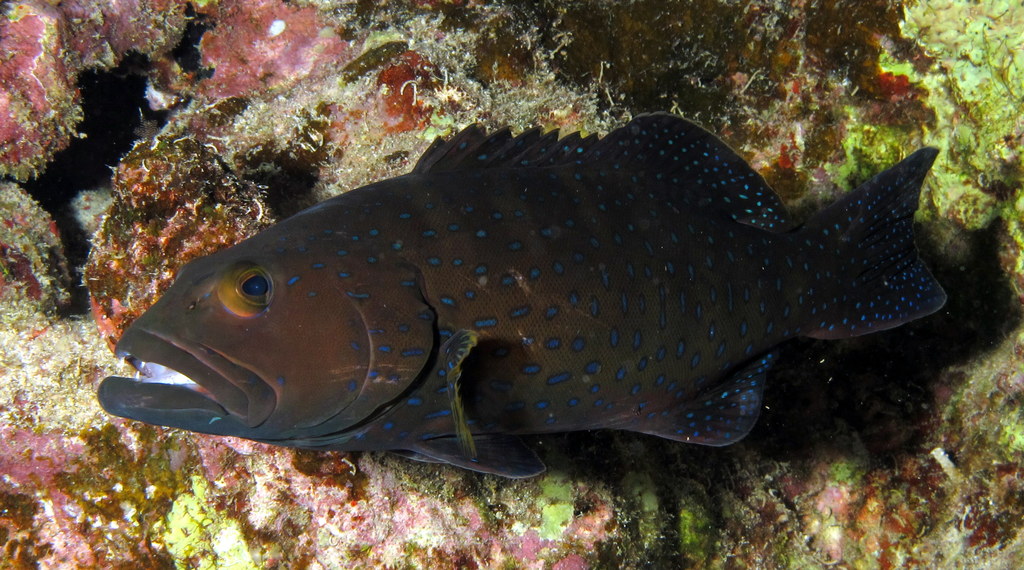
The squaretail coral grouper gets its name from the distinctive squared-off shape of its tail fin. It ranges across the Indo-Pacific from the Red Sea to Samoa and is one of the more widely distributed species. Coloration is typically brownish to reddish with darker spots and a broad pale or yellowish submarginal band on the tail. It is commonly found on reef slopes and lagoon reefs and is a regular target for commercial and artisanal fisheries throughout its range. The squaretail tends to form spawning aggregations, which unfortunately makes them vulnerable to overfishing during those periods. If you encounter a large group of coral trout stacked up on a reef during spawning season, consider passing on the shot and letting them do their thing.
4. Spotted Coral Trout (Plectropomus maculatus)
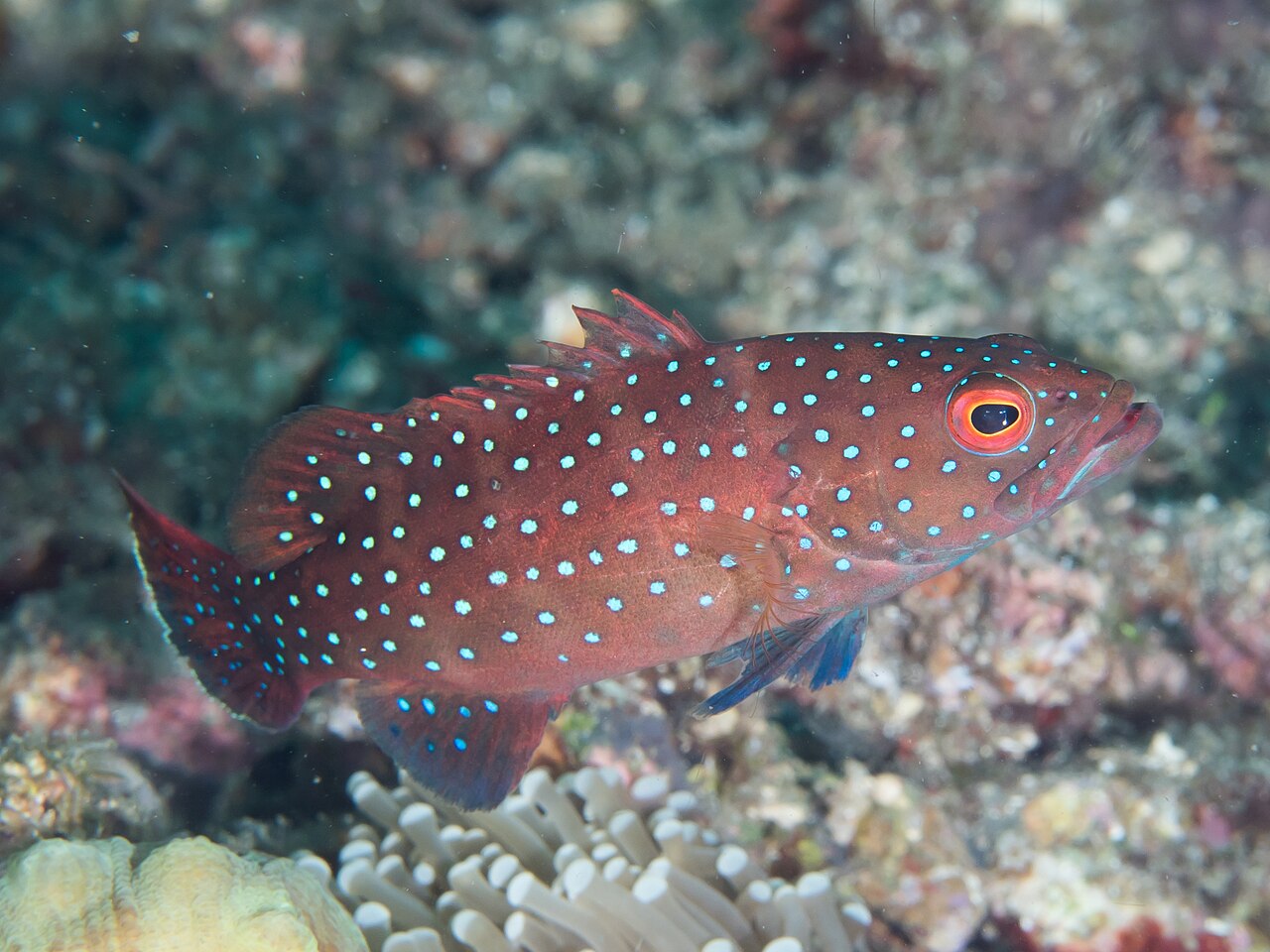
Also known as the barcheek coral trout, this species is found throughout the western Pacific from Thailand and the Philippines to Papua New Guinea and northern Australia. The key identification feature is the elongated blue spots or bars on the head and cheek area, which are distinctly different from the round spots found on the leopard coral trout. Body color ranges from red to pale grey to olive or dark brown. They prefer inshore reefs, coastal waters, and estuarine habitats, making them more accessible to shore divers than some of the deeper-dwelling species. The spotted coral trout is one of the more common species encountered by divers working the inshore reefs of Queensland.
5. Highfin Coral Trout (Plectropomus oligacanthus)
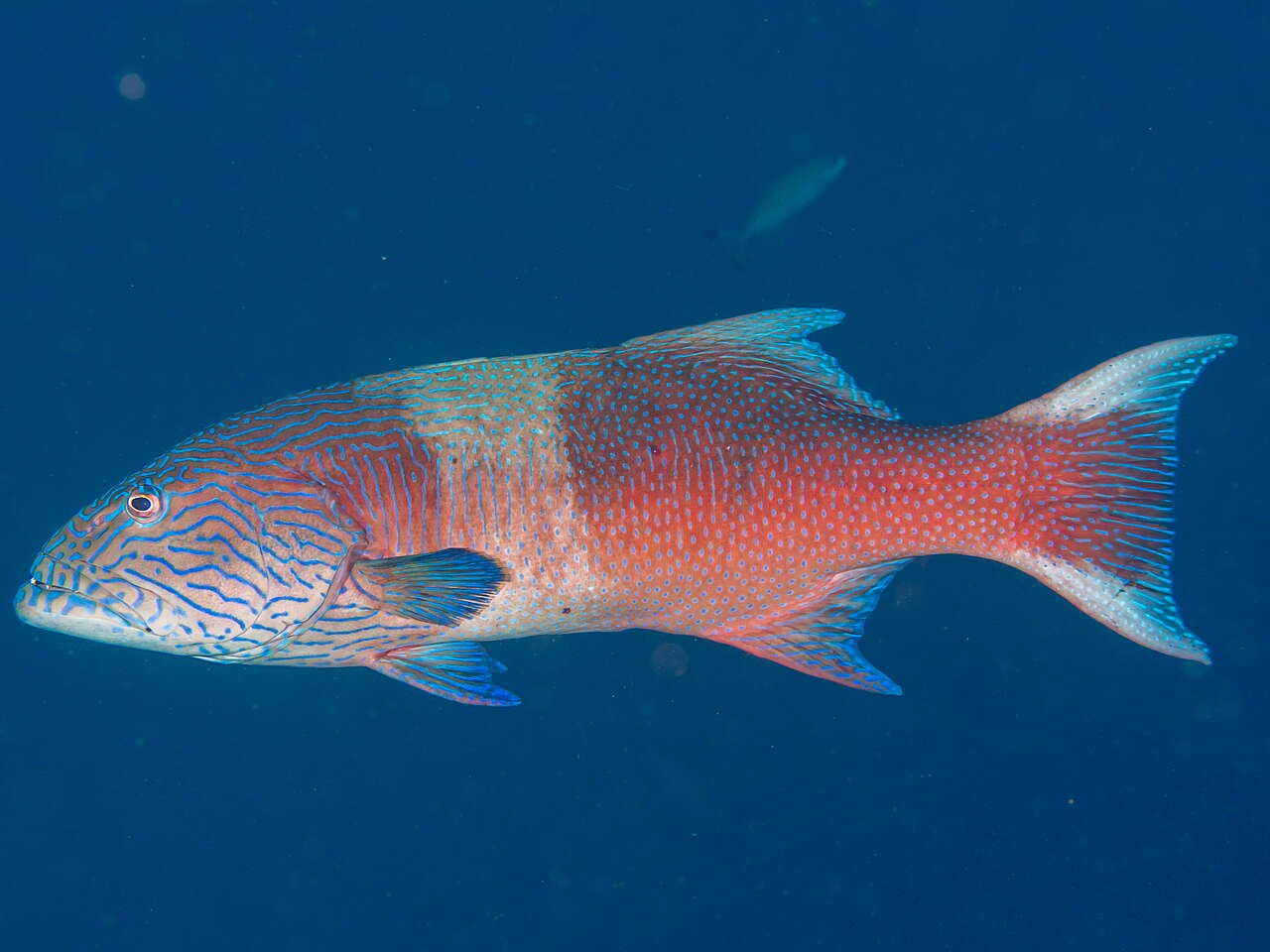
The highfin coral grouper is one of the more visually striking species in the genus. It is found in the Indo-West Pacific from the Philippines and Indonesia to northeastern Australia, the Solomon Islands, and the Caroline and Marshall Islands. The name comes from its notably tall dorsal fin. Coloration is generally dark reddish brown to maroon with blue spots and markings that can appear more vivid than those on other species. It tends to inhabit outer reef slopes and clear water areas with rich coral growth. This is a less commonly encountered species for most divers but one worth recognizing if you are diving the outer reefs of the Coral Triangle.
6. Roving Coral Trout (Plectropomus pessuliferus)
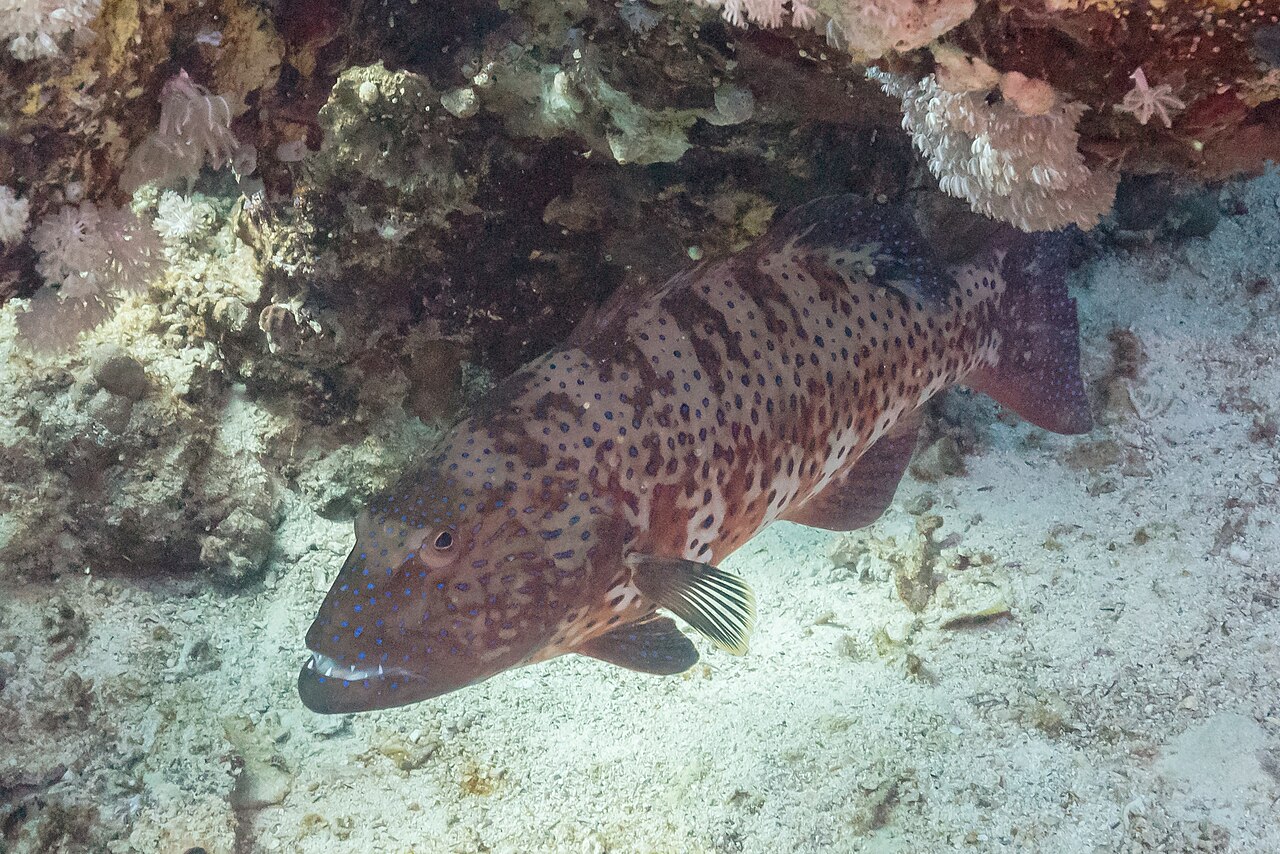
The roving coral grouper has a massive range stretching from the Red Sea across the Indian Ocean to Fiji and Tonga. A subspecies, Plectropomus pessuliferus marisrubri, is sometimes classified as a separate species entirely. True to its name, this fish is more active and mobile than other coral trout species, often roving across reef structure rather than sitting in one ambush spot. It is a large species capable of exceeding 30 pounds. Coloration is dark reddish brown with blue spots and lines. Divers in the Maldives, the Red Sea, and East Africa are most likely to encounter this species. It is an impressive fish on the reef and an even more impressive catch on a spear.
7. Marbled Coral Trout (Plectropomus punctatus)

The marbled coral grouper is the most geographically restricted species in the genus. It is found only in the western Indian Ocean, from Kenya and Mozambique south to South Africa, and across to Madagascar, the Seychelles, Mauritius, and the Chagos Archipelago. It is absent from the Red Sea and the Asian coast. Juveniles are dark brown with random short dashes across the body and a red eye. As they mature, the dashes fade and adults develop a marbled orange-red-brown pattern that sets them apart from the more uniformly spotted species. This is a fish most divers will never see unless they are diving the East African coast or the island nations of the western Indian Ocean. For divers heading to Mozambique or Madagascar, the marbled coral trout is one of the unique species to look for.
Spearfishing Tips for Coral Trout
Regardless of which species you are targeting, coral trout share some common behaviors that affect how you hunt them. They are ambush predators that sit under ledges, in coral caves, and along drop-offs. They have an unfortunate habit of sitting still and staring at divers, which makes them relatively easy targets. That accessibility is exactly why sustainable harvest practices matter.
Use a compact speargun in the 90cm to 1m range with moderate rubber power. Overpowered setups drive shafts into the reef and damage both your gear and the coral. Place your shot behind the gill plate for a clean kill. In shark-heavy waters like the Great Barrier Reef, get your fish to the boat immediately rather than keeping it on a stringer.
Always check local regulations before hunting coral trout. In Queensland, the minimum size is 38cm with bag limits that vary by zone. Some species like the squaretail form spawning aggregations that deserve protection during reproductive periods. Be aware that coral trout can carry ciguatera toxin, particularly larger individuals and those from certain reef systems. Ask local divers about ciguatera risk in the area before keeping large specimens.
Knowing all seven species makes you a better diver and a more responsible hunter. Whether you are working the Great Barrier Reef, exploring the Coral Triangle, or planning a trip to Mozambique, these fish are worth understanding beyond just their taste. If you want to level up your reef diving skills, check out the SpearFactor Master Class at spearfactor.com for training that covers species identification, shot placement, and reef hunting techniques. And download the free Emergency Procedures checklist before your next trip at freedivingsafety.com.
Photo credits: Species photos courtesy of Wikimedia Commons contributors and iNaturalist (P. punctatus photo by jeyre, CC BY). Used under Creative Commons license.


Comments