


Understanding Ciguatera Poisoning: Which Tropical Fish Are Safe to Eat

You have just landed a beautiful trophy fish on a tropical reef dive. The water was warm, the visibility was perfect, and you are already imagining the sashimi. But before you take that first bite, there is something every diver who hunts tropical reef fish needs to understand: ciguatera poisoning. It is one of the most common forms of seafood poisoning in the world, it is virtually undetectable by taste or smell, and cooking does not destroy it. This guide covers everything you need to know to protect yourself.
What Is Ciguatera Poisoning?
Ciguatera fish poisoning (CFP) is a foodborne illness caused by eating reef fish that have accumulated ciguatoxins in their flesh. These natural toxins originate from microscopic organisms called dinoflagellates -- specifically species in the genus Gambierdiscus -- that live on and around coral reefs, attached to macroalgae and dead coral surfaces. When herbivorous fish graze on these surfaces, they ingest the dinoflagellates and the toxins they produce. The toxins then bioaccumulate and biomagnify up the food chain as larger predators eat smaller fish.
This is the critical concept that every diver needs to internalize: the larger and older a reef predator is, the more toxin it has potentially accumulated over its lifetime. A two-pound reef fish may carry negligible levels of ciguatoxin. That same species at twenty pounds could carry enough toxin to put you in the hospital. The toxin does not affect the fish at all -- they look healthy, behave normally, and taste perfectly fine. There is no reliable way to detect ciguatoxin by looking at, smelling, or tasting the fish.
An estimated 50,000 to 500,000 people worldwide suffer from ciguatera poisoning each year, though the actual number is likely much higher due to underreporting and misdiagnosis. It is the most commonly reported marine toxin disease globally.
How the Toxin Moves Through the Food Chain
Understanding the bioaccumulation pathway is key to making smart decisions about which fish to keep and which to release.
It starts at the bottom. Gambierdiscus dinoflagellates produce ciguatoxin precursors as they grow on reef surfaces, particularly on dead coral and macroalgae. These organisms thrive in warm, tropical waters and tend to bloom after reef disturbances such as storms, coral bleaching events, or construction that damages reef structures.
Herbivorous fish -- surgeonfish, parrotfish, rabbitfish, and others -- graze on algae-covered surfaces and inadvertently consume the dinoflagellates. At this level, toxin concentrations are relatively low. A small herbivore that has been feeding in a ciguatera-affected area may carry trace amounts that would not cause illness in a human.
The problem escalates at the next trophic level. Carnivorous reef fish that feed on those herbivores accumulate the toxins from every fish they eat. A grouper that consumes hundreds of smaller fish over years concentrates ciguatoxin in its liver, flesh, and other organs. The toxin is heat-stable, lipid-soluble, and does not break down over time -- it just keeps building up. At the apex of the reef food chain, large predators like barracuda, moray eels, and big jacks can carry extremely high concentrations.
Highest-Risk Species: Fish to Think Twice About
Not all tropical reef fish carry the same level of risk. The following species are most commonly implicated in ciguatera cases, particularly when taken from known hotspot regions.
Great Barracuda (Sphyraena barracuda)
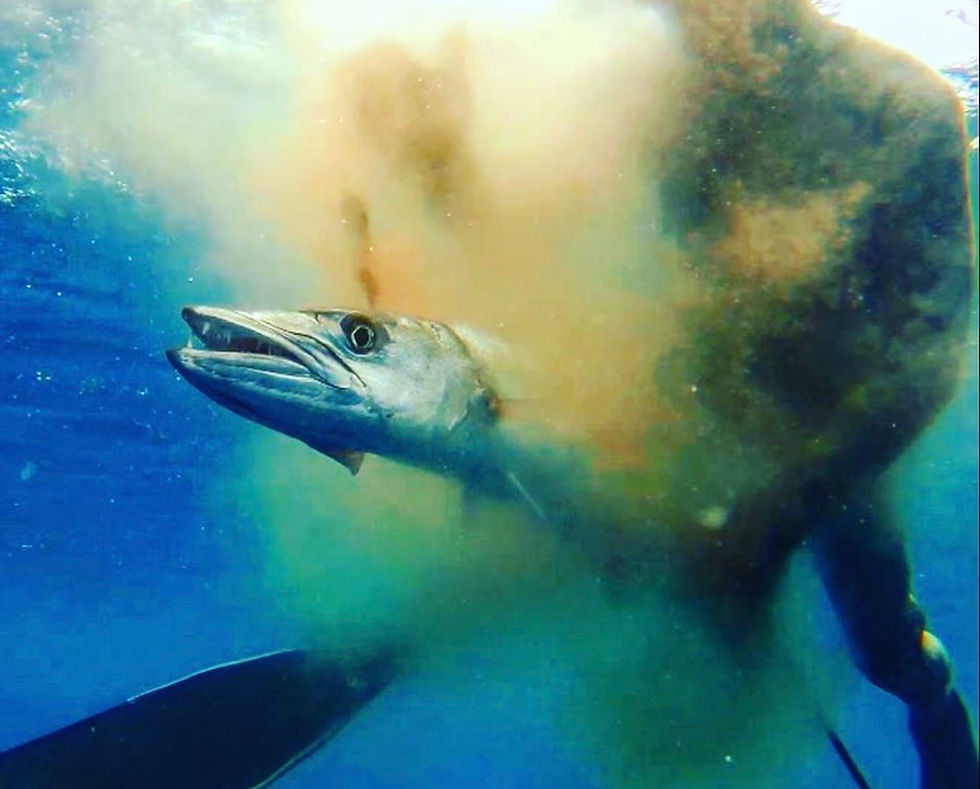
Barracuda are the single most commonly cited species in ciguatera cases. Their position as apex reef predators, long lifespan, and tendency to remain in a home territory for years makes them perfect toxin accumulators. In many parts of the Caribbean and Pacific, locals will not eat barracuda at any size. In other areas, small barracuda under a certain weight may be considered acceptable. The general rule among experienced tropical divers: avoid eating barracuda over five pounds from any reef in a known ciguatera zone. Many experienced divers simply avoid eating barracuda entirely when diving tropical reefs.
Moray Eels
Moray eels are high on the risk list for the same reasons as barracuda: they are long-lived apex predators that stay on the same reef for extended periods. Giant morays (Gymnothorax javanicus) and green morays (Gymnothorax funebris) are especially implicated. Some Pacific island cultures traditionally eat moray eels, but the practice carries significant ciguatera risk. Studies have found some of the highest ciguatoxin concentrations ever recorded in moray eel tissue.

Large Jacks (Caranx species)
Large jacks, particularly horse-eye jacks (Caranx latus) and black jacks (Caranx lugubris), are frequently involved in ciguatera cases. These fish feed heavily on reef fish and can grow large enough to accumulate dangerous toxin levels. The risk increases significantly with size. Smaller jacks are generally safer, but in high-risk areas, even mid-size jacks can be problematic. The black jack is considered one of the most consistently ciguatoxic fish in the Pacific.
Large Grouper

Grouper species are widely consumed throughout the tropics, and smaller individuals are generally considered safe in most regions. The risk climbs with size. Large grouper over ten to fifteen pounds from ciguatera-endemic areas deserve caution. Species like the yellowfin grouper (Mycteroperca venenosa) -- note the telling species name -- are particularly implicated in the Caribbean. Nassau grouper (Epinephelus striatus) and other large reef-resident grouper species also carry elevated risk in hotspot areas.
Hogfish and Snapper (Regional Risk)
Hogfish (Lachnolaimus maximus) and certain snapper species occupy a middle tier of risk. They are not apex predators in the same way as barracuda, but they are carnivorous reef residents that can accumulate toxins in certain areas. Hogfish in parts of the Caribbean -- particularly around some Bahamian islands and areas of the Florida Keys -- have been linked to ciguatera cases. Large snappers, particularly red snapper and cubera snapper over about ten pounds in ciguatera zones, also warrant attention. In many regions, these species are eaten regularly without issue, but the risk is location-dependent.
Geographic Hotspots: Where Ciguatera Risk Is Highest
Ciguatera is fundamentally a tropical and subtropical problem. The Gambierdiscus dinoflagellates that produce the toxin require warm water, and the risk zone generally spans the belt between 35 degrees north and 35 degrees south latitude. However, with ocean temperatures rising, the geographic range is expanding. Within that zone, certain regions carry significantly higher risk.

The Caribbean is the most well-documented ciguatera hotspot in the Western Hemisphere. The U.S. Virgin Islands, Puerto Rico, parts of the Bahamas, and many Lesser Antilles islands have high ciguatera incidence rates. Cuba, the Cayman Islands, and Jamaica also report significant numbers of cases. Within the Caribbean, risk can vary dramatically from one reef to another -- a fish caught on one side of an island may be perfectly safe while the same species from a reef a few miles away could be toxic.
The Pacific Islands represent the global epicenter of ciguatera. French Polynesia has some of the highest reported incidence rates in the world. The Marshall Islands, Kiribati, Fiji, Tuvalu, the Cook Islands, and parts of Hawaii (particularly around certain reef systems) all have significant ciguatera histories. Australia's Great Barrier Reef and the waters of New Caledonia are also well-documented risk areas.
Parts of Southeast Asia, particularly reef systems in the Philippines, Indonesia, Malaysia, and parts of Thailand, carry ciguatera risk. The Indian Ocean, including the Maldives, Mauritius, and Madagascar, also has documented cases. While these areas may have lower reported incidence than the Caribbean or Pacific, this is partly due to underreporting rather than true absence of risk.
An important and concerning trend: as ocean temperatures rise due to climate change, Gambierdiscus is expanding into previously unaffected waters. Cases have been reported from the Canary Islands, Madeira, and even parts of the Mediterranean. Areas that were historically safe may not remain so indefinitely.
Recognizing the Symptoms
Ciguatera symptoms typically appear within two to six hours of eating contaminated fish, though onset can be delayed up to 24 to 48 hours in some cases. The illness presents in two phases that often overlap.
Gastrointestinal symptoms usually come first: nausea, vomiting, diarrhea, and abdominal cramps. These can range from mild to severe and typically last a few days. Many people mistake this phase for ordinary food poisoning, which contributes to underreporting.
The neurological symptoms are what distinguish ciguatera from other foodborne illnesses, and they can be deeply unpleasant. The hallmark symptom is cold allodynia, commonly described as "hot-cold reversal" -- cold objects feel burning hot to the touch, and cold water feels like it is scalding your skin. This bizarre sensory distortion is nearly unique to ciguatera and is a strong diagnostic indicator. Other neurological symptoms include tingling and numbness in the extremities (hands, feet, lips, tongue), itching (sometimes severe and widespread), muscle aches, fatigue, headaches, dizziness, and in severe cases, changes in heart rate and blood pressure.
While ciguatera is rarely fatal, it can be debilitating. The gastrointestinal symptoms usually resolve within a week, but the neurological symptoms can persist for weeks, months, or in severe cases, years. Some people report recurring symptoms triggered by consuming any fish, alcohol, caffeine, nuts, or certain other foods for months after the initial poisoning. There is also evidence that each subsequent case of ciguatera tends to be more severe than the last, as the body becomes sensitized to the toxin.
How to Reduce Your Risk
There is no guaranteed way to avoid ciguatera if you eat tropical reef fish, but you can significantly reduce your risk by following these guidelines.
Avoid large reef predators. This is the single most effective rule. The bigger the fish, the more toxin it has accumulated. A general guideline is to avoid eating reef-associated predatory fish over about five to six pounds in known ciguatera areas. Some experienced tropical divers set even lower thresholds depending on the region.
Ask locals. This cannot be overstated. Local fishermen and divers who have lived and fished in an area for years have invaluable knowledge about which species are safe to eat, which reefs to avoid harvesting from, and what sizes are considered acceptable. In many island communities, this knowledge has been passed down through generations. Before you eat anything you have caught in unfamiliar tropical waters, ask the people who live there. Specific reefs can be ciguatera hotspots while neighboring reefs are clean -- locals know which is which.
Avoid the highest-risk species entirely in hotspot regions. In the Caribbean and parts of the Pacific, many experienced divers simply do not eat barracuda, moray eel, or large jacks regardless of size. The risk-reward calculation does not justify it when there are plenty of safer species to eat.
Eat pelagic fish instead of reef fish when possible. Open-water pelagic species like tuna, mahi-mahi, and wahoo are generally not associated with ciguatera because they feed in the water column rather than on the reef food chain. If you are diving in a known ciguatera area and want to bring home fish for the table, targeting pelagic species is one of the safest approaches.
Avoid the head, roe, liver, and internal organs. Ciguatoxin concentrations are typically highest in the liver, intestines, and head of a fish. Even if you decide to eat a reef fish from a borderline area, discarding these parts reduces your exposure.
Do not rely on folk testing methods. You may hear that feeding a piece of fish to ants or cats, or placing a silver coin on the flesh, can detect ciguatoxin. None of these methods are reliable. The only proven detection methods involve laboratory testing, and even those are not routinely available. Cooking, freezing, smoking, salting, drying, and marinating do not destroy ciguatoxin. The toxin is completely heat-stable and acid-stable.
Start with a small portion. If you are eating a reef species for the first time in a new area and you are uncertain about the ciguatera risk, eat a small amount and wait 12 to 24 hours before eating more. This will not prevent ciguatera entirely, but it may limit the severity of symptoms if the fish does turn out to be toxic.
What to Do If You Suspect Ciguatera Poisoning
If you develop symptoms after eating tropical reef fish -- especially the telltale hot-cold reversal or tingling in your extremities -- seek medical attention promptly. There is no antidote for ciguatera, but medical professionals can provide supportive care that makes a significant difference in recovery.
Intravenous mannitol has been used as a treatment, particularly when administered early (within the first 24 to 48 hours of symptom onset). While its effectiveness is debated in the medical literature, some patients report significant relief. Other treatments focus on managing symptoms: anti-nausea medications, IV fluids for dehydration from vomiting and diarrhea, and medications to address neurological symptoms. Gabapentin and amitriptyline have been used for persistent neurological symptoms with some success.
After a ciguatera episode, avoid fish, alcohol, nuts, and caffeine for at least several weeks, as these can trigger symptom recurrence. Follow your doctor's guidance on when to reintroduce these foods. Keep a portion of the suspected fish frozen if possible -- this can help with diagnosis and reporting.
Lower-Risk Tropical Species for the Table
The good news is that not all tropical fish carry high ciguatera risk. Many species are widely eaten across the tropics with minimal concern. Pelagic species (tuna, mahi-mahi, wahoo) that feed in open water rather than on the reef food chain are generally safe. Smaller reef herbivores and omnivores from areas without known ciguatera problems are typically fine. Lionfish, which are invasive in the Caribbean and now targeted by many divers, are generally considered low-risk for ciguatera due to their small size and relatively low position on the food chain, though some caution is advised in heavily affected areas. Small to mid-size snappers and groupers from areas without a strong ciguatera history are commonly eaten safely.
The key principle remains: the risk is a function of species, size, and location. A smaller fish, from a lower trophic level, caught in an area without a known ciguatera problem, carries very low risk. A large, old, apex predator from a known hotspot reef carries the highest risk.
The Bottom Line
Ciguatera poisoning is a real and significant risk for anyone who harvests and eats tropical reef fish. It is not something to be paranoid about, but it absolutely demands respect and awareness. The toxin is invisible, tasteless, and indestructible by cooking. Your best defenses are knowledge, local intelligence, and conservative choices about which species and sizes to keep.
Before any tropical diving trip where you plan to eat your catch, do your homework on the specific area. Talk to local divers and fishermen. Know which species and which reefs carry the highest risk. Set personal size limits that err on the side of caution. And if a local tells you not to eat something from a particular reef, listen to them -- that advice could save you weeks or months of misery.
Photo credits: School of great barracuda (Sphyraena barracuda) at Ras Muhammad National Park, Egypt, by Diego Delso, delso.photo, via Wikimedia Commons (CC BY-SA 4.0). Giant moray eel (Gymnothorax javanicus) at Ras Katy, Sharm el-Sheikh, Egypt, by Diego Delso, delso.photo, via Wikimedia Commons (CC BY-SA 4.0).


Comments