


Freshwater Spearfishing in the Interior States: The Ultimate Guide to Diving Inland Waters
- Bret Whitman

- Mar 1
- 14 min read
Updated: Mar 2
When most people think of spearfishing, they picture clear blue ocean water, coral reefs, and tropical fish. I get it — that's where most of the media attention goes. But here's the thing: some of the most exciting, accessible, and rewarding spearfishing in America happens hundreds of miles from the nearest coastline. Freshwater spearfishing in the interior states is growing fast, and if you haven't tried it yet, you're missing out.
Over the years through SpearFactor, I've talked to hundreds of divers who assumed they couldn't get into spearfishing because they don't live near the ocean. That's just not true. From spring-fed lakes in the Ozarks to massive reservoirs in Wyoming, from clear-water quarries in the Midwest to gar-filled rivers in Texas, there is a world of freshwater spearfishing waiting for you — and you don't need a plane ticket to get started.
This guide covers everything you need to know: where it's legal, how to find clear water, what gear to use, which species to target, and how to stay safe. Let's dive in.

Is Freshwater Spearfishing Legal? A State-by-State Overview
This is always the first question, and the answer is: it depends. Freshwater spearfishing regulations vary wildly from state to state, and even within states, the rules can differ by county, body of water, and target species. The single most important thing you can do before getting in the water is check your state's fish and wildlife department website for current regulations. That said, here's a general overview of the landscape as of 2026.
States Where Freshwater Spearfishing Is Broadly Legal
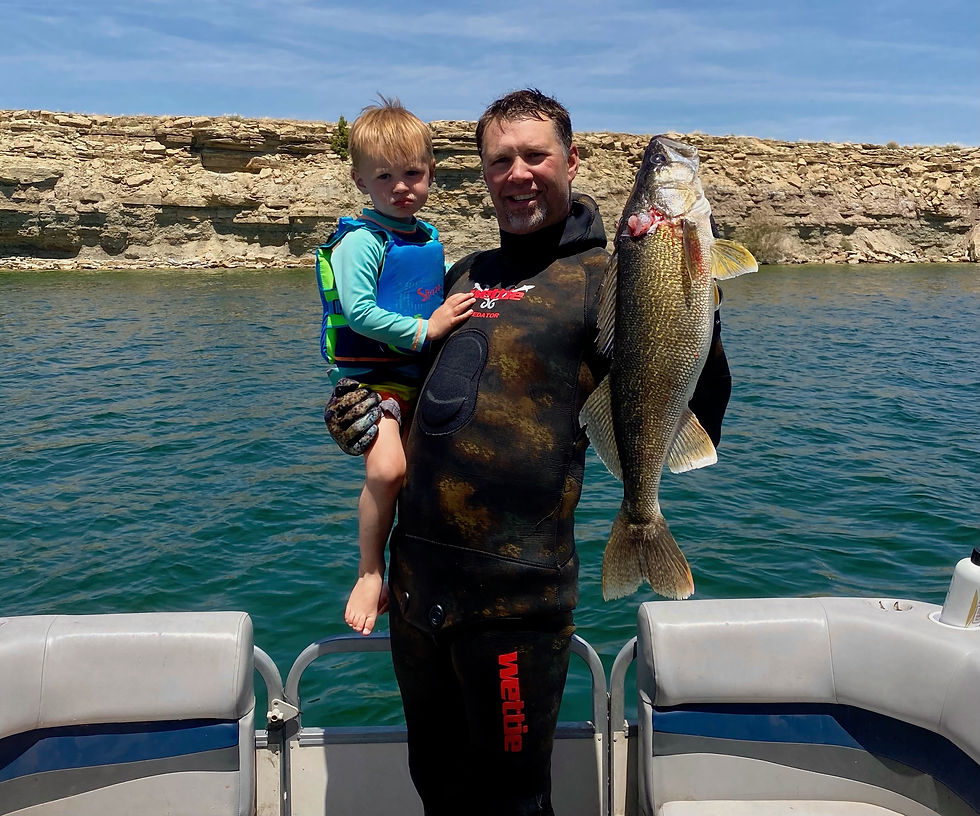
Wyoming is one of the most spearfishing-friendly states in the country. You can legally spear gamefish — trout, bass, walleye, and more — with a standard fishing license. Walleye limits are reduced for divers (2 per day versus 6 for anglers), but the access is remarkable. Utah, New Mexico, and several other western states also permit gamefish spearfishing in freshwater with varying restrictions.
States with Non-Game and Rough Fish Provisions
This is the most common scenario. States like Texas, Missouri, Oklahoma, Arkansas, Tennessee, Kentucky, Indiana, Illinois, and many others allow spearfishing for non-game species — typically carp, gar, buffalo, drum, bowfin, and catfish. These are often the most abundant fish in the lake, and in many cases there are no bag limits or size restrictions on non-game species.
Recent Regulatory Changes
Michigan made headlines by opening Great Lakes spearfishing for walleye, pike, and lake trout starting in 2026. Oregon's 2026-2027 regulations now allow spearfishing in rivers and streams for bass and walleye with no limit — a move designed to help reduce non-native fish pressure on native salmon and steelhead. These expanding regulations reflect a growing recognition that divers can be effective and selective harvesters.
States Where Freshwater Spearfishing Is Prohibited
Florida prohibits spearfishing in all freshwater, including possession of a speargun in or on freshwater. A handful of other states have outright bans or severe restrictions. Never assume — always verify before you get in the water.
In virtually every state where freshwater spearfishing is legal, you need a valid fishing license. Some states require additional permits or stamps for specific species or bodies of water. The license is usually inexpensive and available online from your state's wildlife agency.
How to Find Clear Water: Scouting with Google Earth
Visibility is everything in spearfishing. In the ocean, you might take 30-foot visibility for granted. In freshwater, especially in the interior states, you might be working with 3 to 10 feet on a good day. But clear water exists inland — you just have to know where to look.

Using Google Earth to Scout
Before you drive three hours to a lake, spend thirty minutes on Google Earth. It's one of the most underrated tools in a diver's arsenal. Pull up satellite imagery of your target lake or river. Water color tells you a lot. Deep blue or dark green usually indicates depth and reasonable clarity. Tan, brown, or light green often means suspended sediment or algae. Look for areas where the water transitions from shallow to deep — drop-offs are both easier to spot from satellite and tend to concentrate fish.
Use the historical imagery feature in Google Earth Pro (it's free) to compare the same body of water across different seasons. You'll start to see patterns — when clarity peaks, when algae blooms occur, and how water levels fluctuate throughout the year. This kind of pre-dive homework saves you wasted trips and puts you on clear water more consistently.
Spring-Fed Lakes and Rivers
Spring-fed bodies of water are your best friend for freshwater visibility. Natural springs push cold, filtered groundwater into lakes and rivers at a constant rate, creating pockets of clarity that can rival tropical water. The Ozarks region of Missouri and Arkansas is loaded with spring-fed rivers — places like the Current River, Eleven Point River, and Big Spring can offer visibility of 20 to 40 feet or more depending on conditions. In Texas, the San Marcos River and Comal River are spring-fed and famously clear, though regulations may limit what you can do there. When you're scouting on Google Earth, look for that telltale deep blue-green color coming from a spring source.
Quarries
Abandoned quarries that have filled with groundwater over decades are hidden gems for freshwater divers. The rock walls and deep basins create interesting structure, the groundwater is typically very clear, and fish tend to concentrate around the edges and shelves. Quarries like Banning Quarry in Minnesota, Blue Hole in Pennsylvania, and various quarries across the Midwest offer excellent visibility and accessible diving. One tip: quarries that are actively managed as dive sites may have restrictions on spearfishing, so always check the rules before you bring your speargun.
Tailwaters Below Dams
The water released from the bottom of a dam is typically cold and clear because sediment has settled in the reservoir above. Tailwater sections of rivers below major dams can offer surprisingly good visibility. These are also prime habitat for trout in states that stock them, and they tend to hold good populations of catfish and other species worth targeting.
Seasonal Visibility Patterns
In most of the interior states, fall is the magic season for visibility. Water levels drop, algae dies off, runoff is minimal, and biological activity slows. Late summer through fall is your window. Spring is typically the worst — snowmelt and rainfall send sediment into every waterway. Summer can be hit or miss depending on algae blooms and thunderstorm frequency.
Heavy rain is the enemy. If there's been significant rainfall in the past 48 to 72 hours, visibility is going to suffer. Monitor weather patterns and plan your dives during extended dry periods for the best conditions.
Best Freshwater Species to Target
Common Carp

Carp are everywhere, they're big, they're easy to find, and in most states they're completely unregulated because they're invasive. During the spring spawn, carp move into shallow water in huge numbers and are incredibly accessible to divers. They're not picky about habitat — you'll find them in lakes, rivers, ponds, and reservoirs across every interior state. Carp are also surprisingly good table fare when prepared properly. Smoked carp is excellent, and carp dip is a staple at fish fries across the Midwest.
Gar
Longnose gar, shortnose gar, and spotted gar are found throughout the Midwest and South. Alligator gar — the monster of freshwater — can exceed 200 pounds in Texas and the Mississippi River system. Gar are armored with thick, diamond-shaped scales that can deflect a poorly placed shot, so shot placement matters. Aim behind the head or through the gill plate. A strong, sharp tip is essential — Grapple-style tips work well on gar because they can punch through the tough scales.
Buffalo and Drum
Bigmouth buffalo, smallmouth buffalo, and freshwater drum are abundant throughout the Mississippi River drainage. They're large, often traveling in schools, and are legal to spear in most states. Buffalo can weigh 30 to 50 pounds and put up a strong fight on the shaft. These are underrated fish that a lot of divers overlook.
Bowfin
Bowfin — also called mudfish or dogfish — are prehistoric-looking predators found across the eastern United States. They're aggressive, they're tough, and they're legal to spear in most states where they're found. They prefer weedy, shallow habitat and can actually breathe air, so you'll sometimes spot them near the surface. They make for an exciting hunt in tight quarters.

Catfish

Channel catfish, blue catfish, and flathead catfish are found in virtually every interior state. They can grow enormous — blue cats over 100 pounds have been taken from the Mississippi, Missouri, and Ohio River systems. In many states, catfish are classified as gamefish, which may restrict or prohibit spearfishing for them. Always check your local regulations before targeting catfish.
Invasive Species: Asian Carp
Silver carp, bighead carp, and grass carp have invaded waterways across the Midwest and South. Many states actively encourage their removal by any means, including spearfishing. Silver carp are the ones that famously jump out of the water when startled by boat motors — some divers have reported shooting them mid-air, though I'd recommend focusing on the ones still in the water. Taking out invasive species is one of the most conservation-positive things you can do as a diver, and it's a great way to justify your new gear purchases.
Gamefish Where Legal
In states like Wyoming, Utah, and New Mexico, you can legally spear trout, bass, walleye, and other gamefish. This opens up a completely different world of freshwater spearfishing — clear mountain lakes with rainbow trout, deep reservoirs with walleye, and everything in between. If your state allows it, take advantage of this opportunity. It's some of the best freshwater diving you can do.
Gear for Freshwater Spearfishing
Pole Spears vs Spearguns
For most freshwater situations, a pole spear is the way to go. Freshwater encounters tend to happen at close range — often within 3 to 6 feet — because visibility is limited. A 5 to 7 foot pole spear is maneuverable, fast to reload, and effective at these distances. You don't need a 100cm bluewater gun when you're shooting carp at arm's length.
That said, if you're diving clear lakes in Wyoming for walleye at 15 to 20 feet of visibility, a small-to-mid-size speargun in the 60 to 90cm range gives you more range and power. Match your gear to your conditions. There's no single right answer — it depends on the water you're diving.
Wetsuits
Freshwater is almost always colder than you expect. Even in summer, lakes and rivers in the interior states can be 55 to 70 degrees below the thermocline. A 5mm wetsuit is a good starting point for most conditions. If you're diving quarries or spring-fed rivers, consider a 7mm or add a hooded vest. Cold water shortens your breath-hold and saps your energy faster than anything else. Don't try to tough it out — proper thermal protection means more time in the water, longer breath-holds, and a safer dive.
Masks and Fins
Low-volume masks with dark silicone skirts are ideal for freshwater — they reduce light entry and help your eyes adjust in murkier conditions. Standard freedive fins work fine in lakes. For rivers with current, shorter and stiffer fins give you more control and let you hold position without fighting the water.
Dive Flags and Safety Gear
This is non-negotiable. Freshwater bodies are shared with recreational boaters, jet skis, kayakers, and anglers. A dive flag on a float is legally required in most states and absolutely essential for your safety. Boat traffic is one of the biggest hazards in freshwater diving. Make yourself visible. Attach a float line from your weight belt or speargun to a surface float with a clearly displayed dive flag.
Lights and Low-Visibility Tools
In low-visibility water, a compact dive light can be the difference between seeing fish and seeing nothing. Even during the day, a light helps you peer into structure, undercuts, and shaded areas where fish hide. It also helps your dive buddy keep track of you in murky conditions.
Stringers and Catch Bags
A stringer or mesh catch bag keeps your fish secure and your hands free. In freshwater with limited visibility, the last thing you want is to lose your catch because it slipped off a belt clip. A floating stringer attached to your float line works well and keeps the fish at the surface and away from your body.
River vs Lake Spearfishing: Different Worlds
Lake Techniques
Lakes offer more predictable conditions. Find structure — rock piles, submerged timber, weed edges, drop-offs — and work them systematically. Fish in lakes tend to relate to structure, so if you find the structure, you'll find the fish. Use Google Earth to identify these features before you get in the water, then confirm them in person.
In clear lakes, you can use more of a hunt-and-stalk approach similar to ocean spearfishing. In murky lakes, slow down, stay near the bottom, and let fish come to you. Patience pays off. Carp and buffalo will often cruise through the shallows in predictable patterns, especially early in the morning.
River Techniques
River spearfishing is a different animal. Current is always a factor, and it changes everything about how you approach a dive. Work upstream when possible so you're moving toward fish rather than being pushed past them. Use eddies, boulders, and bends in the river as rest points and ambush spots.
Fish in rivers tend to face upstream into the current, which means you can approach from behind more easily — but the current is also pushing you and creating noise. Move slowly, use the bottom terrain for cover, and time your shots carefully.
One major advantage of river spearfishing: the current naturally refreshes the water, which means visibility can change rapidly for the better after the initial sediment settles from your entry. Also, river fish tend to be concentrated in specific holds and runs, making them more predictable once you learn to read the water.
Top Freshwater Spearfishing Destinations in the Interior States
Wyoming
Wyoming is arguably the best state in the country for freshwater spearfishing because of its liberal regulations allowing gamefish harvest. Lake DeSmet, Boysen Reservoir, Glendo Reservoir, and dozens of alpine lakes offer clear water and diverse species. Walleye is the premier eating fish here, but rainbow trout in mountain lakes offer a truly unique spearfishing experience you won't find anywhere on the coast.
Arizona and Nevada
Lake Mead, Lake Mohave, Lake Powell, and Lake Pleasant all allow spearfishing for striped bass. The desert reservoirs offer clear water and warm conditions, with stripers that school up in massive numbers during certain times of year. The combination of clear water and aggressive fish makes this some of the most action-packed freshwater diving in the country.
Texas
Texas has enormous water resources and allows spearing of non-game fish throughout the state. Sam Rayburn Reservoir, Lake Fork, and the many rivers of the Hill Country offer gar, carp, buffalo, and catfish where legal. Alligator gar in the Trinity River system is a bucket-list freshwater hunt — these dinosaur-like fish can top 200 pounds and require serious gear and skill to land.
Michigan
With the 2026 opening of Great Lakes spearfishing for walleye, pike, and lake trout, Michigan just became one of the most exciting freshwater spearfishing destinations in the country. The Great Lakes offer visibility and fish size that rivals many ocean environments. Lake Michigan and Lake Superior in particular can offer 20 to 40 feet of visibility on good days.
Oregon
The new 2026-2027 regulations allowing river and stream spearfishing for bass and walleye with no limit make Oregon a frontier for freshwater divers. The Columbia River and its tributaries hold massive populations of non-native bass and walleye. Oregon is essentially asking divers to come help remove invasive species — and that's an invitation worth accepting.
Missouri and Arkansas: The Ozarks
The Ozarks have some of the clearest freshwater in the United States, thanks to abundant natural springs. The Current River, Eleven Point River, and Jacks Fork in Missouri, along with the Buffalo River in Arkansas, offer visibility that can reach 20 to 40 feet. Target species are more limited here — primarily non-game fish like carp, gar, and drum — but the diving experience is hard to beat. If you want to feel like you're spearfishing in tropical water without leaving the Midwest, the Ozarks are your spot.
Safety Considerations Unique to Freshwater
Boat Traffic
This is the number one safety concern in freshwater. Unlike in the ocean where boat traffic is often predictable and channel-based, boats on lakes can come from any direction at any speed. Always dive with a properly displayed dive flag. Stay close to your float. Avoid high-traffic areas near boat ramps, marinas, and popular skiing or wakeboarding zones. Weekend afternoons on popular lakes can be genuinely dangerous — plan your dives for early mornings or weekdays when possible.
Currents and Entanglement
Rivers have obvious current, but lakes have current too — inflows, outflows, wind-driven current, and thermocline layers can all move you around. Old fishing line, submerged rope, discarded nets, and underwater vegetation are all entanglement hazards. Always carry a sharp knife on your person — not in your gear bag, on your body where you can reach it with either hand. If you're diving around submerged timber, move deliberately and keep your gear streamlined.
Cold Water
Hypothermia is a real risk in freshwater diving, even in summer. Spring-fed rivers and deep quarries can be shockingly cold. Cold water reduces your breath-hold, impairs your judgment, and saps your energy. Wear adequate thermal protection, know the signs of hypothermia — shivering, confusion, loss of coordination — and get out of the water before you get dangerously cold.
Download our free Emergency Procedures checklist at SpearFactor.com so you have a reference for handling cold-water emergencies and other situations on the water. Print it, laminate it, and keep it in your gear bag.
Wildlife Concerns
Snapping turtles are found in freshwater throughout the eastern and central United States. They're generally not aggressive toward divers, but they can deliver a serious bite if provoked or startled. Give them space. Water moccasins — also called cottonmouths — are a concern in the southern states. They're semi-aquatic venomous snakes that can be encountered both in and around the water. Learn to identify them and avoid areas where they're commonly found.
Alligators are present in the southern states from Texas to the Carolinas. If you're diving in gator country, be aware of your surroundings, avoid areas with known alligator activity, and never dive at dusk or dawn when they're most active. Keep speared fish on a stringer away from your body, because a bleeding fish on your hip is exactly the kind of signal you don't want to send.
Low Visibility Protocols
When visibility drops below 5 feet, everything gets harder — and more dangerous. Stay close to your buddy, use hand signals rather than relying on visual contact at a distance, and seriously consider whether conditions are safe enough to continue. There is no shame in calling a dive because of poor visibility. The fish will be there when conditions improve.
Make sure you and your dive buddy have taken a freediving safety course. I recommend the free course at freedivingsafety.com — it covers the essential rescue skills every diver needs, including techniques that could save your buddy's life in an emergency. Never dive alone, no matter how confident you are.
Tips for Saltwater Divers Transitioning to Freshwater
If you're coming from ocean spearfishing, a few things will surprise you. First, buoyancy is different. Freshwater is less dense than saltwater, so you'll need less weight. If you wear 8 pounds in the ocean, try 5 to 6 in freshwater and adjust from there. You don't want to be over-weighted in a lake with a silty bottom — every movement will cloud the water if you're dragging along the bottom.
Second, the fish behave differently. Freshwater fish are often warier than reef fish because they deal with more fishing pressure in confined environments. Approaches need to be slower and quieter. On the flip side, many freshwater species — especially carp during spawn — can be absurdly easy compared to trying to get within range of a pressured reef fish.
Third, your senses will adjust. The absence of salt means no stinging eyes if your mask floods, but the water often tastes and smells different. Visibility will feel claustrophobic at first if you're used to 50-foot ocean vis. Give yourself a few dives to adjust mentally — your instincts will adapt faster than you think.
Finally, enjoy the accessibility. You don't need a boat to reach great freshwater spearfishing. Many of the best spots are accessible from shore, and your entire kit fits in a backpack. No charter fees, no seasickness, no fighting for parking at the boat ramp — just you, your pole spear, and a lake.
Ready to Dive In?
Freshwater spearfishing in the interior states is one of the most underrated adventures in the diving world. Whether you're a landlocked diver looking to get started or a salty spearo looking for something new, there's incredible freshwater hunting waiting within driving distance of wherever you are.
If you want to build your skills from the ground up, check out the SpearFactor Master Class at spearfactor.com. It covers everything from breath-hold technique to fish identification, and the principles translate directly to freshwater diving. And don't forget to download our free Emergency Procedures checklist — because safety is the foundation of every good dive.
I'll see you in the water. It just might be a lake this time.


Well written and informative as always Bret! One state you missed is South Dakota, same liberal bag limits and species list as Wyoming, with some great big walleye to boot! The Freshwater National Tournament will be held on Lake Oahe in SD at the end of August if anyone is interested in checking out one of the best lakes in the USA. Looking forward to the 2026 freshwater dive season, it should be a doozy!