


Bluefin Tuna in California: The 25x Boom the Data Proves

Updated: Apr 12

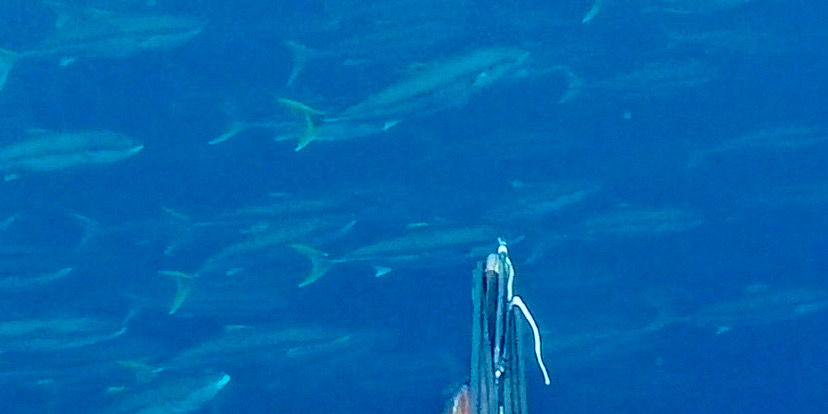
Pacific bluefin tuna are having a historic moment in California. After decades of decline that pushed the species to the brink, the population has rebounded so dramatically that catch quotas were increased 80% for 2025-2026. But the real story is in the water — and in the data.
We analyzed 7 years of California Department of Fish & Wildlife CPFV (Commercial Passenger Fishing Vessel) logbook data — 47,634 records covering 185,319 bluefin caught between 2019 and 2025. Here's what the data reveals about when, where, and why bluefin show up off California.
The Numbers Don't Lie: A 25x Explosion
In 2019, California CPFV boats landed just 2,191 bluefin tuna. By 2023, that number hit 52,405 — a 25-fold increase in four years. The International Scientific Committee confirmed the Pacific bluefin stock rebuilt a full decade ahead of schedule, and the Inter-American Tropical Tuna Commission responded by raising catch limits.
This isn't just more boats going out. The CPUE (catch per unit effort) — the most reliable measure of fish availability — shows a genuine population boom. More fish per hour fished, not just more hours fished.
When to Target Bluefin: The Season Is Expanding
The traditional bluefin window in Southern California was July through November. The CDFW data shows that window is getting wider every year:
• 2019: July – November (5 months) • 2021: June – November (6 months) • 2023: May – December (8 months) • 2025: April – December (9 months)
In April 2025, bluefin appeared in the CPFV data for the first time ever that early, with a CPUE of 2.57 fish per hour — the highest monthly rate in the dataset. Fewer boats were targeting them, but those that went out crushed it. Peak volume months remain August and September, but the early and late shoulder seasons are where the best catch rates hide.
Where They Are: 93% From Offshore and Island Waters
Bluefin are an offshore species, and the data confirms it. A full 93% of all CPFV-caught bluefin come from the Channel Islands and offshore fishing blocks. The top-producing blocks are 897, 869, 867, and 830 — all in the island zone between San Clemente Island and the Tanner/Cortez Banks.
Mainland San Diego and LA coast blocks contribute almost nothing to the CPFV bluefin catch. This is a bluewater game. If you're targeting bluefin, you're running offshore.
The Temperature Paradox: Cooler Water = More Bluefin
This is the most counterintuitive finding. When we cross-referenced monthly catch rates with NOAA water temperature data from San Diego (Station 9410170), we found a statistically significant negative correlation: warmer months actually produce lower bluefin CPUE (r = -0.29, p = 0.04).
The optimal temperature range is 62–64°F, with a CPUE of 1.93 fish per hour. This makes biological sense — bluefin are a cool-water tuna species, and upwelling events that drop surface temperatures also concentrate the baitfish (anchovy, sardine, squid) that bluefin follow.
For divers and anglers, the takeaway is clear: don't wait for the warmest water. Some of the best bluefin action happens during or right after upwelling events, when the water drops into the low 60s and the bait gets pushed into tight schools.
Reading the Temperature Break: Where Warm Meets Cold
Any experienced offshore angler knows this: the water near the coast can be 68–70°F on a summer day, but as you run offshore, you'll hit a sharp temperature drop — sometimes 5–8 degrees in less than a mile. That boundary where warm coastal water meets the cooler California Current is called a thermal front, and it's the single most important feature for finding bluefin.
Bluefin patrol the cool side of these temperature breaks. The front acts like a wall — baitfish (anchovy, sardine, squid) get pushed against it and compressed into dense schools, and bluefin ambush them along the edge. Research shows bluefin will pop in and out of warmer water to feed, but they consistently return to the cooler side. They tolerate water as cold as 55°F when actively chasing bait, but the sweet spot is right on that transition zone where 62–65°F water meets warmer surface water.
When you're running offshore and your surface temp gauge starts dropping, slow down. You're approaching the zone. The sharper the temperature gradient, the more concentrated the bait — and the more likely bluefin are holding on that edge.
Green Water vs. Blue Water: Follow the Color Change
Water color tells you almost as much as your temperature gauge. Green water means chlorophyll — phytoplankton blooms that attract the entire food chain from zooplankton up through baitfish and eventually to bluefin. Deep blue water looks beautiful but it's often a biological desert — clear and warm, but empty.
The magic zone is where green meets blue. That visible color change — sometimes a hard line you can literally see on the surface — marks the boundary where nutrient-rich upwelled water meets the cleaner offshore current. Bluefin work this seam. They cruise the blue side where visibility is better (making it easier to hunt) but dart into the green side where the bait is concentrated. Satellite chlorophyll-a imagery confirms this pattern: bluefin catch rates correlate with moderate chlorophyll levels and proximity to these color boundaries, not with the deepest blue water.
For divers heading offshore, look for the color break. If you're in solid green water with 10 ft of visibility, you're in the bait zone but may not see bluefin. If you're in solid blue with 80 ft of visibility, the bait has moved on. The sweet spot is that transition — 30–50 ft of visibility with a slight green tint, where you can see the fish coming but the food chain is still active around you.
Moon Phase: Full Moons Help You Find Them
Bluefin tuna showed the only statistically significant moon phase correlation in the entire CDFW dataset. Months with more new moon days had significantly lower CPUE (1.04 vs 1.54 fish per hour, p = 0.014). This likely reflects that bluefin feed and school near the surface more actively in moonlit conditions, making them easier to locate and target.
The State Record and What's Coming
California's state record bluefin stands at 395 pounds, 6 ounces — and with the population at historic highs and the season expanding, it's likely just a matter of time before that record falls. The 2025-2026 catch quota of 1,872 metric tons (an 80% increase) reflects the international scientific consensus that this stock is healthy and growing.
Water temperatures in 2026 are already running unseasonably warm — 68°F at La Jolla in late March, a number we usually don't see until mid-May. If patterns from 2025 hold, expect bluefin to show up even earlier this year.
Track Bluefin Conditions in Real Time
Our Fish & Dive Conditions tool now includes a dedicated Bluefin Tuna forecast, built on this CDFW dataset and calibrated against live ocean sensors. It factors in water temperature (favoring the 62-64°F sweet spot), upwelling events, moon phase, current strength, and seasonal patterns from 7 years of logbook data.
➡️ Check Bluefin Conditions Now → conditions.spearfactor.com
Key Takeaways
• Bluefin catches increased 25x from 2019 to 2023 (2,191 → 52,405) • Season expanding: was Jul-Nov, now Apr-Dec in warm years • 93% caught offshore at the Channel Islands and banks • Cooler water (62-64°F) produces the best catch rates • Find the temperature break — bluefin patrol the cool side where bait compresses • Work the green-to-blue color change — 30-50 ft viz with a green tint is the sweet spot • Full moon periods are significantly better for finding them • 2025-2026 quotas up 80% — the fishery is officially rebuilt • 2026 warm water may push the season earlier than ever
Data: California Department of Fish & Wildlife CPFV Logbooks (2019–2025), NOAA CO-OPS Station 9410170, NOAA Fisheries Pacific Bluefin Stock Assessment. Hero image: NOAA Fisheries (public domain).


Comments