


185,000 Bluefin Tuna and the Data That Changes How Divers Hunt Them

Updated: Apr 18

Between 2019 and 2025, California Department of Fish and Wildlife (CDFW) Commercial Passenger Fishing Vessel logbooks recorded 185,319 bluefin tuna catches off the Southern California coast. That dataset is massive — and what it reveals should change how every bluewater diver approaches these fish.
This isn't speculation or anecdotal advice. This is what the numbers actually say.
The Fishery Exploded 25x in Five Years
In 2019, CPFV boats logged 2,191 bluefin tuna. By 2023, that number hit 52,405. That's a 25-fold increase — one of the most dramatic fishery expansions in California history.
There are more bluefin tuna in California waters right now than anyone has seen in decades. The Pacific bluefin population is rebounding, and the Southern California / Channel Islands corridor has become the epicenter of that recovery. For bluewater divers, this means more opportunities than at any point in modern memory.
Cooler Water Outperforms Warm Water — and It's Not Even Close
This is the finding that surprises most people. The conventional wisdom says warmer water brings tuna. The data says otherwise.
The optimal sea surface temperature (SST) for bluefin catch rates is 62-64°F, with a catch-per-unit-effort (CPUE) of 1.93 fish per angler trip. The correlation between warmer water and catch rates is negative (r = -0.29), and it's statistically significant. In plain language: as water gets warmer beyond that sweet spot, bluefin catches drop.
Why? Cooler water concentrates bait. When upwelling pushes cold, nutrient-rich water to the surface, it triggers phytoplankton blooms that cascade up the food chain. Anchovies, sardines, and squid aggregate in these zones — and bluefin follow. The temperature breaks where cool and warm water collide are where the action happens.
For divers, this is actionable intelligence. Don't chase the warmest water. Find the breaks.
Moon Phase: Where CPFV Data and Diving Reality Diverge
The CPFV logbook data shows that full moons produce significantly better catch rates for rod-and-reel anglers (p = 0.014). Full moon periods are the statistically best time to book a charter trip if you're fishing with a rod.
But here's where bluewater divers need to pay attention — this effect reverses for spearfishing.
The reason full moons help charter boats is simple: captains can visually spot surface boils and locate schools more easily under bright moonlit conditions. It's a detection advantage. The fish aren't behaving differently — the boats are just finding them faster.
For a diver floating at 40 feet with a flasher, a full moon is your enemy. Crystal-clear, brightly lit water means bluefin can see you from 100+ feet away. These fish are incredibly line-shy and diver-shy. They'll size you up at distance and vanish before they ever commit to a shot range.
New moons and quarter moons reduce underwater visibility just enough to work in the diver's favor. The fish commit closer before detecting you. They approach the flasher with less hesitation. Every experienced bluewater diver who has hunted bluefin will tell you the same thing — darker water phases produce more shots on target.
Temperature Breaks Are the Single Most Important Variable
Across every variable the CDFW data reveals, temperature breaks emerge as the dominant factor for locating bluefin tuna. These are the boundaries where warm and cool water masses meet — visible on SST satellite charts as tight gradient lines.
Bluefin stage on these breaks. The temperature differential concentrates bait species on the cool side, and bluefin patrol the edge, ambushing prey that wanders across. For a diver positioned on a temp break with a flasher deployed at 30-60 feet, you're sitting exactly where bluefin are already hunting.
This is why divers who study SST charts before every trip consistently outperform those who just run to the same GPS coordinates. The breaks move. The fish move with them. If you're not checking current SST data, you're guessing.
93% Offshore and Islands — This Is a Bluewater Game
The CDFW data is unambiguous: 93% of all bluefin tuna catches come from offshore and island CDFW reporting blocks. This is not an inshore species. Bluefin are caught overwhelmingly in open water and around the Channel Islands — San Clemente, Santa Barbara Island, and the offshore banks.
For divers, this means bluewater spearfishing for bluefin requires proper offshore planning: reliable boats, safety protocols for deep open-water dives, float lines, and the understanding that you're operating miles from shore in serious conditions. This isn't a kelp-line hunt. It's an expedition.
The Season Is Expanding
Historically, California's bluefin tuna season ran from July through November. The CDFW data shows this window is expanding. In warm-water years, catches now extend from April through December. The traditional "tuna season" framework is outdated.
For bluewater divers planning their season, this means starting to monitor conditions earlier and staying alert later into fall and early winter. With 2026 water temperatures running unseasonably warm, there's a real possibility of an extended bluefin presence this year.
Upwelling Drives Everything
Strong, recent upwelling events are the engine behind the best bluefin conditions. When northwest winds push surface water offshore, cold, nutrient-dense water rises from depth. This triggers the bait concentrations and temperature breaks that bluefin key in on.
The San Diego to Channel Islands corridor sits squarely in California's primary upwelling zone, which is why this stretch consistently produces the highest bluefin catch rates in the state. When you see strong upwelling in the forecast followed by a few days of settling, that's your window.
Putting It All Together: Tactics for Bluewater Divers
The CDFW data, combined with field experience from bluewater divers across California, points to a clear tactical framework:
Find the temperature breaks. Check SST charts the morning of your trip. Look for tight gradients in the 62-64°F range. The fish are on the edge.
Deploy your flasher at 30-60 feet. Bluefin are curious and competitive. A well-placed flasher on a temp break is the most effective attraction tool a diver has. Set it and be patient.
Plan around new and quarter moons. Reduced underwater visibility works in your favor. The fish approach closer before detecting you. Full moons help charter boats, not divers.
Breath-hold endurance is the limiting factor. Bluefin rarely commit on the first pass. They circle. They inspect. They leave and come back. The diver who can stay down longer and remain calm at depth gets the shot. If you're not training your breath hold specifically for bluewater, you're leaving fish in the water.
Watch for upwelling events. Strong upwelling followed by a settling period creates ideal conditions — cooler water, concentrated bait, defined temp breaks. This is when the best days happen.
Patience is not optional. This is a waiting game. Position yourself correctly, deploy your flasher, control your breathing, and wait for the fish to commit. Rushing a shot on a bluefin almost always ends in a miss or a lost fish.
The Data Keeps Improving — and So Can Your Planning
The 185,319 bluefin records in the CDFW CPFV dataset represent just the commercial passenger fleet. They don't include private boat catches, which are substantial. The actual number of bluefin in California waters is significantly higher than what the logbooks capture.
At SpearFactor, we've built these data findings — SST correlations, upwelling indices, moon phase adjustments, and temperature break mapping — directly into our conditions forecasting tool. If you want to check real-time conditions, visibility forecasts, and optimal dive windows for your area, visit conditions.spearfactor.com to plan your next bluewater session with data, not guesswork.
The bluefin are here. The data says so. Now go find the break.
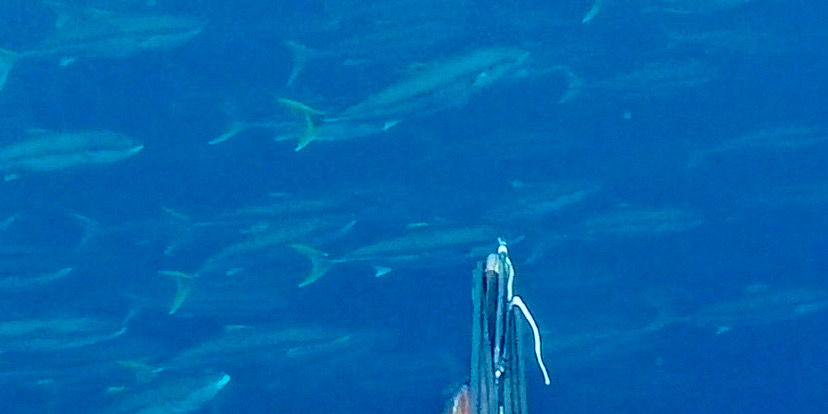
Photo credits: Cover image — Pacific bluefin tuna off the Southern California coast. All fishery data sourced from CDFW CPFV logbook records, 2019-2025.


Comments