


How to Kick Efficiently: Fin Technique for Freediving and Spearfishing

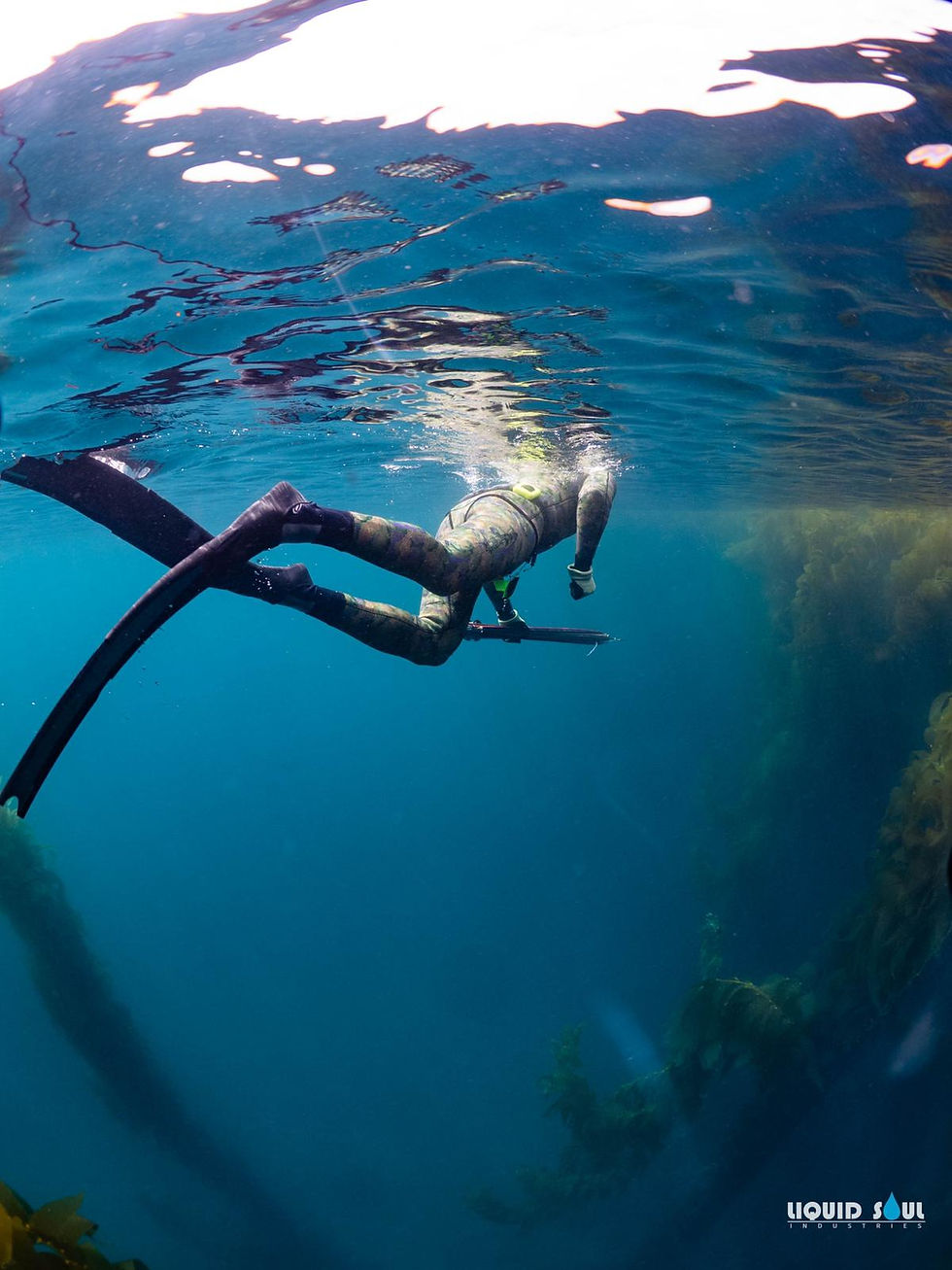
Every fin stroke you take underwater costs oxygen. For a freediver or spearfishing diver, that is the only currency that matters. The difference between a diver who returns to the boat exhausted after two hours and one who stays fresh for a full morning is almost never lung size or fin brand. It is kick technique. Good kicking looks almost lazy from the outside, like the diver is gliding. Bad kicking looks like someone climbing an invisible ladder. This guide breaks down the biomechanics of an efficient freediving kick, the mistakes most divers make, and how to train the flexibility and timing that lets you dive deeper, hunt longer, and approach fish without scaring them off.
Why Efficient Kicking Matters
Oxygen conservation is the obvious benefit. A hip-driven, slow-cadence kick can cut your oxygen burn rate roughly in half compared to a short, choppy knee kick. That translates directly into bottom time, the window where you actually hunt or photograph or enjoy the reef. If you are burning a third of your breath hold just getting to depth, you have no time to wait for fish.
Silent approach matters just as much for spearfishing. Fish detect kicks through their lateral line long before they see you. A slow, smooth kick with no fin slap reads as a neutral object in the water column. A fast, slappy kick reads as a predator or a threat, and the fish are gone before you ever see them. Watching bluewater divers work on spooky yellowtail or wahoo, you will notice they often drift motionless for long stretches and use the absolute minimum number of kicks.
Efficient kicking also reduces lactic acid buildup in the legs. When you kick hard and short, anaerobic byproducts pile up fast, and you feel that heavy, burning leg fatigue that ends dive days early. A longer, slower stroke stays mostly aerobic and keeps you loose. Add it up across a full day and the efficient diver gets more quality dives, reaches greater depths, and leaves the water feeling like they could do it again tomorrow. That is really what technique buys you.
Core Principles of a Good Freediving Kick
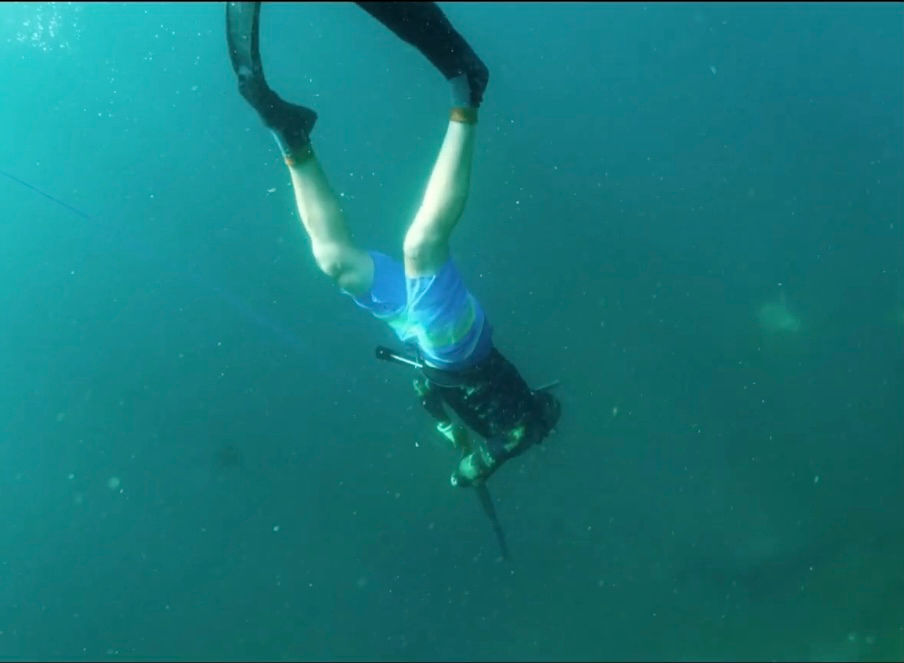
Before breaking down the mechanics stroke by stroke, internalize these five principles. If any one of them is wrong, the rest of the technique falls apart.
Long, slow, deliberate strokes. Every kick should feel like it is unfolding in slow motion. You are not sprinting. You are loading the fin blade, letting it flex, and letting the recoil do the work.
Full ankle flexion and extension. The ankle is the terminal joint in the kinetic chain. A stiff or partially flexed ankle wastes the energy your hips just generated. At the bottom of a downkick, the top of the foot should be pointing straight down the line of the leg.
Knees straight, kick from the hips. The biggest, most oxygen-hungry muscles in your body sit around your hips: glutes, hip flexors, and the long lever of your thigh. Those are the muscles you want doing the work, not the small muscles around your knee.
Arms against the body, not wide. Arms swinging or held out wide create drag and break streamline. One arm extended forward along the head, the other tucked at the side, or both arms pinned along your torso during descent and ascent.
Body streamlined, head tucked. Your body should form one straight line from fingertips to fin tips. The moment you lift your head to look forward, your hips drop, drag spikes, and every kick has to work harder to compensate.
The Fundamental Kick: Hip-Driven Long-Axis
The freediving kick is a hip-driven long-axis kick. That phrase contains the whole technique. Long-axis means the motion pivots around the body's long axis, with both legs moving opposite each other like an alternating pendulum. Hip-driven means the power source sits at your hip joint, not your knee.
Most new divers kick from the knees without realizing it. The tell is a high-frequency, short-amplitude kick that creates a lot of bubbles and noise but not much forward motion. You can spot it in any pool: someone churning the water frantically and not actually going anywhere fast. That kick is inefficient because the small knee-extension muscles fatigue quickly and burn oxygen fast, and it is noisy because short strokes cause more turbulence per unit of distance traveled.
Correct technique: legs stay nearly straight throughout the stroke, with only a slight bend at the knee during the recovery phase. The hip initiates the motion, swinging the whole leg through a wide arc. The ankle stays relaxed until the very end of the stroke, when it snaps through, extending the fin blade and translating accumulated energy into a clean push of water behind you. Think of your leg as a long fishing rod and your fin as the lure at the tip. The rod bends and unloads in one smooth arc. You do not want the tip flailing independently.
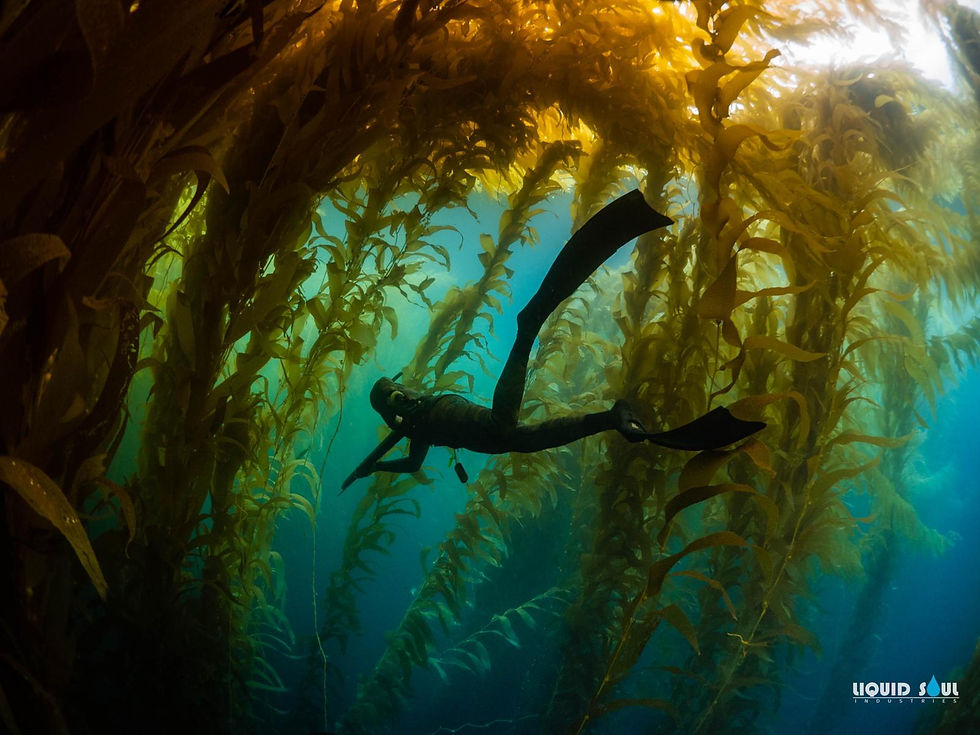
A useful mental cue: imagine your knees are loosely tied together with a bungee cord. They can separate a little during the stroke, but they always want to come back toward each other. That cue alone corrects half the knee-bending mistakes new divers make.
Kick Frequency: Slower Is Faster
For a trained freediver, roughly 8 to 12 kicks per minute during a descent or gliding phase is an efficient cadence. Twenty or more kicks per minute is almost always wasting oxygen. This counterintuitive rule surprises most divers coming from a swimming background, where higher stroke rates generally mean more speed.
Underwater, slower really is faster, within reason. Each kick launches you forward and the fin blade continues to unload its stored energy even after your leg has stopped driving. If you start the next kick too early, you fight against your own residual momentum and the unloading fin. You are also shortening the glide, which is the free movement you get between strokes. Let the glide happen. Count to two or three between kicks during descent, then start the next stroke.
If you notice your kick rate spiking, especially during a stressful moment, that is a flag. Stress and mild panic drive cadence up, and cadence burns oxygen. Resetting to a conscious slow count is one of the most useful self-corrections a diver can practice.
Kick Phases: Power Stroke and Recovery
Every freediving kick has two halves: a loaded power stroke and a relaxed recovery. Knowing which is which and applying force only where it belongs is a big part of efficiency.
Downward kick (power stroke on descent). When you are head-down descending, the downward stroke of each leg is the power phase. The leg swings down from the hip, the knee stays mostly straight, and the ankle extends so the top of the foot points roughly straight down the line of the leg at the end of the stroke. You can feel the fin blade loading and releasing.
Upward recovery. The opposite leg is coming back up to its starting position. Let it. No muscular effort is needed beyond what it takes to swing the leg, because the fin blade passes through the water at a neutral angle and creates minimal resistance. The fin flexes and loads naturally as it changes direction. Trying to muscle the recovery is a common hidden oxygen drain.
Ascent kick. On the way back up to the surface you are working against your own weight until you reach neutral buoyancy, so the drive is stronger than on the way down. Keep the same technique, hip-driven with straight legs, but push harder through each power stroke. The recovery still stays relaxed. It is the output, not the mechanics, that change.
Common Mistakes That Wreck Efficiency
Knee-bending kick. The single most common issue. You feel the burn in your quads, your cadence is high, and your fin tips are barely moving while your shins are doing most of the visible work. Fix: cue yourself to keep your knees straight and initiate from the hip. Think about kicking your heels together at the top of the recovery.
Arms wide or arms pumping. Divers who swim with arms extended out to the sides double their drag coefficient. Divers who pump their arms to assist the kick waste oxygen with muscles that should be idle. Both arms go along the body on descent and ascent. One arm forward, one arm at the side is the compromise for surface swims where you want to see ahead.
Head up, looking forward. When you lift your head to see where you are going, your spine breaks its streamline and your hips drop. The drag penalty is substantial. On descent, chin slightly tucked and eyes down the line. On ascent, look up but keep the body straight by letting your eyes do the work, not your neck.
Fin slap at the surface. The telltale splash you hear when a diver kicks too hard with part of the blade breaking the water. Fish hear that easily. Fix: either submerge deeper before driving hard, or do a duck dive and begin kicking only once both fins are fully submerged.
Kick frequency climbing when stressed. This one is sneaky because it feels productive. You get tangled, spooked by a big shadow, or surprised by depth, and your kick rate doubles. It feels like you are working hard to get out, but you are just burning oxygen faster. Train yourself to consciously slow the cadence down when stress rises. Slow is always safer.
Practice Drills for a Better Kick
Pool lengths with minimal effort. Pick a pool length (25 meters is ideal) and swim it underwater using the fewest kicks possible. Count them. Try to take one less kick each length. This drill forces you to rely on glide and load the fin fully, which is exactly what you want at depth.
Dynamic apnea. Horizontal breath-hold swimming in a pool is the single best drill for building an efficient kick. Distance per breath hold is the score, and the only way to improve is a more efficient technique. Start with lengths and work up. Many freediving clubs run dynamic sessions, and even a few pool visits a month sharpen your kick dramatically.
Slow-motion kicking underwater. In shallow water, deliberately execute each kick at half speed or less. Feel where the tension is. Feel the fin blade load. Feel the ankle snap. This is how you build the neuromuscular pattern, and it transfers directly to your normal-speed kick.
Video yourself. Nothing reveals hidden flaws like seeing your own kick on video. Ask a buddy to film you from the side as you swim past at a moderate depth. You will see knee bend, arm position, and head angle instantly. Most divers are shocked to find their technique looks nothing like what it feels like.
Ankle Flexibility: The Hidden Limiter
If you struggle to reach full ankle extension at the end of your kick, you are not alone. Tight ankles are the most common physical limiter among divers, and they are especially common in anyone with a history of running, sitting at a desk, or wearing stiff shoes. A tight ankle means the fin blade cannot follow through, which costs energy and distance on every single stroke.
The good news is that ankle range of motion responds well to consistent stretching, even in adults. Three useful moves: calf raises through a full range (drop your heel below the step, rise onto your toes, hold at both ends); ankle circles in both directions, with resistance if you have a band; and yoga poses that open the ankle, particularly a deep squat held for two to three minutes and hero pose (sitting on your heels with tops of feet flat on the floor). Five to ten minutes a day beats one long weekly session.
One tell for ankle tightness: if you wear long fins, do your feet cramp during a dive session? That is often the ankle fighting to reach a position it cannot comfortably hold. Working on the stretches above tends to eliminate the cramps within a few weeks.
Depth-Specific Technique
A good kick adapts to where you are in the dive. The same underlying biomechanics apply throughout, but the effort profile changes based on buoyancy and purpose.
Surface swim. Relaxed long strokes, arms positioned for visibility, face in the water as much as possible to keep streamline. You are covering distance, not racing. A slow, sustainable cadence saves you for the dive itself.
Descent, positive buoyancy zone. You are typically positive from the surface to roughly 10 meters (depending on your wetsuit and weighting). In this zone you need a few committed hard kicks to push through your own buoyancy. Five to eight strong, clean strokes is usually enough. Once you feel the water start to pull you down, back off.
Free fall and near depth. Once negative, stop kicking entirely or kick very sparingly. Gravity is doing the work. This is the phase where inexperienced divers waste the most oxygen because they do not trust the free fall. Let it happen. At the target depth, minimal kicks to hold position or glide along the bottom.
Ascent. Strong, measured kicks from depth until you are positive again, then you can ease off because buoyancy is helping. Many divers make the opposite mistake, kicking frantically near the surface where it is no longer necessary. Save the strong effort for the deep portion of the ascent. Near the surface, keep a hand up, watch for the boat, and finish calm.
How Fin Choice Affects the Kick

Technique comes first, and a good technique works with any fin. That said, fin choice affects the feel. Longer blades deliver more power per stroke and allow an even slower cadence, but each kick costs more. Shorter blades are quicker to recover but require more kicks to cover the same distance. Material matters too: plastic blades are heavier and less responsive, fiberglass is a balanced middle ground, and carbon fiber is lighter and more responsive for the same stiffness, which means less leg fatigue over a long dive day.
Crucially, fin material does not change the fundamentals. A diver with great technique in plastic fins will still out-dive a diver with poor technique in top-end carbon fiber. Upgrade the technique first, then upgrade the fins. For a deeper comparison of fin materials and blade choices, see our separate guide on choosing freediving fins for spearfishing.
Monofin vs. Bifins for Spearfishing
Competitive freedivers chasing depth records often use a monofin, a single large blade shared between both feet. For pure straight-line descent and ascent, the monofin is more hydrodynamically efficient than bifins. It uses an undulating dolphin-kick pattern driven from the core and hips.
For spearfishing, the monofin is impractical. You cannot swim horizontally in a natural posture, cannot make tight turns, and cannot easily maneuver around structure. Hunting requires lateral mobility, quick orientation changes, and the ability to hold position while a fish closes. Bifins do all of that. Every serious spearfishing diver uses bifins. The efficiency edge of a monofin does not outweigh its tactical disadvantages for hunting.
Putting It Together on a Dive Day
A good practice sequence for any dive day: begin with a gentle surface swim using long, deliberate kicks. Focus on streamline rather than speed. On your first few dives, keep the depth moderate and pay attention to each phase. How many kicks did it take to get through positive buoyancy? Did you free-fall cleanly? Was your ascent smooth and mostly arms-at-sides? Small corrections on warm-up dives set the tone for the rest of the day.
As you move into hunting dives, think about kick economy as a hunting tool, not just a fitness tool. Fish that hear a slow, quiet approach often do not react. Fish that hear a fast, choppy approach disappear. Many of the biggest fish shot every year are taken by divers who moved barely at all and let the fish come to them.
The most important thing: kicking is a skill, and like every other skill it improves with deliberate practice. Spend a few pool sessions focused just on kick mechanics and your open-water diving will change within a single season.
Plan Your Next Dive Day
Efficient kicking only matters if you actually get in the water. Before your next session, check local conditions, visibility forecasts, swell, and thermocline at conditions.spearfactor.com to pick the right day and dial your expectations. For more of fins check the Spearfactor YouTube video with Jerry from Neptonics
Safety
Never freedive alone. Always dive with a trained buddy using one-up-one-down protocols. For core freediving safety principles, shallow water blackout prevention, and rescue technique resources, visit freedivingsafety.com.

Comments