


Reading Kelp Canopy from the Surface: Visual Skills for Locating Fish Before You Splash

Experienced California divers know fish are present before they splash. They read it from the canopy, from the bird activity, from the water color and movement, from the way the surface tells the story of what's happening below. New divers splash into every kelp bed hoping to find fish; experienced divers identify the productive zones from the boat and ignore the rest.
This guide covers how to read kelp canopy from the surface — what to look for, what to ignore, and how to translate visual observations into a productive dive plan.
Canopy Density and Health
Healthy canopy means a productive ecosystem below. The basics:
Thick, dark green canopy with many fronds = healthy mature kelp forest, high biodiversity below
Thin or yellow canopy = stressed kelp, often from warm water, urchins, or recent storm damage
Scattered patches of kelp = depleted forest, often urchin barren transitioning to bare rock
Connected canopy across the surface = continuous kelp forest underneath
Broken or fragmented canopy = patchy structure with sand bottom between patches
Target connected, dark-green, mature canopy. Skip yellowed or thin areas — those zones are usually fishless.
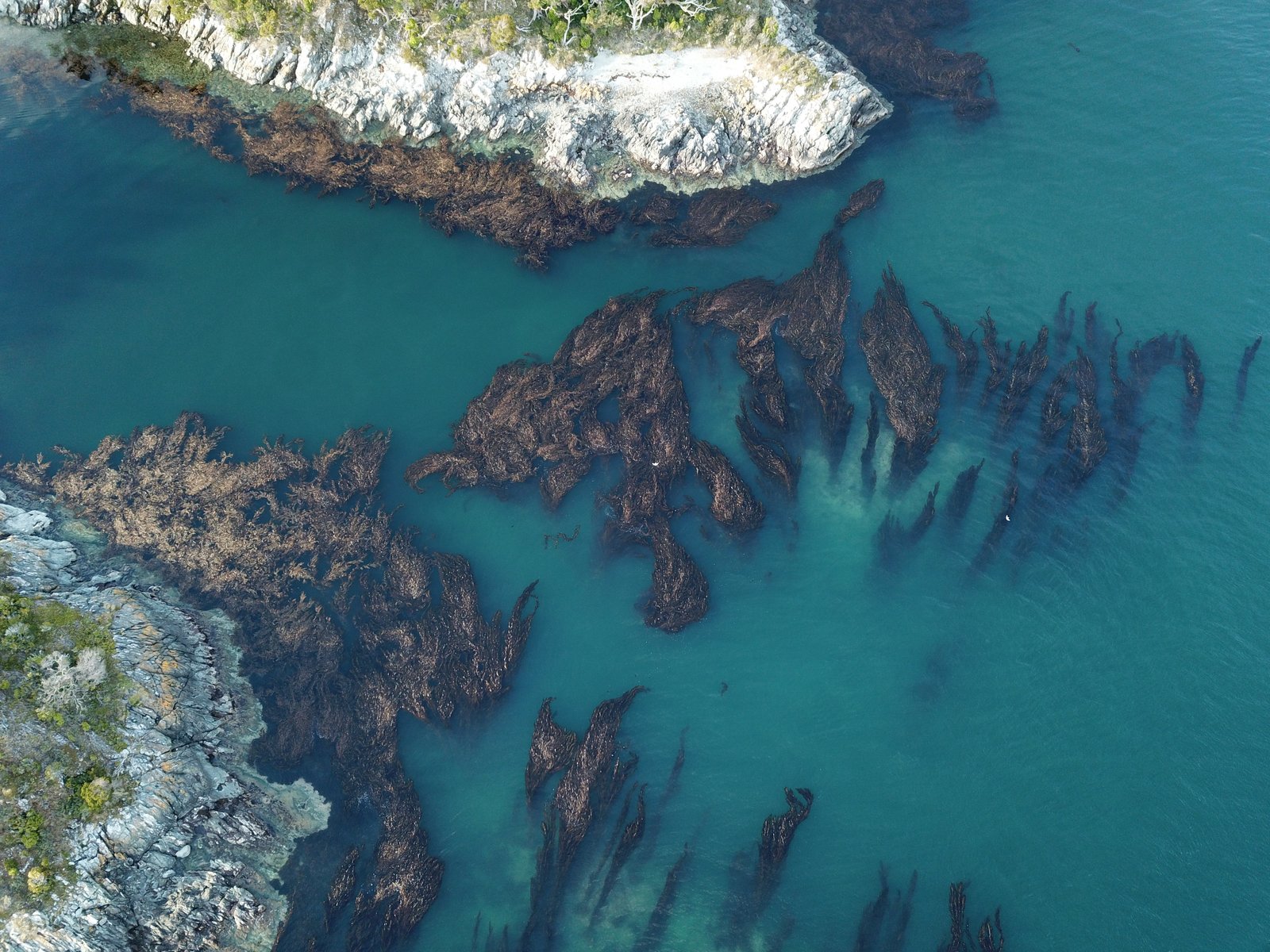
Reading the canopy from above: dense, dark mats mark mature kelp, while the open lanes and outer edges are where you watch for bait and predators.
The Edge Effect
The most productive water is at the edge of the kelp, not deep in the middle of it. Reasons:
Predators patrol the outer edge looking for prey
Current and water movement is stronger at the edge — concentrates bait
Visibility is generally better at the edge than inside the canopy
Bait fish gather at the edge to feed and shelter
Reef structure at the kelp boundary holds territorial reef fish
Read the outer edge of the kelp from the boat. Look for:
Bait activity (surface flicks, bird working, jumping fish)
Color changes (current edges or temperature breaks)
Structure visible just outside the kelp line (boiler rocks, ledges)
Areas where the kelp edge is irregular, with bays and points
Bird Activity Around Kelp
Terns diving on bait at the kelp edge = high probability of predators below
Pelicans plunge-diving = bait concentration, often pelagic predators driving the bait up
Gulls picking at the surface = small bait or dead bait, less reliable predictor
Cormorants holding station on the canopy = they are hunting the same fish you are
Sea birds rafting on the water without active feeding = nothing happening below
Bird activity is the single best free intelligence source for finding active fish on a kelp dive day.
Bait Tells on the Surface
Surface flicks (small splashes from bait fish) — bait present, may have predators below
Skipping or jumping bait — predators actively chasing
Slicks on the surface (oily patches) — fresh feeding activity
Bait balls visible from the surface — major predator presence likely
Lone slick without other signs — older feeding, predators may have moved on
Water Color and Movement
Clean blue-green water = good visibility likely, fish behavior productive
Cloudy or green-brown water = poor visibility, fish less active or scared
Current visible as color or texture differences = active water movement, productive feeding
Glassy calm water with no movement = often slower fishing
Foamy surface or whitewater = post-storm, fish may be holding deep or scattered
Kelp Behavior Tells
Kelp standing straight up = minimal current, calm conditions
Kelp lying down or sweeping = strong current, often productive but harder to dive
Kelp moving with waves = surface swell present, surge will be at depth too
Broken kelp pieces floating = recent storm damage, productive feeding around the floats
Sea otters in the kelp = the area is healthy enough to sustain otters — usually a good sign
Time-of-Day Reading
Dawn: bait coming up, predators feeding, peak observation time
Mid-morning: bait may be deep but activity still visible
Midday: visual indicators most accurate but fish often less active
Late afternoon: bait coming up again, evening feed starting
Dusk: peak feeding for many species, surface tells are dramatic
What to Skip
Kelp patches with no bird activity, no bait tells, and no surface movement
Yellowed or thin canopy areas
Zones the boat traffic has been heavy on — fish may have moved
Areas where other divers are concentrated — pressure suppresses fish
Patches without an obvious current edge or feature
Reading Skills That Pay Off
Spending ten minutes on the boat or shore reading the conditions before splashing produces more productive dive time than splashing immediately and figuring it out underwater. Most divers skip the reading step. The divers who do it consistently outproduce their buddies. Learn to read the canopy, learn to read the birds, learn to read the bait — and you'll find fish on days that other divers leave empty-handed.
Related Reading
Kelp canopy photo by BravoGonzalo, via Wikimedia Commons (CC BY-SA 4.0).


Comments