


September 2026 California Diving Wrap-Up: Marie's Swell, the Cold Flip, and the Fall Clarity Payoff

August went out warm, blue, and pelagic-rich. September was the pivot of the year. The single biggest swell event of the season - Hurricane Marie - slammed the coast in the first week, and then, almost on cue, the water flipped cold. By the back half of the month the fall clarity California is famous for finally showed up. This is what actually happened in the water in September, region by region, grounded in dozens of in-water reports and the offshore intel that shaped the month.
THE MONTH IN MOTION
September ran in three acts: a hurricane, a cold flip, and a clarity payoff. Here is how it unfolded:
September 1-7: Marie's swell arrives. A powerful long-period south and southeast groundswell from Hurricane Marie slammed the Southern California coast - the biggest swell event of the season. The energy lifted the bottom, browned out every shallow reef, and moved sand on a scale divers rarely see. Shaw's Cove in Laguna got stripped to bedrock, familiar entries changed overnight, and the inshore was essentially undiveable. Offshore and the islands rode it out.
September 8-14: The sand settles, the water flips. As Marie's swell faded the inshore started to clean up - but the bigger story was temperature. A shift in the pattern and a pulse of upwelling knocked surface temps down hard, from the mid-70s into the low-to-mid 60s in a matter of days. The warm El Nino lens that defined all summer got peeled right back.
September 15-21: Clarity returns. With the bloom finally dying off and cold, clean water filling in behind the swell, visibility jumped. This was the classic fall clearing. La Jolla, Palos Verdes, and the Laguna coves all reported their best water in weeks on the calm mornings.
September 22-30: The fall pattern settles. Cooler, cleaner, calmer. White seabass started waking up on the kelp edges, the offshore pelagic bite tapered as the water cooled, and divers turned their attention to the October 2 lobster opener and the groundfish deep zone reopening October 1.
The driver: one hurricane, then a cold flip. September's story was a handoff. Hurricane Marie delivered the summer's biggest south swell and rearranged the nearshore sand, and right behind it the ocean swapped its warm summer lens for cold, clean fall water. The divers who waited out the first week were rewarded with some of the clearest water of the year in the second half.
REGIONAL BREAKDOWN
San Diego & La Jolla: Marie browned the inshore and the Shores hard in the first week, then La Jolla came back strong. By mid-month the Cove and the Ecological Reserve were running 20-30 ft on the clean mornings as the cold water moved in and the bloom cleared. The thermocline weakened with the surface cool-down, so the whole column settled into a more uniform, cleaner body of water. The standout region once the swell passed.
Orange County: Ground zero for Marie's sand. Laguna's coves - Shaw's, Divers Cove, Crescent Bay - were blown out and physically rearranged in the first week, with Shaw's famously scoured down to exposed reef. As the swell laid down the coves cleaned to 10-18 ft on the calm mornings, and the newly exposed structure actually opened up fresh terrain for divers willing to relearn the entries.
Los Angeles & Palos Verdes: Exposed to Marie's energy and surge-prone in the first week, PV came around nicely with the fall settle. Flat Rock and the deeper peninsula reefs ran 15-25 ft on the clean days once the cold water filled in. Catalina stayed the boat-diver's pick throughout.
Monterey & the Central Coast: Less affected by the south swell and already cool, Monterey kept its late-summer-into-fall good run. The Breakwater (San Carlos Beach) and the Del Monte shale ran 15-25 ft, and Carmel Bay and Point Lobos cleaned up beautifully on the light-wind days. September and October are traditionally the Central Coast's clearest months, and it showed.
Northern California: Cold, green, and swell-exposed as always, with the fall calms bringing the occasional good window. A day-by-day call around the wind and the swell - go when the forecast lines up.
THE COLD FLIP, EXPLAINED
The marine heatwave that defined June through August finally broke its grip in September, and the swap showed up everywhere:
Surface temps dropped fast. A pattern shift and a pulse of upwelling pulled the mid-70s surface water down into the low-to-mid 60s in days. The warm lens that kept the summer stratified got mixed out.
The thermocline weakened. With the surface cooling toward the deep water, the sharp summer temperature break at 40-50 ft faded. Depth stopped being a separate, warmer world and the column settled into one cleaner body.
Clarity jumped. Cold, nutrient-spent fall water is clear water. As the warm-season bloom died off and sank, visibility climbed across the south - the fall payoff California waits all summer for.
Warm-water strays thinned. As the heat backed off, the dorado, the sea-snake reports, and the tropical oddities that defined August started to fade. A few pelagics hung on offshore, but the signal was clearly turning toward fall.
FISHING CONDITIONS AND SPECIES ACTIVITY
White Seabass: The headline of the back half. The cool-down and the settling water woke the ghosts back up on the deeper kelp edges - low-light mornings and a quiet approach were the play. The ideal fall target as the pelagic season tapered.
Yellowtail: Still around and still catchable on the kelp edges and island fronts, though starting to thin as the water cooled. A reliable month before the real seasonal drop-off.
Dorado (mahi) & tuna: Past the peak but not gone. The warm year held fish on the offshore paddies and banks into September for boat divers with the range, even as the inshore flipped cold. The last good window of the El Nino pelagic run.
California Halibut: A strong plan-B all month. When Marie browned out the rocks in the first week, the sand flats on a clean-viz morning were the reliable target.
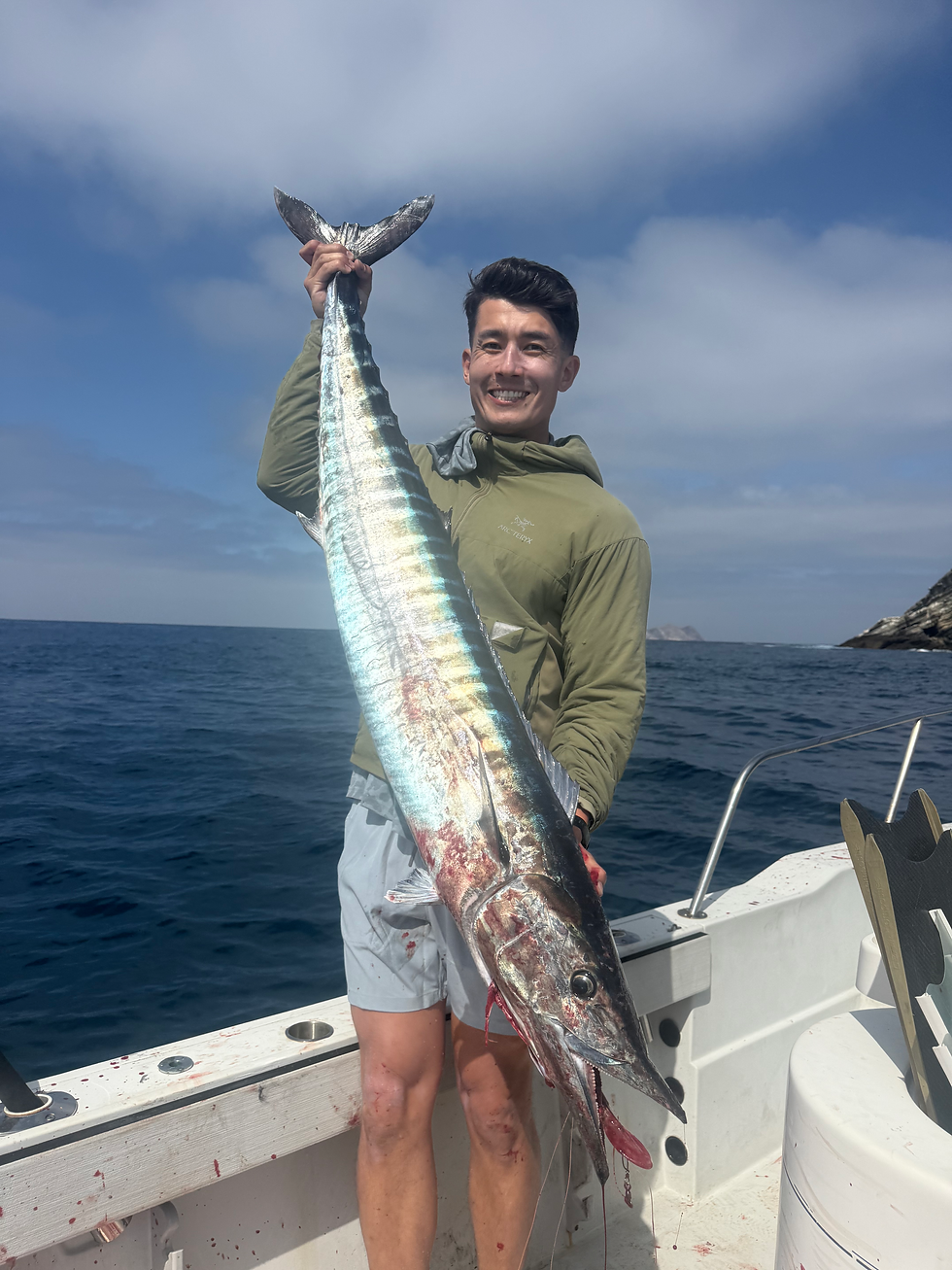
Wahoo: Offshore Southern California saw consistent catches all month. Below the border also had a good run of wahoo caught to include at the Coronado Islands and off of Ensenada.
SEPTEMBER VISIBILITY NUMBERS AT A GLANCE
The month's visibility story in one place - typical September ranges versus what the water actually did, swell week and all:
San Diego / La Jolla: typical 15-25 ft; September actual 3-8 ft during Marie, rebounding to 20-30 ft by mid-month. Tactic: wait out the first week, then dive the clean cold water.
Orange County coves: typical 12-18 ft; September actual near-zero during the swell, rebuilding to 10-18 ft on the calm mornings. Tactic: relearn the post-Marie entries and time the morning.
LA / Palos Verdes: typical 12-20 ft; September actual 15-25 ft at depth after the settle. Tactic: work the deeper peninsula reefs on the clean days.
Monterey / Central Coast: typical 10-20 ft; September actual 15-25 ft. Tactic: light-wind mornings at Carmel and Lobos.
Catalina / offshore: typical 20-40 ft; September actual 30-40 ft blue. Tactic: the boat-diver's reliable bet all month.
HOW THE FORECAST DID
The September outlook led with two wildcards: a tropical south swell browning out the inshore, and the warm-water bloom clearing as fall set in. Marie made the first call look prescient - the swell was even bigger than a typical system and defined the whole month. The bloom retreat verified too, and then some: not only did the algae clear, the water flipped genuinely cold, improving clarity faster and harder than the forecast expected. The one thing the outlook under-weighted was how fast the warm lens would disappear - the cool-down arrived earlier and sharper than a normal fall transition.
A SAFETY NOTE FROM SEPTEMBER
September's hazards came from the swell as much as the water. Marie physically rearranged the nearshore sand and reef - entries, channels, and depth over familiar spots changed, so treat post-swell shore dives like new sites and scout before you commit. The cold flip was abrupt; dress for the deeper, colder number and respect the shock of a 10-degree surface drop. And while the bloom cleared, lingering domoic acid can stay in the food chain after the water turns blue again - check the current California Department of Public Health advisories before you eat anything you take.
THE BOTTOM LINE ON SEPTEMBER 2026
September 2026 was the turn of the year. Hurricane Marie delivered the summer's biggest swell and reshaped the Laguna coast in a single week, and then the ocean flipped cold and handed back the fall clarity it had been hoarding all summer. The first week was a write-off at the beach; the back half was some of the best water of the year.
October historically builds on exactly this - the clearest month on the California calendar, with lobster season open, the groundfish deep zone reopened, and the warm-weather crowds long gone. If the cold, clean fall pattern holds, the payoff is just getting started. As always, verify current CDFW regulations and CDPH health advisories before you dive or take anything.
Recap compiled from NOAA and CDIP swell and buoy models, NOAA sea-surface temperature and coastal upwelling data, CDPH biotoxin advisories, CDFW regulations, and offshore intel and firsthand reports from the San Diego and Central Coast dive community. Conditions change fast - always check current forecasts, CDPH advisories, and CDFW regulations before you dive, and dive within your training and limits.
Cover image: Kelp forest, Channel Islands National Marine Sanctuary (NOAA, public domain).


Comments