


Spearfishing the LA County Coast: A Region-by-Region Guide from Palos Verdes to Malibu

Spearfishing Palos Verdes and the LA Coast: A Local's Guide
Los Angeles may be known for Hollywood and traffic, but just beneath the surface of its coastline lies some of California's most productive spearfishing. The Palos Verdes Peninsula in particular is one of the best dive destinations in southern California, with rocky reefs, kelp forests, and a diversity of game fish that rivals anywhere on the coast. From calico bass and sheephead to white sea bass and yellowtail, the LA coast offers year-round hunting within an hour's drive of millions of people. Here is what you need to know to dive it effectively.
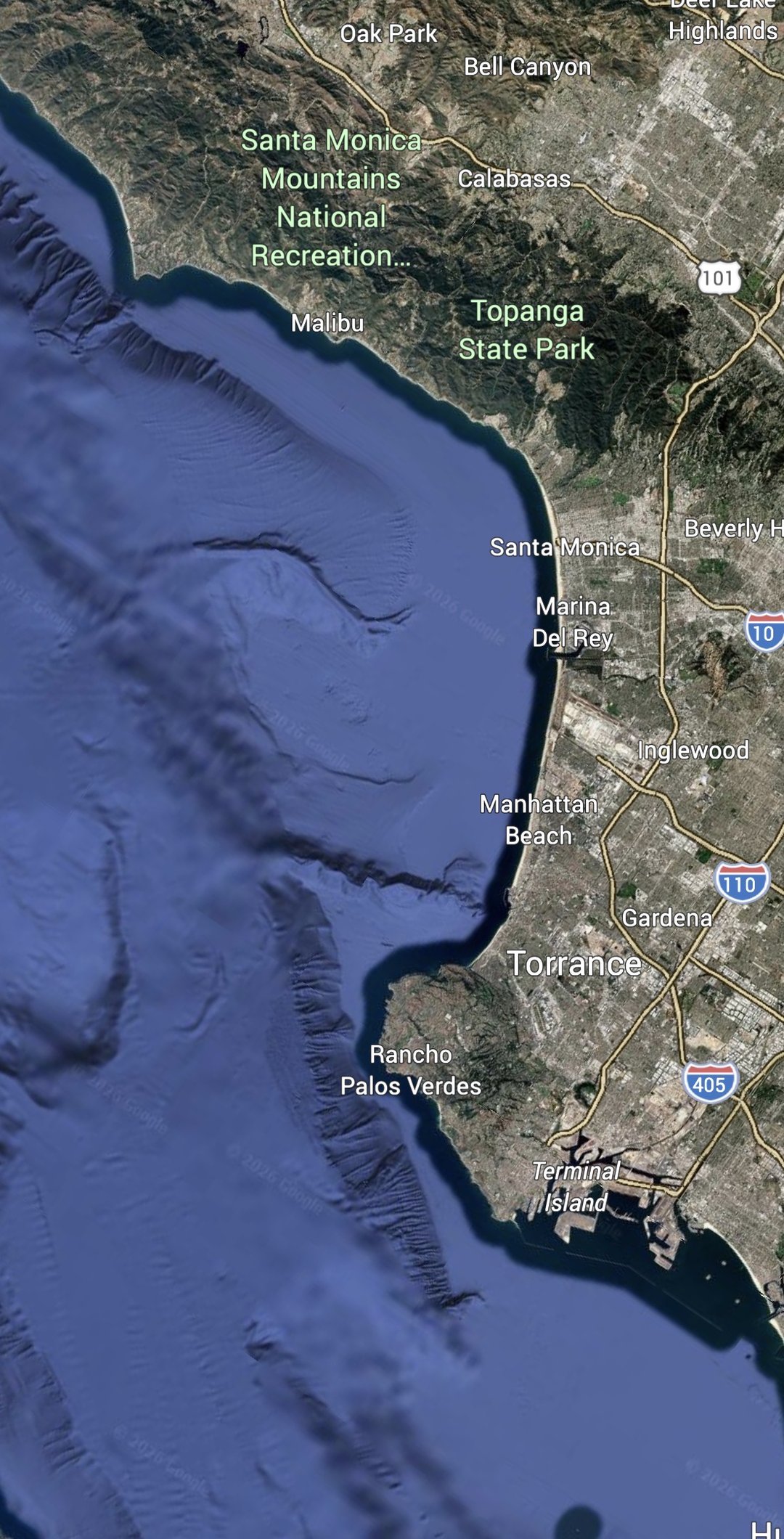
The LA County coast at a glance — Malibu and Santa Monica curving south through the South Bay to the Palos Verdes Peninsula. Image: Google Earth.
Palos Verdes: The Heart of LA County Diving
Palos Verdes is the centerpiece of Los Angeles County diving — a rocky peninsula ringed with kelp-lined coves, healthy reefs, and the county’s best shore-dive access. Rather than repeat it all here, we break down every spot on the peninsula, from Lunada Bay to Abalone Cove, in our complete Palos Verdes spearfishing guide.
Beyond Palos Verdes: Other LA Coast Spots
Redondo Beach Artificial Reef
The Redondo Beach artificial reef sits in 50 to 60 feet of water off the Redondo Beach pier area. The reef structure attracts calico bass, sand bass, sheephead, and halibut. It is a boat or kayak access spot and can produce well when conditions are clear. The sand flats surrounding the reef also hold halibut for divers willing to scan open bottom.
Malibu
The Malibu coastline north of Santa Monica offers scattered reef structure and kelp beds, particularly around Point Dume and the reefs off Leo Carrillo State Beach. Important: Point Dume is a marine protected area. The Point Dume State Marine Reserve is no-take — no spearfishing of any kind — and the adjacent State Marine Conservation Area allows spearfishing only for pelagic finfish such as yellowtail, bonito, and white sea bass. Resident reef fish like calico bass and sheephead may not be taken anywhere within the Point Dume boundaries, so hunt calicos on open-coast reefs outside the MPA (the Leo Carrillo area and points upcoast) and always check the current CDFW MPA maps before you get in the water. When warm water pushes north in summer, the legal pelagic targets — yellowtail, plus white sea bass over the kelp in spring — are what make this stretch worth the trip. Malibu also tends to have cleaner water than the inner bay, especially after rain events.
Catalina Island
Catalina is really its own destination rather than mainland LA coast, but it sits just offshore and is the clear-water escape when the coast turns dirty. It is big enough to deserve a full breakdown of its own — see our complete Catalina Island spearfishing guide for dive sites, boat logistics, and seasonal targets.
Target Species on the LA Coast
The LA coast supports a wide variety of game fish. Here are the primary species divers encounter.
Calico bass (kelp bass) are the bread and butter of LA spearfishing. Found on every reef and kelp bed, they are available year-round with the best action in warmer months. The minimum size is 14 inches with a 5-fish bag limit. Sheephead are another year-round resident, found on rocky reefs. Males are the larger fish with distinctive black and red coloring. Minimum size is 12 inches with a 5-fish bag limit.
White sea bass move through the LA coast primarily from March through June, following squid spawns into the kelp beds. These are one of the premier targets for California divers, with a 28-inch minimum size and 3-fish bag limit. Yellowtail show up when water temperatures climb above 64°F, typically from June through October. Look for them on the outer edges of kelp beds and around structure.
California halibut are found on sand flats and the sand-reef interface throughout the LA coast. They require a sharp eye and good bottom-scanning technique. The minimum size is 22 inches with a bag limit of 5 fish. Bonito are abundant in summer and fall, often seen in schools on the outer kelp edges. There is no size limit and a 10-fish bag limit, making them a fun and plentiful target.
Conditions and Timing
Water visibility on the LA coast is highly variable. After winter storms and rain events, visibility can drop to near zero as runoff clouds the water. The best visibility typically comes during late summer and fall (August through November) when storms are rare and water temperatures are warm. Spring can also offer good windows, particularly during periods of offshore winds.
Water temperatures range from around 55°F in winter to 72°F in late summer. A 7mm wetsuit is standard for winter diving, while a 5mm or 3mm suit works for summer. Thermoclines are common in summer, with warm surface water and significantly cooler water at depth.
Swell direction matters significantly on the Palos Verdes Peninsula. The west and south sides of the peninsula are exposed to south and southwest swells, while the east side (around Long Point) is more protected. During summer south swells, the eastern spots tend to be calmer. In winter, northwest swells hit the west side hardest. Check swell reports and choose your spot accordingly.
Access and Logistics
Shore diving is the most common access method for Palos Verdes. Most dive sites require hiking down steep trails or bluffs, so plan your gear accordingly. A good gear bag or backpack-style system makes the hike much easier than carrying everything by hand. Parking can be tight at popular spots, especially on weekends. Arrive early.
Kayak diving has become increasingly popular on the LA coast. A sit-on-top kayak allows you to access offshore reefs and kelp beds that are too far to reach by shore diving, while avoiding the cost of boat charters. Launch from Abalone Cove, Terranea, or the harbors in Redondo or San Pedro to access the best offshore structure.
Boat charters run out of San Pedro, Long Beach, and Marina del Rey. Half-day and full-day spearfishing charters are available and can access the full range of spots from Malibu to Catalina. This is the best option for reaching the offshore kelp beds and the Channel Islands.
Marine Protected Areas
The LA coast has several marine protected areas (MPAs) that restrict or prohibit spearfishing, and a couple of them sit right on top of the most fishy-looking reef. MPA names are misleading — a “conservation area” can be fully no-take. Know exactly which line you are on before you load your gun. The two clusters every LA diver needs to memorize are at Point Dume in Malibu and on the Palos Verdes south shore.
Point Dume State Marine Reserve and Conservation Area (Malibu)
At the Malibu headland the Point Dume State Marine Reserve is no-take — no spearfishing of any species inside its boundaries. Immediately west, the Point Dume State Marine Conservation Area is more permissive but still restrictive: divers may take only white seabass and pelagic finfish such as yellowtail and Pacific bonito by spear. Resident reef fish — calico bass, sheephead, and the like — are off-limits anywhere inside the Point Dume complex. The reserve covers the waters off Point Dume State Beach and the headland; the conservation area extends west toward Zuma and El Matador. Hunt calicos on the open-coast reefs outside the boundary, around Leo Carrillo and points upcoast.

Point Dume boundaries: the red zone is the no-take State Marine Reserve; the blue zone is the State Marine Conservation Area (pelagic finfish and white seabass only). Map: California Department of Fish and Wildlife.
Point Vicente and Abalone Cove SMCAs (Palos Verdes)
On the Palos Verdes Peninsula two MPAs sit back to back along the south shore. The Point Vicente State Marine Conservation Area is fully no-take — no fishing or spearfishing of any kind, despite the “conservation area” name. Just east, the Abalone Cove State Marine Conservation Area is less restrictive: divers may take pelagic finfish, including white seabass and Pacific bonito, by spear, but resident reef species are protected. Both cover prime-looking reef and kelp, so confirm your position before diving.

Palos Verdes boundaries: the purple zone is the no-take Point Vicente SMCA; the blue zone is the Abalone Cove SMCA (pelagic finfish only). Map: California Department of Fish and Wildlife.
Before diving any spot, check the current CDFW MPA maps — boundaries are defined by GPS coordinates, not landmarks, and they are actively enforced. Regulations also change, so verify the latest rules at wildlife.ca.gov before you get in the water.
Safety on the LA Coast
The LA coast presents some unique safety considerations. Boat traffic is heavy, particularly near the harbors and shipping lanes. Always dive with a float and diver-down flag, and be aware of boat traffic patterns. The rocky entries at Palos Verdes can be treacherous in swell — watch several sets before entering and plan your entry and exit routes.
Current can be strong along the peninsula, particularly on tidal changes. Check tide charts and plan your dive around slack tides when possible. Always dive with a buddy, carry a knife, and follow the safety protocols at freedivingsafety.com. The convenience of urban diving means help is never far away, but that is no excuse for cutting corners on safety.
What This Means for California Divers
The Palos Verdes Peninsula and the greater LA coast offer surprisingly good spearfishing for a major metropolitan area. The combination of rocky reef habitat, kelp forests, and the convergence of warm and cool water creates a productive marine environment that supports a wide range of game fish. Whether you are a local looking for a quick after-work dive or a visitor exploring California spearfishing, the LA coast deserves a spot on your list. Check conditions, know your MPAs, and get in the water.
Check current visibility, water temperature, and fish activity predictions at your dive spot using the SpearFactor Fish & Dive Conditions Tool.

Comments