


August 2026 California Diving Forecast: Peak Warmth, the Pelagic Prime, and the Bloom's Retreat

Updated: Aug 1
August is the warmest month of the year in California waters — and, in a normal year, the tail end of the peak plankton bloom. But 2026 has been anything but normal. After an early June bloom and a persistent marine heatwave that defined July, August arrives with the surface as warm as it will get all year and the coastal murk finally starting to ease.
This forecast breaks down what to expect in August, where divers will actually find clean water, which species are peaking, and the tactics that will separate a good month from a frustrating one. It's grounded in July's in-water reality, the latest offshore intel, and the seasonal patterns that make August the pelagic high point of the year.

THE AUGUST BLOOM OUTLOOK: PEAK WARMTH, EASING MURK
Here's the good news: August usually marks the beginning of the end for the summer bloom. Nutrients get depleted, the plankton that exploded in early summer starts to die back, and — critically — the water column begins to settle into a stable, stratified pattern. The murk doesn't vanish, but it stops winning every day.
The heatwave factor: The marine heatwave that ran through June and July isn't done. Surface temperatures will peak in August at their annual high — expect 72-76°F at the surface across Southern California, with the warm lens sitting over cooler, cleaner water at depth. That stratification is the key to the month: the bloom lives up top, the clean water and the fish live below it.
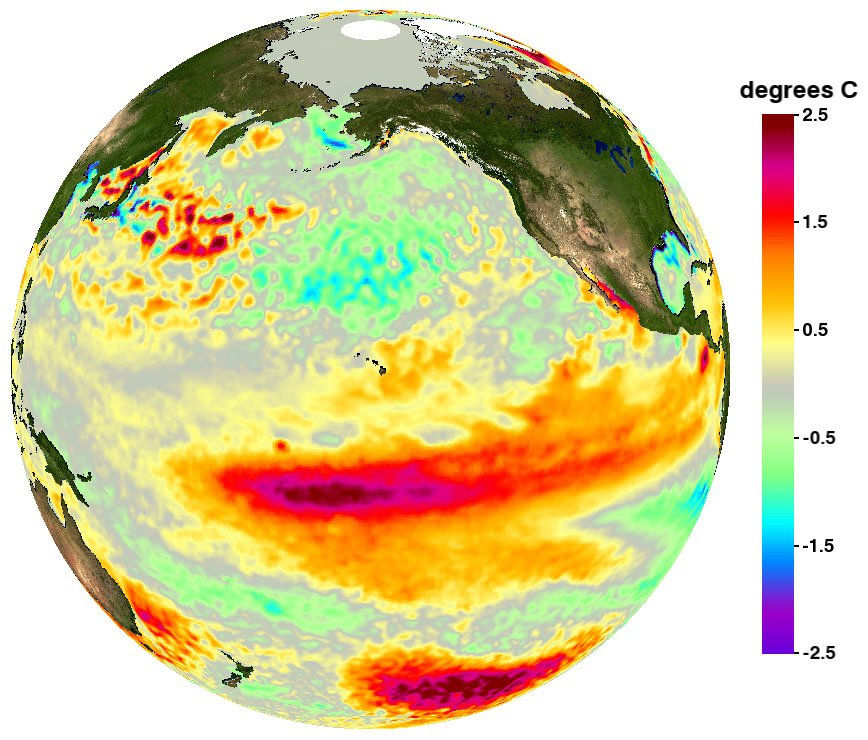
What's driving it — a strengthening El Niño: The marine heatwave has a name behind it. As of late July 2026, the benchmark Niño 3.4 index sits at +1.4°C, with the eastern Pacific (Niño 1+2) running a striking +3.0°C — an east-weighted signature that points to a classic Eastern Pacific El Niño. Forecasters put the odds of a very strong El Niño through late 2026 above 80%, with near-certain persistence into spring 2027. For California divers, that's the big-picture reason the water is this warm, the pelagics have pushed north, and the bloom set up the way it did — and a strong signal these warm-water conditions aren't going away soon.
What it means for the months ahead: An east-weighted El Niño like this one tends to keep coastal water warm and stratified while suppressing the cold, nutrient-rich upwelling that both feeds blooms and cools the surface. Practically, that points to a warm, pelagic-friendly fall — expect the yellowtail, dorado, and tuna window to run long, and don't be surprised if bluewater conditions hold well past their usual close. It also means the surface warmth and significant thermaloclines. Understanding these temperature breaks and how your targeted species react to them if important for a successful hunt.
Water temperature projection: Surface temps peak (72-76°F in SoCal, 60-66°F in Monterey, 55-60°F in NorCal). That warm surface is a double-edged sword — comfortable diving and a magnet for warm-water pelagics, but it also caps the bloom in place until swell or upwelling breaks it up.
The daily rhythm: July established the pattern that carries into August — morning murk, then a cleaner mid-day-to-late-afternoon window as light winds let particulate settle and tides bring in clean water. Timing your dive to the clearing is as important as picking the spot.
The August swell wildcard — hurricane surf: Late summer is Eastern Pacific hurricane season, and distant tropical systems off Baja and mainland Mexico fire long-period south swells straight at Southern California. Several of these hurricane-driven south swells have already rolled through and stirred up the inshore vis this season. They're a mixed blessing: a pulse can churn and flush stagnant nearshore water, but more often it lifts the bottom and knocks visibility back down for a day or two after it arrives. Watch the south-swell forecast as closely as the wind — a big tropical pulse can undo a week of afternoon clearing, and the cleanup usually lags a day or two behind the swell dropping.
REGIONAL FORECAST: WHERE AUGUST LOOKS DIVEABLE
SAN DIEGO (Mission Beach, Pacific Beach, Ocean Beach, Point Loma, La Jolla)
Shore-based (0-40 ft): MODERATE
The bloom is finally thinning as August progresses. Bay-mouth zones (Pacific Beach, Mission Bay, Ocean Beach) still run murky and should be avoided, but open beaches and Point Loma kelp improve to 8-15 ft on clean afternoons — a real step up from July.
Depth access (30-70 ft): GOOD to EXCELLENT
La Jolla Cove and La Jolla Shores remain the most reliable clean water in Southern California — 20-35 ft below the thermocline, and warm. Drop under the surface lens and you find the season's best combination of visibility, temperature, and fish.
Offshore pinnacles & banks (60-120 ft): EXCELLENT
The Coronado Islands, offshore banks, and high spots hit their annual peak: 30-50 ft blue water, warm, and stacked with pelagics. For boat divers, this is the best month of the year.
ORANGE COUNTY (Laguna Beach, Newport, Huntington, Crystal Cove)
Shallow coves (Shaw's, Crescent, Emerald): MODERATE
The late-summer easing helps. Expect 10-15+ ft of visibility on light-wind afternoons — still streaky, but more diveable than July's pea soup.
Reef structure (30-60 ft): GOOD
Orange County's outer kelp edges and rocky transitions clean up to 15-25 ft. The deeper reef edges consistently out-fish the shallows.
Boat-access offshore: EXCELLENT
Longer runs to open-water structure and paddies see 25-40 ft blue water. The offshore pelagic bite is the reason to own a boat in August.
LOS ANGELES (Palos Verdes, Malibu, Santa Monica Bay, Catalina)
Santa Monica Bay & sandy beaches: MODERATE
The open sandy stretches improve with the easing bloom, but stay surge-prone. Expect 8-15 ft on the better days.
Palos Verdes reefs (Malaga Cove, Lunada Bay, Flat Rock): GOOD to EXCELLENT
The crown jewel of LA shore diving. PV depth access gets you under the lens to 15-25 ft, and the water is the warmest it'll be all year. When the beaches are blown, the deep PV reefs hold up.
Boat-access offshore & Catalina: EXCELLENT
Front-side Catalina and offshore high spots peak now — 30-40 ft blue water and a full slate of pelagics.
MONTEREY BAY (Santa Cruz, Carmel, Big Sur, Lover's Point, Point Lobos)
Shore-based coves: MODERATE
Easing from July's pea soup. Expect 8-15 ft on the better days, with 60-64°F water and molas cruising the kelp. Carmel Bay is the reliable pick.
Deep reef & kelp forest (40-80 ft): GOOD
Descending below the surface layer pays off — 15-30 ft at depth. Point Lobos's deeper reefs continue to be the Central California highlight (reservations required).
Offshore pinnacles (Aumentos, Shale Island, Mt. Chetron): EXCELLENT
These sites hold 25-40 ft visibility and are the dependable NorCal clean water when the coast is soupy.
NORTHERN CALIFORNIA (Half Moon Bay, Point Arena, Fort Bragg, Sonoma/Mendocino coast)
General forecast: MODERATE to GOOD
August is often the best NorCal window before the fall swell arrives — clean, cold, productive water at depth. But respect the predator profile: the July 12 white shark attack near Fort Ross is a reminder that this is prime white shark habitat. Dive with a buddy, avoid low-light hours, and stay aware of seal and sea lion activity.
AUGUST SPECIES WINDOWS: WHAT'S ACTIVE
One caveat before the visibility talk: not every target needs clean water. August is the pelagic peak of the year, and the offshore blue-water fishery is entirely independent of the coastal bloom. Match your target to the conditions you can actually get.
Bluefin Tuna — The Offshore Prize at Peak
August is prime time. Late-July reports already had bluefin from schoolie grade up over 100 lb on the offshore banks, and August typically builds on that. This is blue-water hunting — warm 72-75°F water, kelp paddies, and meter marks well offshore.
Yellowfin Tuna & Dorado — The Heatwave's Warm-Water Visitors
The clearest signature of the 2026 heatwave. Fishdope had yellowfin and dorado (mahi) pushing into Southern California range by late July, and August is when that warm-water bite matures. Dorado stack under kelp paddies and any floating structure; yellowfin work the offshore banks alongside the bluefin. In a normal year these are a bonus — in 2026 they're a legitimate August target.
Yellowtail — Peak Season
Yellowtail are pelagic migrants that push north with warm water, and 2026's heatwave is exactly the kind of year that stacks them on Southern California kelp edges and hard structure. August is peak volume. They're reachable both inshore (kelp edges, La Jolla, PV, island fronts) and offshore (paddies, banks).
White Seabass — Tapering From the Summer Peak
The summer run is winding down but not over. White seabass are the ideal murk-season target — a croaker that hunts by sound and tolerates stained water. Work deeper kelp and island structure on the new moon and at dawn. Squid presence keeps them fed and reachable.
Calico Bass (Kelp Bass) — Year-Round Staple
Still aggressive and dependable. Hunt the 25-40 ft reef and kelp zone wherever the afternoon clearing pushes visibility past 10-15 ft. Palos Verdes and La Jolla kelp edges are the most reliable. Expect fish to hold deeper, following the cooler water.
Halibut — Sandy-Zone Reliable
Year-round residents that ignore the bloom entirely. Sandy-to-rocky transition zones at 20-40 ft hold flatties all month — a solid consolation prize when the kelp is too murky to hunt. Night hunting boosts catch rates.
Rockfish, Lingcod & Cabezon — Mind the New 50-Fathom Line
Important 2026 regulation change: Effective July 1, 2026, the new Southern Groundfish Management Area (Point Conception to the US–Mexico border) restricts rockfish, lingcod, cabezon, and greenling to waters shoreward of the 50-fathom (300 ft) line, with the seaward zone closed through September 30. If you're hunting groundfish off San Diego, Orange County, or LA in August, stay inside the 50-fathom line and confirm the current CDFW depth constraint before every trip — the boundaries and dates can change mid-season.
For most shore and nearshore spearos this changes little, but boat divers working deeper offshore reefs need to know exactly where that line falls. The nearshore reefs remain open and productive.
THE SPECIES CALENDAR FOR AUGUST
Species | Prime Window | Best Tactic | Difficulty
Bluefin Tuna | Apr–Dec, summer-fall peak | Offshore blue water, paddies | Hard
Yellowfin / Dorado | Jul–Oct (warm years) | Offshore banks & paddies | Hard
Yellowtail | Jun–Sep peak | Kelp edges, structure, paddies | Medium
White Seabass | Into late summer | New moon, deep structure, night | Hard
Calico Bass | All month | Depth, reefs, 25-40 ft | Medium
Halibut | All month | Sandy zones, night | Medium
Rockfish/Lingcod | All month (inside 50 fm) | Nearshore reefs, shoreward of the line | Medium
GSB | All month | Observation, La Jolla | Easy
LATE-SUMMER OUTLOOK: THE BEST IS COMING
Here's the encouraging part. August is the pivot. The bloom that dominated June and July is on its way out, the water is at its warmest, and the pelagic fishery is peaking. Historically, September and October deliver California's best diving of the year — the water is still warm, the bloom clears, and visibility jumps into the 20-40 ft range up and down the coast.
If August is any guide, the divers who thrive will be the ones who've learned the 2026 playbook: go deep, go late, chase the offshore blue water, and read the daily clearing. The habits that got you through the bloom are the same ones that will fill the boat when the fall clarity arrives.
THE BOTTOM LINE FOR AUGUST 2026
August 2026 is the warmest, most pelagic-rich month of the year, and the first month the coastal murk genuinely starts to loosen its grip. Shore diving improves to moderate, depth access at La Jolla and Palos Verdes stays excellent, and the offshore blue-water fishery — bluefin, yellowfin, dorado, yellowtail — hits its annual peak.
Plan accordingly: prioritize boat time if you can get it, keep working the depth game on shore, time your dives to the afternoon clearing, and mind the new 50-fathom groundfish line. The heatwave that made summer a grind also stacked the ocean with warm-water fish — August is the month to cash that in.
And if you can hold out a few more weeks, the reward is close: September and October are coming, and they're usually the best diving California offers all year.
Forecast data compiled from SpearFactor community reports, Fishdope offshore intel, CDFW regulations, NOAA climate and swell modeling, and in-water dive logs across California, summer 2026. Always verify current bag limits, size limits, and area closures with CDFW before diving.


Comments