


Why California Yellowtail Fishing Has Been Off the Charts This Week

If you fish or dive the California coast and you weren't on the water this week, I'm sorry to be the one to tell you what you missed. It was one of those rare stretches where everything lined up at once, and the yellowtail responded like it was the best week of the year. I want to break down why it happened, because the reasons aren't random luck — they're a stack of oceanographic factors that all peaked together, and understanding them will make you a better hunter the next time they line up.

A Marine Heatwave Set the Table
The single biggest driver this season is the marine heatwave parked over the Northeast Pacific. Coastal water temperatures have been running several degrees above normal — I've watched local surface temps climb to 70°F, which is remarkable for June. Yellowtail are a warm-water species. When that warm water pushes up the coast and holds along our kelp lines, the fish come with it and they stay aggressive. This isn't a one-day event; it's a season-long setup that has kept yellowtail inshore and feeding from the islands to the local kelp beds.
We've seen this movie before. The last comparable heatwave — the Warm Blob of 2015 — produced some of the best inshore yellowtail fishing in years for the same reason. When the ocean runs warm, our local kelp beds turn into a yellowtail magnet.
The New Moon Did Double Duty
Here's where it gets interesting. The new moon on June 14 did two things at once, and both favor the bite. First, new moons open a feeding window — fish key on the lunar cycle, and the days around a new moon consistently fire up predator activity. Second, and this is the part most anglers overlook, a new moon aligned with the moon's closest approach produces king tides: the most extreme high and low tides of the cycle. Bigger tidal swings mean stronger tidal currents, and current is the lever that turns yellowtail on.
So the same lunar event delivered both the feeding window and the water movement. That's not coincidence — it's the same cause wearing two hats.
Current Is the Yellowtail Trigger
If you take one thing from this post, take this: moving water is the yellowtail switch. Ask anyone who chases these fish and they'll tell you the same thing — downhill current means a bite, and slack water means you're waiting. There's a reason for it. Current concentrates and disorients bait, pushing sardines and anchovies against the kelp and structure where yellowtail set up to ambush them. It also signals feeding time to the fish.
This week's king tides cranked that current up. The strongest bites have come on the moving water of the morning tide swing, not at slack. If you've been fishing the middle of the day and wondering where the fish went, that's your answer. Be on the water early, on the moving water, and you'll find them.
La Jolla Showed Why It's a World-Class Ground
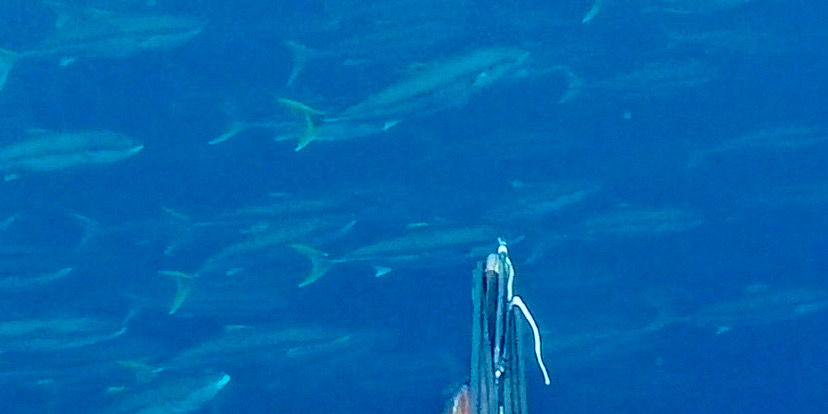
The standout was yesterday morning at the La Jolla kelp. Wide open — two solid hours of nonstop yellowtail. Smaller models in the 7 to 10 pound range and bruisers pushing 20 to 30-plus pounds, eating everything thrown at them. Boats burned through their sardines by 9 a.m., and when the bait ran short, the fish ate iron just as fast. That is a fish-of-a-lifetime kind of morning, and it happened on a local kelp bed you can reach from the beach.

La Jolla earns its reputation for a reason. The submarine canyon there concentrates bait and current in a way few spots can match. Stack a warm-water year, a new-moon feeding window, and ripping tidal current on top of that geography, and you get exactly what we saw.
When the Bite Gets This Good, Everyone Shows Up
Here's the honest part. This morning the bite backed off a notch from yesterday's blitz, and the reason wasn't hard to spot — every boat in the county was out there. When a bite gets this good, word travels fast, and heavy pressure on a single kelp bed, with dozens of boats, motors running, and hooked fish thrashing, can scatter the bait and put the school down, especially once the morning current eases toward slack. That's not a knock on the spot. It's a reminder that on a crowded bite, timing the moving water matters even more. Get there early, fish the current, and be set up before the fleet pushes the fish off the bite.
What This Means If You're Diving for Them
For those of us who hunt yellowtail on a breath instead of a rod, the same logic applies, with one twist. The water movement firing up the bite is also stirring sediment in the shallow coves and along the beaches, so visibility close in has been hit or miss. The fish are holding on the current lines and the kelp edges, which is exactly where you want to be anyway. Get out past the murk, find the moving water and the bait, and the yellowtail will be there.
A few things that have been working: time your dives to the moving tide rather than slack, focus on the kelp lines and current seams where bait piles up, and don't be afraid to cover water until you find the bait — where the bait is, the yellowtail are. Flashers and a quiet approach do the rest.
Will It Last?
The honest answer: the heatwave isn't going anywhere soon, so the seasonal setup will hold for a while. The current piece, though, rides the tide cycle — so the screaming-current days will ease as we move off the king tides, then fire again on the next big swing. My advice is simple: watch the tides, watch the water temperature, and when you see a big tidal swing line up with warm water and bait, clear your schedule. That's the combination that produced this week.
Plan Your Next Window
The difference between a good day and a fish-of-a-lifetime day usually comes down to timing — and timing is something you can actually plan for. That's exactly why I built the SpearFactor Conditions tool: real-time visibility, water temperature, swell, and tide data for dive and fishing spots up and down the California coast, so you can spot these windows before they happen instead of hearing about them afterward. Check the live conditions before your next trip at conditions.spearfactor.com, and dive into more tactics and species guides over at SpearFactor.com. Tight lines and good hunting.


Comments