


Crispy Beer-Battered Fish and Chips From California Rockfish and Lingcod

Fish and chips is the dish everyone thinks they can wing and almost nobody nails on the first try. The fish comes out greasy, the batter slides off, the chips are limp, and the whole plate tastes like the fryer rather than the fish. It does not have to go that way. With firm California white fish, a properly cold batter, and disciplined oil temperature, you can put out a plate that rivals any seaside shop, and you get to do it with a fish you shot yourself.
This is a technique post as much as a recipe. Get the three fundamentals right, the fish, the batter, and the heat, and the rest is just assembly.
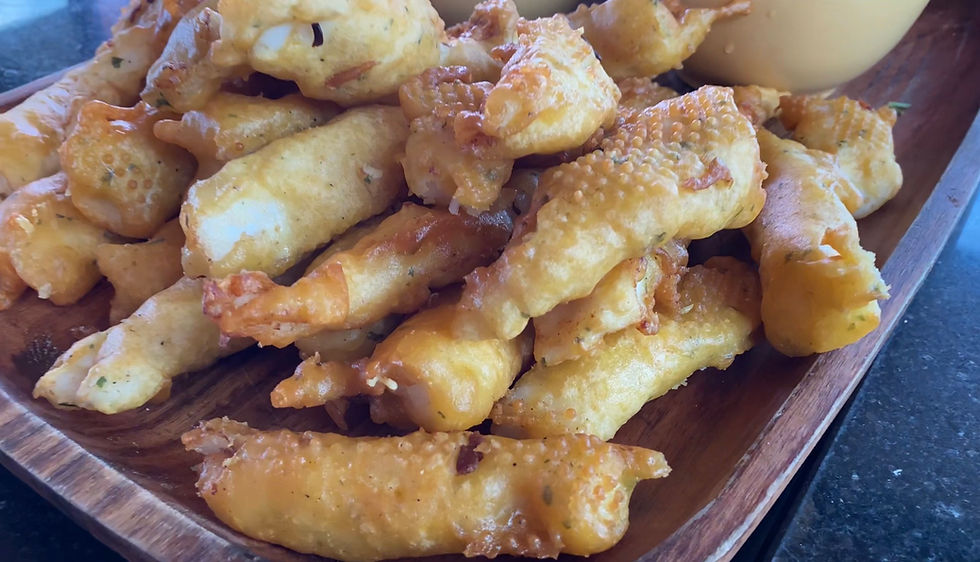
The Right Fish
You want a firm, white, lean fish that holds together in hot oil and flakes cleanly when it is done. Off the California coast that points straight at rockfish, lingcod, and halibut, and all three are superb here. Rockfish is the everyday choice, mild and flaky and abundant. Lingcod is denser and a touch sweeter, and it fries into thick, meaty pieces that hold their shape well. Halibut is the luxury version, clean and firm, though leaner, so do not overcook it.
Cut the fillets into pieces roughly the size of your palm, an inch or so thick. Uniform pieces fry evenly, which is the whole game. Pat them completely dry before they go anywhere near the batter, because surface moisture is the enemy of a batter that sticks and crisps. A light dusting of plain flour on the dry fish, shaken off, gives the batter something to grip.
Why Cold Beer Batter Works
The classic batter is flour and cold beer, and the science behind it is worth understanding because it tells you what not to do. The carbonation in beer introduces bubbles that lighten the batter and help it puff. The cold temperature slows gluten development, which keeps the coating tender rather than tough and bready. And the alcohol evaporates fast in the hot oil, driving off moisture quickly so the crust sets crisp instead of soggy.
Everything about a good batter serves those goals. Keep the beer cold, ice cold, straight from the refrigerator. Mix the batter lightly and at the last minute, leaving some small lumps; overmixing builds gluten and gives you a chewy shell. Some cooks swap a portion of the flour for cornstarch or rice flour for an even crisper, lighter result, and it works well.
A Working Batter
For about a pound and a half of fish, whisk together one cup of all-purpose flour, a quarter cup of cornstarch, a teaspoon of baking powder, a teaspoon of salt, and a little black pepper or paprika. Then pour in roughly one cup of cold beer, a light lager or pale ale, whisking just until it comes together into a batter about the thickness of thin pancake batter. If it is too thick to coat thinly, add a splash more beer. Use it right away while it is cold and bubbly.
A trick worth knowing: keep a little dry flour aside for dredging the fish, and keep the batter bowl sitting in a larger bowl of ice if your kitchen is warm. Cold batter going into hot oil is the contrast that makes the crust shatter-crisp.
Controlling the Oil, the Part That Separates Good From Greasy
Temperature is everything. The target is around 350 to 375 degrees, and you need a thermometer; guessing is how plates come out greasy. Use a neutral high-smoke-point oil and enough of it that the fish can float freely without crowding the pan. If the oil is too cool, the batter absorbs oil before it sets and the fish turns greasy. If it is too hot, the crust browns before the fish cooks through.
The single most common mistake is crowding the pan. Every piece you add drops the oil temperature, so fry in small batches and let the oil recover back to temperature between them. Lower the fish in gently and away from you, hold each piece in the oil for a second before releasing so it does not stick to the bottom, and let it fry undisturbed until deep golden and crisp, usually four to six minutes depending on thickness. Drain on a wire rack, not paper towels, because a rack lets air circulate underneath and keeps the bottom crisp instead of steaming it soft.
The Chips
Real chips are thick-cut and twice-fried, and the double fry is what makes them fluffy inside and crisp outside. Cut russet potatoes into thick batons. Rinse off the surface starch and dry them well. Fry them once at a lower temperature, around 300 degrees, until soft but not colored, then pull them out and let them rest. When you are ready to serve, fry them a second time at the higher 375-degree heat until golden and crisp. The first fry cooks the inside; the second builds the crust.
If you are running one pot, fry the chips first through their first low-temperature fry, set them aside, fry the fish, then give the chips their fast second fry while the fish rests. Salt the chips the moment they come out of the oil so it sticks.

Serving
Serve immediately. Fish and chips waits for no one, and the crust softens within minutes. Pile it up with lemon wedges, a good tartar sauce, and malt vinegar if you lean traditional. Or if you want to be more modern, go ahead and pick up some Chick-fil-A sauce. Seriously, it's delicious! A little flaky salt over the top of the fish right out of the oil never hurts. That is the whole point of doing it at home: fish that was swimming that morning, fried in a crust you mixed yourself, eaten the second it is ready.
Key Takeaways
Use firm white California fish: rockfish for everyday, lingcod for meaty pieces, halibut for the premium version; cut into uniform palm-sized pieces and pat bone dry.
Cold carbonated beer batter stays light and crisp because bubbles lighten it, cold slows gluten, and alcohol flashes off fast; mix it lightly and at the last minute.
Add cornstarch or rice flour to the batter for extra crispness, and dust the dry fish with flour first so the batter grips.
Hold oil at 350 to 375 degrees with a thermometer, fry in small uncrowded batches, and let the oil recover between batches to avoid greasy results.
Drain fried fish on a wire rack, not paper towels, to keep it crisp.
Make proper chips by twice-frying thick-cut russets, low first to cook through, high second to crisp, and salt immediately; serve everything the moment it is done.


Comments