


The 5-Minute Pre-Dive Briefing: A Buddy Conversation Template Every Diver Should Use

I'll never forget the time I was diving with a couple of friends of mine in Guam, and then all of a sudden there were only two of us and we thought our friend was missing. After several minutes of looking for him diving, our concern began to grow, but then we heard someone yelling from the rocks, and it was him.He had gotten tired and swam in to take a break. We were obviously upset from the concern that our friend had blacked out and drowned on our watch.But the failure was on all of us for not talking through this situation beforehand, which would have reduced quite a bit of stress on all of us.
The buddy system only works if both divers have actually talked through the plan. Most dive incidents — including the serious ones — happen between buddy teams who assumed they were on the same page but never confirmed it. The fix is a 5-minute conversation before splashing that covers signals, separation protocols, surface watch responsibilities, and emergency response. It feels formal at first; experienced divers do it on every dive day, especially with new buddies.
This guide covers the pre-dive briefing template that turns the buddy system from policy into actual safety.
Why the Briefing Matters
Three common buddy failure modes:
Both divers assume the other knows hand signals and don't verify
Surface watch protocol is unclear — neither diver knows whose turn it is to watch
Emergency response plan was never discussed — both divers freeze when something goes wrong
The briefing prevents all three by making them explicit.
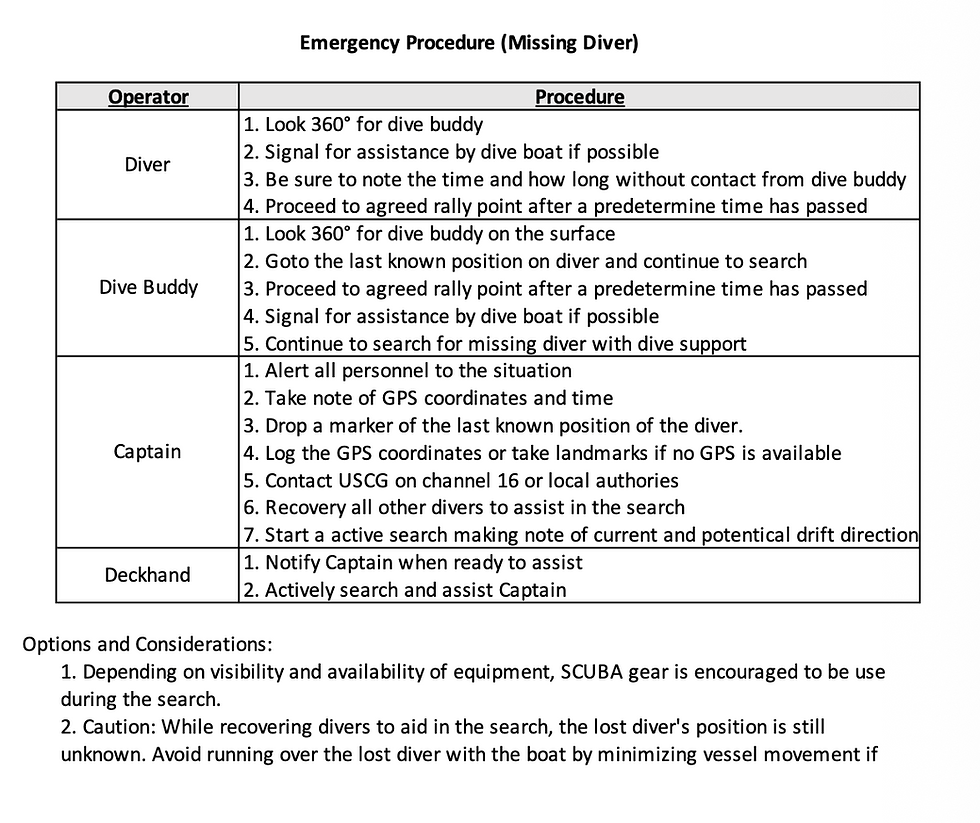
The 5-Minute Template
Cover each item below before splashing on every dive day, especially with new buddies:
1. Hand Signals Review (60 seconds)
OK signal (thumb and finger circle)
Surface signal (thumb up with sweep)
Distress signal (closed fist held up)
Need help (waving arms above water)
Take it slow (open palm sweep)
Confirm both divers know each signal — actually demonstrate, don't just describe
2. Dive Plan (60 seconds)
Where are we diving? Specific spot, depth range
How long are we planning to be in the water? Total time, expected end time
What's the target species or goal?
Are there specific zones to focus on or avoid?
What's the bailout plan if conditions don't work?
3. Surface Watch Protocol (60 seconds)
Who is watching when? One-up, one-down or alternating?
How often should the surface watch see the diver come up?
What's the elapsed time threshold for concern? (e.g., 90 seconds without sight of the diver)
Where is the float / flag positioned?
Who is responsible for monitoring boat traffic?
4. Emergency Response (60 seconds)
If a blackout happens, what's the response sequence?
Where is the rescue equipment (oxygen, AED, first-aid kit)?
Who calls the Coast Guard or 911 if needed?
What's the nearest hospital or recompression chamber?
Who has the float plan contact information?
5. Wildcard Items (60 seconds)
Any medical conditions either diver has that the buddy should know about (asthma, allergies, recent injuries)
Any equipment limitations (recent gear changes, untested rigging)
Recent dive history that affects the plan (back-to-back dive days, recent depth records)
Specific concerns or questions either diver has
When to Do the Briefing
Before every dive day with a new buddy — non-negotiable
Before every dive day with an established buddy when conditions have changed (new spot, different conditions, new gear)
Before every dive day in critical conditions (cold water, deep diving, low visibility)
When the dive plan changes mid-day — quick reset on the new plan
Every charter day — the briefing transfers to the new boat/operator
Common Briefing Mistakes
Skipping it because 'we know each other' — change creates new failure modes
Doing it on the water instead of beforehand — too late, distracted
Just verbally confirming without actually demonstrating signals
Skipping the emergency response section because it feels morbid
Not writing down emergency contact info (phone numbers in a phone that may die)
The Briefing Card
Many divers carry a laminated briefing card with the template printed on it. Practical reasons:
Standardizes the conversation across buddies
Forces both divers to look at the same checklist
Useful for new dive buddies who don't have a routine yet
Easy to update when emergency contact info changes
Costs almost nothing and lasts years
The Briefing as Habit
The first few times the briefing feels formal and slightly awkward — adult divers having a structured conversation about something that 'should be obvious.' That feeling fades quickly. After a season of doing it, the briefing becomes part of the routine like checking your gear or applying sunscreen. The day the briefing actually saves a dive trip — and it will — you'll never skip it again. Five minutes of conversation. Lifetime of better diving.
If you have any questions regarding any of what you have read, please reach out to me and I will help you.


Comments