


The Marie Report: How One South Swell Reshaped Southern California Diving

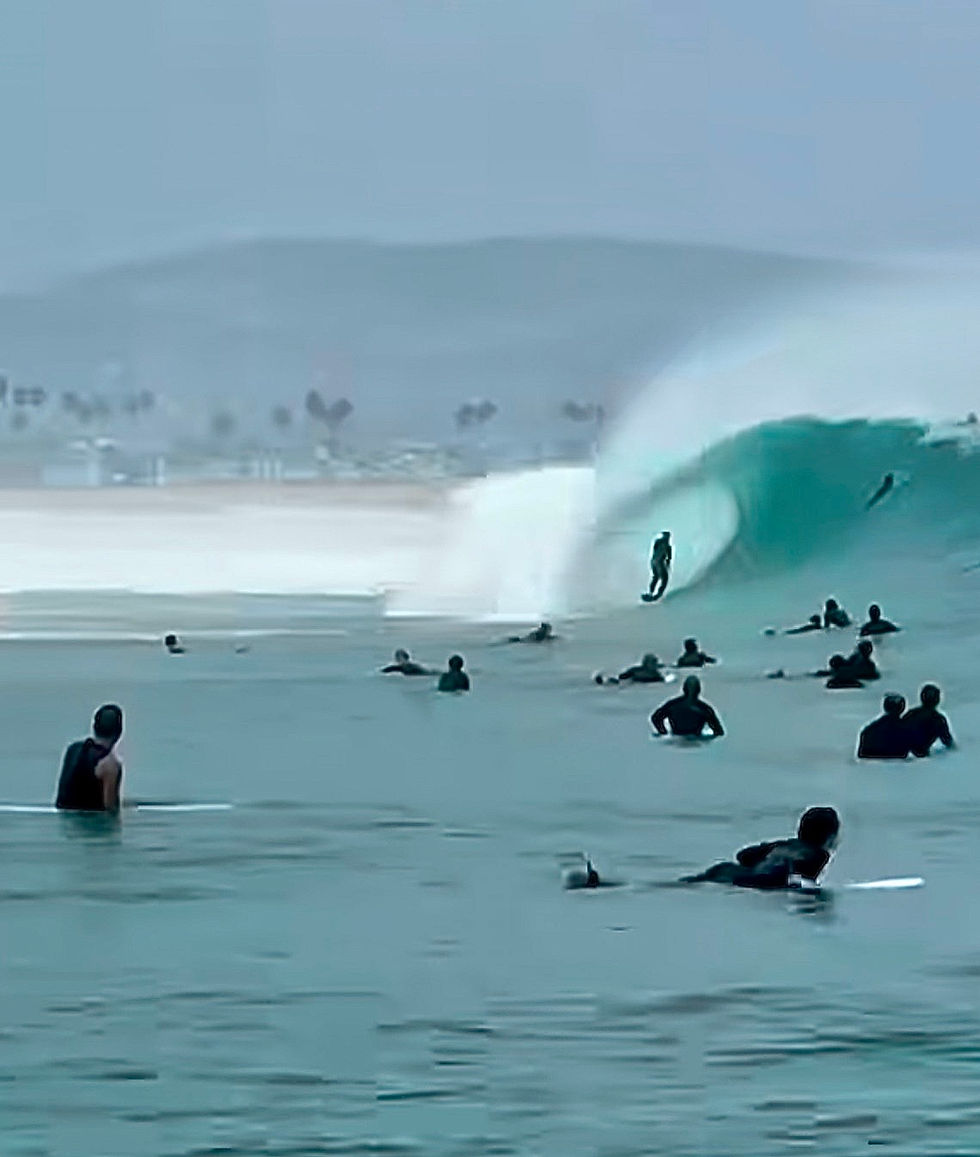
Over Labor Day weekend, the leftovers of Hurricane Marie threw a giant south swell at Southern California, and the whole coast felt it. The storm itself never came close - it stayed 700-plus miles to the south and west - but the long-period energy it fired off put High Surf and Coastal Flood advisories on the map through Tuesday, and set off a chain reaction that touched water temperature, visibility, the shape of our favorite coves, and even what showed up on the reef. Here's the full rundown of what one swell did.
The swell itself
Marie's swell was long-period and came out of the south to south-southwest - the combination that reaches deep and hits hard. It filled in Friday, built through the weekend, and peaked Sunday into Monday. The defining feature was direction: because the energy came from the south, it hammered south- and southwest-facing exposures and slid right past anything tucked behind a north-facing headland or an island lee. Two spots a few miles apart dove like completely different oceans depending on which way they opened to the sea.
The coast got rearranged: sand on the move
A swell that size doesn't just make waves - it moves the bottom. Long-period energy reaches down and mobilizes sand that normally sits put, and in the coves it scours the sandy channels right out. Laguna's coves were a textbook case: divers found lower sand levels and rock, cobble, and reef that had been buried all summer suddenly back in the open, along with changed entries and exits. If your favorite sandy walk-in turned into a rock scramble, this is why. The sand will rebuild over the calmer months - but for now, a lot of structure is showing that usually stays hidden.
The water flipped cold
The swell arrived alongside a wind shift, and that's what reset the temperature. As the wind swung to the northwest and cranked, it drove upwelling - dragging the warm surface layer offshore and pulling cold, deep water up to replace it. San Diego's nearshore surface dropped from the low 70s into the mid-60s in about a week, with the Imperial Beach pier reading as low as the low 60s. After a summer of bathtub-warm, warm-to-the-bottom water, the ocean did a hard reset. Bring more suit, and plan your exposure for the bottom temperature, not the surface.
Visibility: green up top, cleaner down deep
Upwelling is a double-edged sword for clarity. The cold water it brings up is loaded with nutrients, and those nutrients feed a plankton green-up, so the nearshore turns green and softer just as the short-period wind chop stirs the top of the water column. The nuance that saved dives all week: that wind chop is shallow-acting. Murky and surgy up top, noticeably better once you drop below it. The islands and the deeper reefs held the cleaner, bluer water while the mainland shallows churned. Once the wind lays down and the plankton settles, upwelled water tends to clean up cold and blue - so the rough green days now can set up genuinely good diving next week.
Wildlife: the warm-water circus, and the changing of the guard
The summer heatwave had pushed a parade of unusual, tropical-leaning visitors into our water - triggerfish, hammerheads, mantas, a thresher, sea turtles, even fin whales offshore, and basket stars turning up shallower than the old-timers remember. Scripps Institution of Oceanography and partners have been asking divers to report unusual fish sightings, and this is exactly the kind of season that produces them, so if you saw something that didn't belong, photograph it and report it to the Scripps Marine Vertebrate Collection. As the water cooled, the guard started to change: white seabass began showing along the San Diego coast, right on cue with the temperature drop and the moon.
Offshore: marlin, bluefin, and dorado
The warm blue water made for a wild offshore stretch. Marlin were the headline, showing on the Catalina and channel grounds and up around Santa Cruz and Anacapa. Bluefin went on a full-moon night bite well out west, and dorado filled in on the kelp paddies both north and south. Closer in, the coastal yellowtail bite slowed as the bait situation got tight - a couple of harbors flat ran out of bait mid-week. The same warm water that brought the pelagics also delivered the offshore visibility, on the windows the swell allowed.
Region by region
San Diego / La Jolla (rough): blew out on the 30th and stayed unsettled into the swell; the Shores canyon rim was the diveable option on calm mornings.
Orange County / Laguna (rough): south-facing coves took the direct hit - this is where the sand moved and the reef got exposed. Save the open south-facing spots for later in the week.
LA / South Bay - Palos Verdes (moderate): the peninsula's north-facing pockets held up better than the mainland average; light-wind mornings were the window.
Catalina / Coronado Islands (island blue): the lee coves stayed blue and diveable while the mainland churned - the pick of the week for boat divers.
Central Coast - Carmel / Point Lobos (moderate): far enough north that Marie barely registered; standard NW-wind windows applied.
Monterey Bay (clean): the most protected water in the state - a south swell just doesn't wrap into the bay the way it slams SoCal.
The takeaways
Watch direction, not just wave height. A south swell and a west swell blow out completely different spots.
When the coast is churned, go north-facing, go to the islands, or go deep - that's where the clean water hides.
Dress for the cold-water reset, and plan your exposure for the bottom, not the surface.
Give a blown spot a day or two. Short-period wind chop settles fast once the wind drops.
Mind the rules: verify current regulations, seasons, and MPA boundaries with CDFW, and check CDPH advisories before you eat your catch.
Looking ahead
Marie's energy fades through midweek, and the payoff for a rough week is often cold, clean, blue water and a reef that's switched back on. The calendar is turning, too: white seabass are waking up on the cool-down, and the spiny lobster opener is just a few weeks out. Watch the wind more than the swell for the turnaround, and get your gear and paperwork sorted now.
For real-time predictions on your exact spot, check conditions.spearfactor.com.
One swell, a thousand miles away, and it rewrote the whole Southern California coast for a week - the temperature, the clarity, the sand, and the life on the reef. That's the ocean for you. Read it, respect it, and time your windows.
Dive safe out there.
Cover image: big ocean surf wave by Austin Schmid, CC0 (public domain), via Wikimedia Commons / Unsplash.


Comments