


Red Tide and Spearfishing California: When to Dive, When to Skip, and How it Impacts Fish

Red tide is one of the most disruptive conditions a California diver will encounter. A bloom can reduce visibility to inches and create pitch black conditions, push fish out of normal patterns, and (in severe cases) cause respiratory irritation, eye burning, and skin reactions. With marine heatwave conditions persisting along the California coast through 2026, red tide events have been more frequent and longer-lasting than the historical norm.
This guide covers what red tide actually is, how to recognize it before you commit to a dive, when it is safe to get in the water, and what fish behavior to expect during and after a bloom.

What Red Tide Actually Is
Red tide is a type of harmful algal bloom (HAB). Microscopic phytoplankton - usually dinoflagellates - reproduce explosively under the right conditions and turn the water rust-red, brown, or pink. The species responsible varies by region:
Southern California: Lingulodinium polyedrum is the most common red-tide organism. It produces yessotoxin, which is generally low-impact for humans but can affect shellfish
Northern California: Pseudo-nitzschia diatoms are the major concern. They produce domoic acid, which contaminates shellfish and is dangerous to humans
Open coast and offshore: various Karenia and Akashiwo species, some of which produce respiratory irritants
Not all red tide is dangerous. The Lingulodinium blooms common in San Diego, Orange County, and Los Angeles are usually safe for divers in terms of direct toxicity. The main impact is visibility and (occasionally) fish behavior.
How to Recognize Red Tide
Water color: rust-red, pink, brown, or muddy yellow - especially visible in still bays and harbors
Foam or scum lines: where currents concentrate the bloom, you can see thick reddish foam at the surface
Smell: fishy, sulfurous, or bleach-like odors
Bioluminescence at night: red tide blooms often glow blue when disturbed (Lingulodinium is the classic California bioluminescent bloom)
Dead fish or birds along the beach: severe blooms cause fish kills as oxygen is depleted
If the water looks like dirty rust along the shore but blue and clean a quarter mile out, the bloom may be only in the surf zone or in a localized pocket. Check satellite imagery and beach reports before driving to the spot.
When It Is Safe to Dive
Most California red tides do not pose direct toxicity risk to divers in the water - the dinoflagellate species common here are not the brevetoxin-producing Florida species that cause severe respiratory irritation. That said, dive judgement still matters:
Visibility: any red tide thick enough to color the water reduces visibility dramatically. Bloom water in the 1-3 foot visibility range is common
Skin reaction: some divers develop hives or rashes from prolonged exposure to dinoflagellate-rich water. Rinse thoroughly after the dive
Eye irritation: stinging eyes are common in dense blooms. Avoid contacting eyes during and after the dive
Respiratory: aerosolized bloom toxins can cause coughing or scratchy throat. If you start coughing on the swim out, get out
Shellfish: do NOT take any shellfish (mussels, clams, scallops) during a red tide event - even a few days after the bloom clears, toxins persist
If the visibility is workable and you have no respiratory irritation, most California divers continue diving through mild Lingulodinium events. Domoic acid blooms in Northern California are different - skip the dive, especially if you plan to take fish for the table.
How Red Tide Affects Fish Behavior
Fish do not die in light blooms but their behavior shifts:
Vertical migration: fish move below the bloom layer (which is usually surface to 20 feet thick) into clearer, oxygen-rich water deeper down
Concentration at structure: fish gather at reefs, kelp, and wrecks where the bloom is less dense
Pelagic shifts: yellowtail and bonito often move offshore during bloom events, returning when the water clears
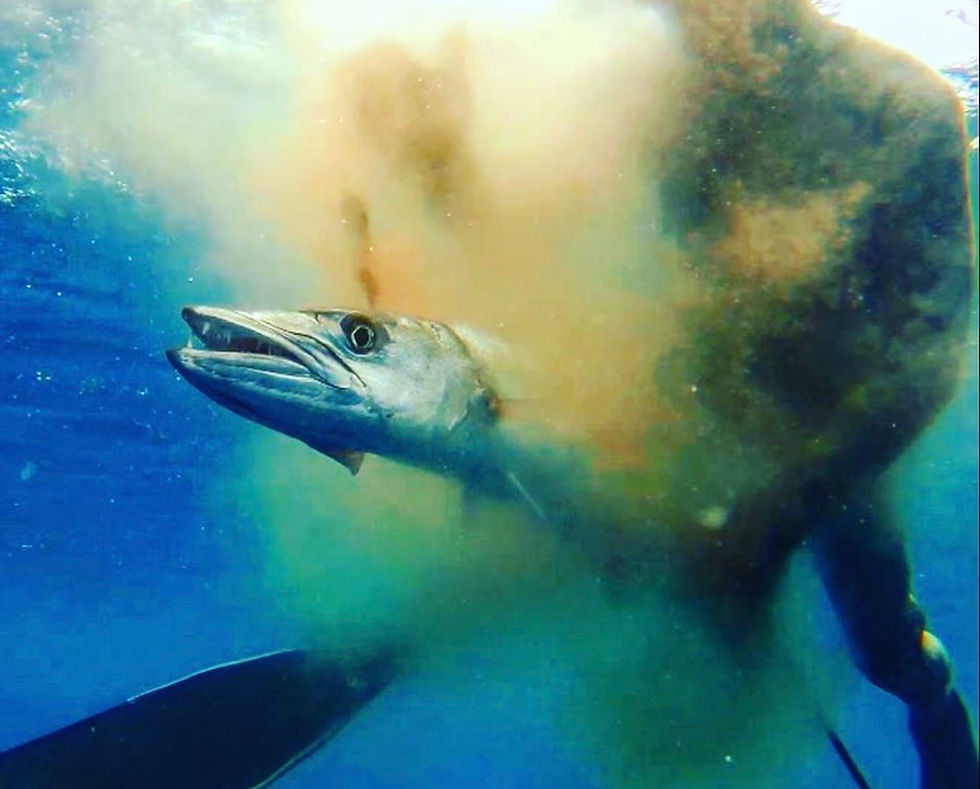
Hunting opportunity: divers willing to drop below the bloom line into clear water often find concentrated, willing fish
Reduced predator activity: large predators may temporarily abandon a bloom-affected area
The tactical takeaway: during a bloom, look deeper than usual. The fish that stayed in the area are below the colored layer. Divers who drop through the bloom into the clean water below often have surprisingly productive sessions.
After the Bloom
Red tide events typically last 1-3 weeks before the bloom dies off. The aftermath has its own pattern:
Visibility recovers within days once the bloom dies and sinks
Fish move back into normal patterns within a week
Detritus from dead bloom organisms briefly enriches the bottom - small bait fish often concentrate, and predators follow
Shellfish toxin levels can take 4-8 weeks to drop below safe thresholds. Check CDPH advisories before harvesting
Some of the best post-bloom diving comes 7-14 days after a major event. The water is clean again, the bait is concentrated, and the predators are back and feeding aggressively.
Frequently Asked Questions
Is it safe to dive during a red tide in California?
Generally yes for Southern California Lingulodinium blooms - direct toxicity risk to divers is low. Skin and eye irritation are possible; rinse thoroughly after the dive. Avoid Northern California domoic acid events, and skip any bloom causing respiratory symptoms or fish kills.
Can I eat fish I speared during a red tide?
Finfish from Southern California Lingulodinium blooms are generally safe - the toxins do not accumulate significantly in fish muscle. NEVER take shellfish (mussels, clams, scallops, lobster guts) during or within several weeks of a bloom. Check CDPH advisories before harvesting any shellfish.
How long does a red tide last?
Typical events run 1-3 weeks before dying off. Visibility usually recovers within a few days of the bloom collapsing. Fish behavior normalizes within a week. The post-bloom 7-14 day window often produces excellent diving as bait concentrates and predators return.
Should I cancel a trip if there's a red tide warning?
Not automatically. Blooms are often patchy - a quarter mile offshore or one cove over can be clean. Check satellite imagery, beach reports, and local dive shop intel. If the bloom is widespread and dense, target a different area or wait for the recovery window.
Check Conditions Before You Go
Check current visibility, water temperature, and fish activity predictions at your dive spot using the SpearFactor Fish & Dive Conditions Tool.
Where We Go From Here
Red tide is not the end of a dive trip - it is a condition you read and adapt to. California divers who learn to recognize blooms, drop below the bloom layer, and dive the recovery window after blooms clear get more days in the water than divers who treat red tide as a hard stop. Just respect the shellfish closures, rinse off thoroughly after diving in colored water, and skip dives where respiratory irritation kicks in.


Comments