


Spearfishing the Mariana Islands: Guam, Saipan, and the Western Pacific


The Mariana Islands sit at one of the most dramatic edges on the planet. A short paddle from the white-sand reef flats and the bottom drops into the Mariana Trench - the deepest ocean on earth. That geography defines the diving here. You can hunt parrotfish in twenty feet of warm clear water in the morning and be in indigo blue chasing wahoo and dogtooth tuna by noon, and you never have to leave US soil to do it.
For US travelers, the Marianas are one of the most underrated tropical destinations in the world. No foreign passport, no foreign currency, English everywhere, and a spearfishing tradition older than written records of the Pacific. This is a guide to diving Guam, Saipan, Tinian, and Rota - what to target, when to go, what the rules are, and what you should know about the culture before you put a stringer in the water.
Geography and Access
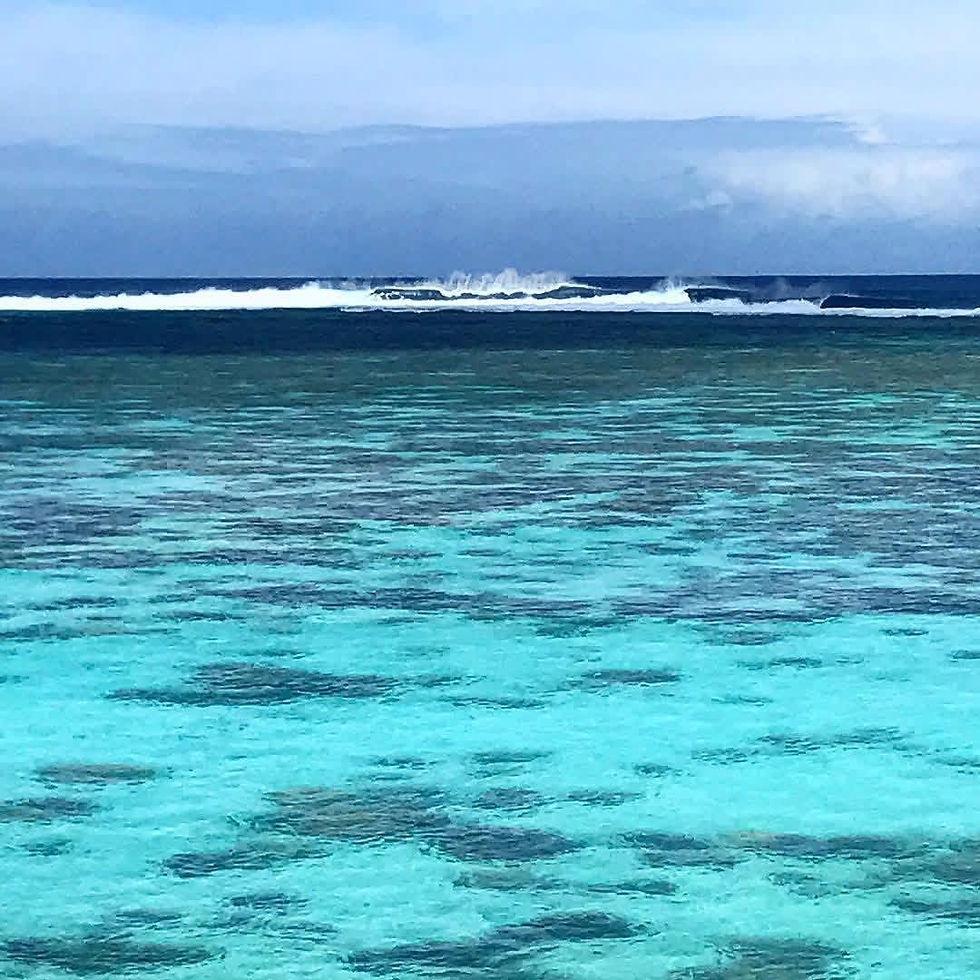
The Mariana archipelago stretches across the Western Pacific roughly six hours by air from Tokyo and about eight hours from Honolulu. The chain is split into two political pieces. Guam, the southernmost and largest island, is an unincorporated US territory. The Northern Mariana Islands - Saipan, Tinian, and Rota are the inhabited ones - form the Commonwealth of the Northern Mariana Islands, or CNMI, also a US Commonwealth. For US citizens, both are domestic travel. No passport, no visa, US dollars, US postal service, US cell carriers in most cases.
What makes the diving special is bathymetry. The islands are the visible peaks of an enormous underwater volcanic ridge. The Mariana Trench runs just to the east, and the dropoffs around the islands are some of the steepest on earth. In several spots you can swim from chest-deep reef flat to a ledge that falls into a thousand feet of blue water in a few fin kicks. That brings pelagic fish remarkably close to shore and gives the reef edges that signature deep-blue clarity.
Tokcha: The Chamoru Spearfishing Tradition
Before talking gear and species it is worth pausing on the cultural piece, because it matters here in a way it does not in most destinations. The indigenous Chamoru people of Guam and the CNMI have been spearfishing these reefs for thousands of years. The Chamoru word tokcha refers both to the act of spearing fish and to the spear itself. Hawaiian sling and pole spear are not just tourist gear in the Marianas - they are the modern continuation of a deep-rooted ancestral practice. Many local families still feed themselves from the reef, and tokcha is taught from father and uncle to son the same way it has been for generations.
What that means for visiting divers is simple. Be respectful. Hire a local guide if you can, listen to what they say about which reefs are theirs and which are open, and do not show up acting like you discovered the place. The Chamoru community has watched a lot of outsiders come through over the centuries, and the divers who get the warmest welcome are the ones who treat the reef and the people on it the way locals expect their guests to behave.
Guam: Regions and Reef Zones
Guam is roughly thirty miles long and the most developed of the Marianas. Tumon is the tourist hub, but the dive zones are spread around the perimeter of the island. A few key areas worth knowing.

Apra Harbor (West Coast)
Apra Harbor on the west side is the main offshore charter access point. Most boats running pelagic trips out toward the Marianas Trench wall and Galvez Banks leave from here. Apra Naval Base sits adjacent, and there are restricted military zones - work with a charter that knows the boundaries. The west coast is generally calmer than the windward east, which means more workable charter days.
Tumon Bay
Tumon Bay is the main tourist beach and is a designated marine preserve. It is no-take. Snorkel it with a camera, do not go in there with a speargun.
Cocos Island and Lagoon (South)
Cocos Lagoon itself is also a marine preserve, but if you head down to the southern tip is a productive reef system right along the edge of the lagoon. Reef fish, schools of jacks running the cuts, occasional pelagic surprises moving through the channels. This is one of the best zones for divers who want a less developed feel without chartering offshore.
Talofofo and Inarajan Bays (Southeast)
Talofofo and Inarajan on the southeast coast is surf-influenced reef. The east side of Guam takes the prevailing trade-wind swell, so this is moodier water - but when it lays down it can produce some of the most active reef hunting on the island.
Two Lovers Point and the North Cliffs
The cliffs around Two Lovers Point in the north drop into deep water close to shore. Most of this is boat access only - there is no easy path from the cliff top to the water - but the fish life along these walls is excellent. Trevally, snapper, and reef-edge pelagics work this zone.
Pago Bay
Pago Bay on the east coast offers reef and dropoff access with a more sheltered character on calm days. The reef shelf here is a productive ambush zone for parrotfish, surgeonfish, and the trevally that work the edge.
Ritidian Point (Far North)
Ritidian Point at the very north end is some of the most pristine reef on Guam. It is also inside the Guam National Wildlife Refuge - no take. You can swim it and look at it and that is it. Treat the boundary as hard. Access Ritidian through the Air Force base.
Saipan, Tinian, and Rota
About forty-five minutes north by short hop flight, the CNMI feels noticeably less developed than Guam. Three islands carry most of the diving traffic.
Saipan is the largest tourist hub in the Northern Marianas. The lagoon side has the Mañagaha Marine Conservation Area - a no-take zone around the small offshore island and surrounding waters - but reef access outside the protected zones is productive. Saipan offers the best combination of charter availability, lodging, and reef diversity in the CNMI.
Tinian is smaller, less pressured, and carries a heavy layer of World War II history - it was the launch point for the Enola Gay. For divers, the appeal is uncrowded reef and dropoffs that get very little visitor traffic. Infrastructure is thin. Plan accordingly.
Rota is the southernmost of the inhabited CNMI islands, with a small population and excellent reef diving. There are fewer charters and almost no commercial dive tourism compared to Saipan, which is exactly why some divers prefer it. The reefs here see less pressure than anything on Guam and Rota has the best visibility I have personally ever experienced. Be aware when you dive in any of these Islands. It's deeper than you think it is.
Marine Preserves: Know the Boundaries
The Marianas have a network of no-take marine preserves and the boundaries are taken seriously by enforcement. Penalties are real - fines, gear confiscation, sometimes worse for repeat offenses. Before you go in the water, get current preserve maps from Guam DAWR (Department of Aquatic and Wildlife Resources) for Guam, or from CNMI Division of Fish and Wildlife for the Northern Marianas.
On Guam, the main no-take marine preserves include Tumon Bay, Piti Bomb Holes, Sasa Bay, Achang Reef Flat, and Pati Point. Ritidian Point, as noted above, is inside the National Wildlife Refuge.

In the CNMI, the Mañagaha Marine Conservation Area on Saipan is the most prominent. Sections of the Saipan lagoon are also protected. Confirm specifics locally before any dive. The lines are not always intuitive.
Target Species
The Marianas hold two distinct fisheries that often run side by side. Reef hunting is the daily bread - the work that fed CHamoru families for generations and still does. Pelagic hunting from the boat is the bonus that the geography here makes possible because the trench wall is so close to shore.
Reef Species

Parrotfish - kichu and mahg in CHamoru depending on size and species - are the staple. Wrasse (lalu and related species), surgeonfish (hugupao), goatfish, multiple snapper species, and grouper round out the daily reef table. Large grouper still exist offshore, though the Nassau-style stock-piling fisheries that hammered groupers across the Pacific have left their mark here too. Treat large grouper with restraint. Take what you will eat and move on.
Reef trevally and bigeye trevally show up on the outer reef edges. Papio - juvenile jacks - are common in the lagoon channels. Atulai, the bigeye scad, schools heavily and is traditionally caught with hand-thrown spears in shallow water, a quintessentially Marianas style of fishing.
Pelagic Species

From the boat, the headline targets are wahoo (lanang), dogtooth tuna, yellowfin tuna, mahi-mahi (mañgon), giant trevally (i'e), bonito, kingfish, and marlin offshore. Dogtooth tuna are a particular Pacific specialty - they hold tight to deep reef pinnacles and require both skill and patience. The proximity of the trench wall makes the Marianas one of the better US-flag destinations for chasing them.
Water Conditions and Seasons
The Marianas sit just north of the equator and the water is warm year-round - typically eighty to eighty-five degrees Fahrenheit. A 1.5mm wetsuit is plenty, and many local divers go shirtless or wear a rash guard. Visibility is the other defining feature. Sixty to a hundred feet is normal on the reef, and offshore on the trench-side dropoffs you can routinely get more than a hundred feet of clarity.
Current is the variable to watch. The outer reef edges and pass mouths can run hard, especially on tide changes. This is open Pacific water - there is no sheltering coastline upstream - and a strong drift can pull you off your spot fast. Carry a float line, run a flag, and know how to negotiate with current rather than fight it.
Seasonally, the dry months from November through May are the calmest and most reliable. The trade winds ease, the swell drops, and charter cancellation rates plummet. July through October is the wet season and the typhoon window. Big weather can shut things down for days, and even between storms the residual swell can keep boats tied up. If you have the flexibility, plan a Marianas trip for the dry months.
Regulations: This Section Matters
The single most important rule for visiting divers: scuba spearfishing is prohibited on Guam. Freedive only. This is enforced and enforcement is not lenient. The same general principle applies across the CNMI in most areas. If you are coming from a destination where scuba spearfishing is normal, recalibrate before you arrive.
Non-residents need a Guam DAWR license to spearfish on Guam. The CNMI has its own permitting process through the Division of Fish and Wildlife. Do this paperwork before your trip - it is straightforward but not something to chase down on day one. Bag limits are enforced, and certain species are fully protected, including humphead (Napoleon) wrasse, all sea turtles, and all marine mammals. US federal rules layer over the local rules - if you intend to chase billfish offshore, an HMS permit may be required for the operation you charter with.
Marine preserves are no-take. Penalties for taking inside a preserve are severe. Get current preserve boundaries before every dive day, and when in doubt about a line, do not pull the trigger.
Charters and Access
Guam has the deepest charter fleet - multiple operators running both reef and bluewater days, mostly out of Apra Harbor and the Hagatna marina area. The CNMI fleet is smaller. Saipan has a handful of solid options; Tinian and Rota have very few, often just an individual captain or two. Day rates run roughly three hundred to five hundred dollars per person, depending on length, fuel, and how far offshore you push. I recommend Liquid Soul Charters if you want to have a solid Captain and a good time.
For divers wanting to cover all four main islands, the practical move is a multi-day plan that hops the inter-island short flights. Liveaboard options are limited compared to places like Indonesia or French Polynesia - most multi-day diving here is land-based with daily charter trips out, not sleeping aboard.
Sharks and In-Water Safety

The Marianas are not a high-shark-stress destination compared to French Polynesia or the Bahamas. The standard Indo-Pacific cast of characters is here - gray reef sharks and blacktips on the reef, occasional bulls, and tigers offshore - but you are not generally diving around a lot of them. That said, the same rules apply as anywhere shark-prone: get fish out of the water fast, do not bleed a fish on a stringer attached to your body, and pay attention to behavior changes when you start landing fish.
Always dive with a partner using one-up-one-down, run a float and flag, and never dive alone on a deep dropoff. Shallow water blackout does not care that the water is warm and clear. Divers from the local Chamoru community will tell you the same - the reef gives a lot, but it does not forgive carelessness.
Ciguatera
Ciguatera is real here. The risk concentrates in large reef predators - large barracuda, large moray, large grouper, and large jacks. The toxin builds up the food chain and cooking does not destroy it. There is no good test in the field. The only practical defense is local knowledge: ask before you eat any large reef fish, follow the guidance of Chamoru divers and local guides who know which reefs and which species have produced poisonings, and when in doubt, pass. Smaller fish lower on the food chain are generally safe, but the rule of thumb is local knowledge first.
Travel Logistics
For US citizens, the Marianas are technically domestic travel - you do not need a foreign passport. That said, US Customs does inspect arrivals from Guam and the CNMI back into the mainland US the same way it inspects international arrivals, so bring your passport or a driver's license plus a certified birth certificate to make the return trip painless. Real ID-compliant identification is the cleanest path.
Bring your own gear. Hard gun cases are checked as oversize sporting equipment on most carriers. Declare it as such at check-in. Local rental options exist but they are limited and not always tuned for traveling divers. Plan to arrive self-sufficient.
English is universal. Chamoru is still spoken in many households and you will hear it on the boat. Lodging clusters in Tumon on Guam and in Garapan on Saipan, both of which give you walking access to restaurants and basic supplies. Climate is tropical and humid year-round. Mosquito-borne illnesses like dengue and zika are not common but not zero - pack repellent and use it.
Why the Marianas Belong on Your List
What you get in the Marianas is a combination that is genuinely rare. Tropical reef diving with deep blue water and pelagic potential a short run from the dock. US territory simplicity - no foreign visa, USD currency, English, no electrical adapter, your own cell carrier in most cases. Less crowding and less pressure than Hawaii, with reef quality that holds up against any high-end destination in the Pacific. And underneath all of that, a living spearfishing tradition that goes back thousands of years on the same reefs you are diving.
If you are a US-based diver who has done Hawaii a few times and wants something that feels further away without the foreign-travel friction, the Marianas are the move. Bring a respectful approach to the local culture, learn a few words of Chamoru, hire a guide your first day on each island, and you will leave with one of the better trips of your spearfishing life.
Planning a Marianas trip? Check forecast viz, swell, current, and conditions for any reef in the world at conditions.spearfactor.com before you book the charter.
Photo credits: NOAA divers in Apra Inner Harbor, Guam (2022), Public Domain. NOAA diver surveying Acropora coral, Guam National Wildlife Refuge (2022), Public Domain. Piti Bomb Holes Marine Preserve, NOAA Coral Reef Habitat Assessment for Guam (2009), Public Domain. All images via Wikimedia Commons.


Comments